Finding a personal direction
Students start the year by pulling from their own lives, interests, and questions to land on the ideas they want their artwork to explore. Expect sketchbooks filling up with rough plans and inspiration.
This is the year art becomes a personal body of work. Students develop their own ideas across a series of pieces, drawing from life experience and the artists who came before them. They sharpen their technique, choose which pieces to show, and explain the meaning behind each one. By spring, they can put together a portfolio that holds together as a point of view.
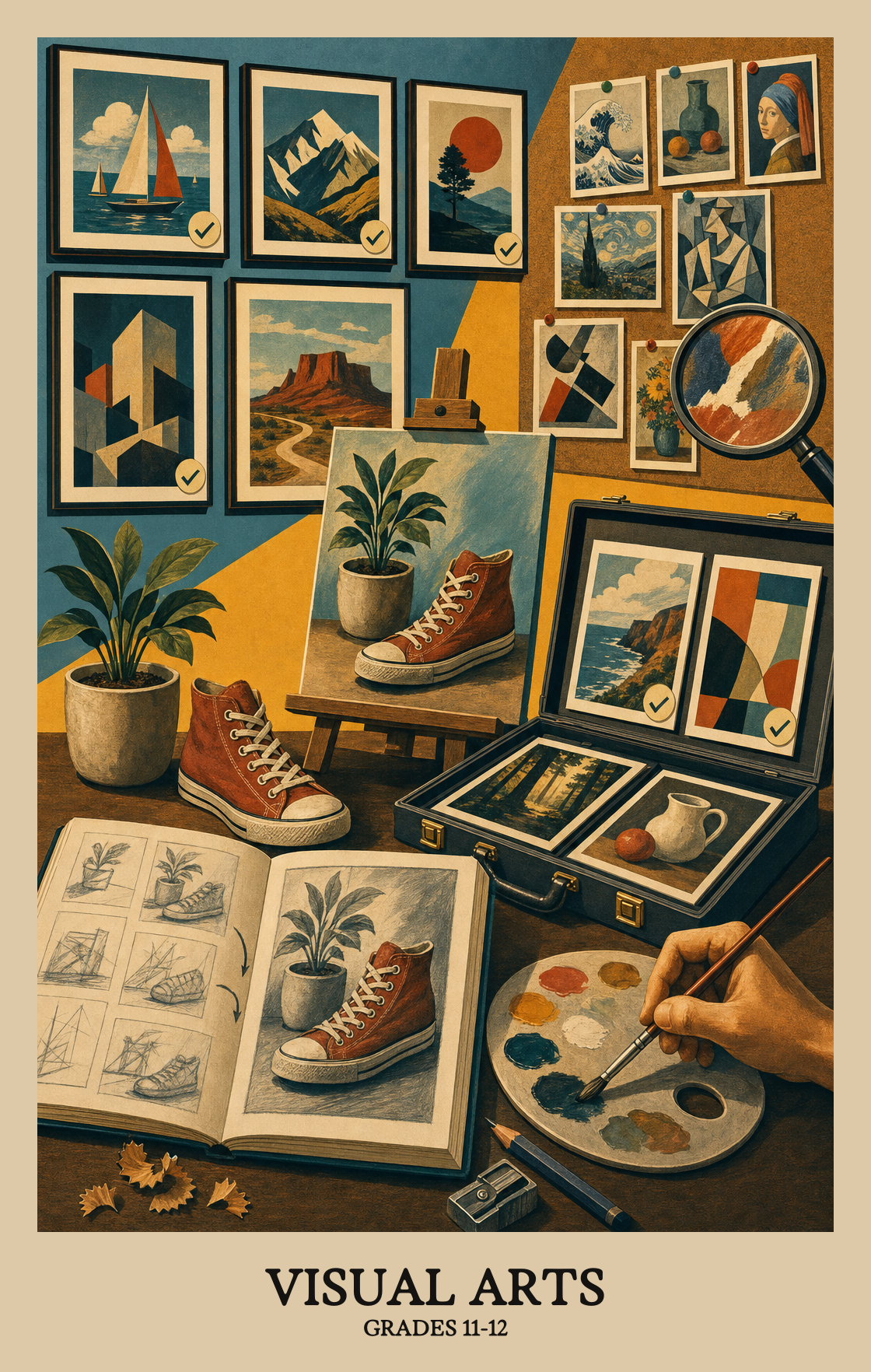
Students start the year by pulling from their own lives, interests, and questions to land on the ideas they want their artwork to explore. Expect sketchbooks filling up with rough plans and inspiration.
Students move from rough ideas into real pieces, choosing materials and techniques on purpose. Parents may see several versions of the same project as students test what works.
Students study other artists and time periods to figure out what a piece is saying and how it holds up. They learn to back up an opinion with specific details from the work itself.
Students place their own work and the art they study inside bigger conversations about history, identity, and community. The goal is understanding why a piece matters beyond the studio.
Students polish their strongest pieces, decide how they should be displayed, and prepare statements that explain the work. By spring this often looks like a portfolio or exhibition.
Students pull from personal experience, other subjects, and outside influences to shape what they make and how they make it.
Students pull from what they know, what they've read, and what they've lived through to make original artwork that reflects their own perspective.
Students connect works of art to the time, place, and culture that shaped them, explaining how that context changes what a piece means.
Students connect a work of art to the time, place, and culture it came from, then explain how that context changes what the work means.
| Standard | Definition | Code |
|---|---|---|
| Using life experience to make art Grades 11-12 | Students pull from personal experience, other subjects, and outside influences to shape what they make and how they make it. | CA-VA:Cn10.11-12.HsAccomplished |
| Using personal experience to make art Grades 11-12 | Students pull from what they know, what they've read, and what they've lived through to make original artwork that reflects their own perspective. | CA-VA:Cn10.11-12.HsAdvanced |
| Art in its historical and cultural context Grades 11-12 | Students connect works of art to the time, place, and culture that shaped them, explaining how that context changes what a piece means. | CA-VA:Cn11.11-12.HsAccomplished |
| Art in its historical and cultural context Grades 11-12 | Students connect a work of art to the time, place, and culture it came from, then explain how that context changes what the work means. | CA-VA:Cn11.11-12.HsAdvanced |
Students take a creative idea and develop it into a finished visual artwork, making deliberate choices about what to make and how to make it.
Students at this level move beyond assigned prompts and develop original concepts for their own artwork, deciding what to make, why it matters, and how to bring the idea to life.
Students refine and arrange their ideas into finished visual art, making deliberate choices about composition, materials, and technique to bring a concept from rough plan to completed piece.
Students refine and arrange their visual ideas into finished work, making deliberate choices about composition, materials, and meaning as the piece develops.
Students revisit a piece of art they've made, sharpen the details that aren't working, and decide when the work is truly finished.
Students revise and finish original artwork, making deliberate choices about what to change, what to keep, and when the piece is done.
| Standard | Definition | Code |
|---|---|---|
| Develop original artistic ideas Grades 11-12 | Students take a creative idea and develop it into a finished visual artwork, making deliberate choices about what to make and how to make it. | CA-VA:Cr1.11-12.HsAccomplished |
| Developing original artistic ideas Grades 11-12 | Students at this level move beyond assigned prompts and develop original concepts for their own artwork, deciding what to make, why it matters, and how to bring the idea to life. | CA-VA:Cr1.11-12.HsAdvanced |
| Develop and organize original artistic ideas Grades 11-12 | Students refine and arrange their ideas into finished visual art, making deliberate choices about composition, materials, and technique to bring a concept from rough plan to completed piece. | CA-VA:Cr2.11-12.HsAccomplished |
| Develop and refine your artistic ideas Grades 11-12 | Students refine and arrange their visual ideas into finished work, making deliberate choices about composition, materials, and meaning as the piece develops. | CA-VA:Cr2.11-12.HsAdvanced |
| Finish and refine artwork Grades 11-12 | Students revisit a piece of art they've made, sharpen the details that aren't working, and decide when the work is truly finished. | CA-VA:Cr3.11-12.HsAccomplished |
| Finishing and refining artwork Grades 11-12 | Students revise and finish original artwork, making deliberate choices about what to change, what to keep, and when the piece is done. | CA-VA:Cr3.11-12.HsAdvanced |
Students review a body of their own artwork, decide which pieces are strong enough to show publicly, and explain the thinking behind each choice.
Students review a body of their own artwork, decide which pieces are strong enough to show publicly, and explain the thinking behind each choice.
Students revise and polish finished artwork to get it ready to show an audience, making deliberate choices about technique, materials, and presentation.
Students take a piece of artwork through multiple rounds of revision, adjusting technique and execution until the work is ready to show an audience.
Students choose how to display or present their work so the idea or feeling behind it comes through clearly to the audience.
Students choose how to display or share finished artwork so the piece communicates a clear idea or feeling to whoever sees it.
| Standard | Definition | Code |
|---|---|---|
| Choosing which artwork to present and why Grades 11-12 | Students review a body of their own artwork, decide which pieces are strong enough to show publicly, and explain the thinking behind each choice. | CA-VA:Pr4.11-12.HsAccomplished |
| Choosing artwork worth presenting Grades 11-12 | Students review a body of their own artwork, decide which pieces are strong enough to show publicly, and explain the thinking behind each choice. | CA-VA:Pr4.11-12.HsAdvanced |
| Refining artwork for presentation Grades 11-12 | Students revise and polish finished artwork to get it ready to show an audience, making deliberate choices about technique, materials, and presentation. | CA-VA:Pr5.11-12.HsAccomplished |
| Refining artwork for presentation Grades 11-12 | Students take a piece of artwork through multiple rounds of revision, adjusting technique and execution until the work is ready to show an audience. | CA-VA:Pr5.11-12.HsAdvanced |
| Presenting art that means something Grades 11-12 | Students choose how to display or present their work so the idea or feeling behind it comes through clearly to the audience. | CA-VA:Pr6.11-12.HsAccomplished |
| Presenting art that means something Grades 11-12 | Students choose how to display or share finished artwork so the piece communicates a clear idea or feeling to whoever sees it. | CA-VA:Pr6.11-12.HsAdvanced |
Students look closely at a finished piece of art and explain what choices the artist made, such as color, composition, or subject matter, and why those choices shape how the work feels or what it means.
Students look closely at advanced artwork and explain what they notice, connecting visual choices like color, composition, and texture to what the work means or how it makes a viewer feel.
Students analyze a piece of art and explain what the artist was trying to say, using specific details from the work to support their reading of it.
Students analyze a piece of visual art and explain what the artist was trying to say, using specific details from the work to support their reading of it.
Students assess a piece of artwork against specific criteria, such as composition, technique, or intent, then explain in writing or discussion why the work succeeds or falls short.
Students choose specific criteria, like composition or use of light, and use them to judge whether a piece of art succeeds. The goal is a reasoned verdict, not just a personal reaction.
| Standard | Definition | Code |
|---|---|---|
| Reading and analyzing works of art Grades 11-12 | Students look closely at a finished piece of art and explain what choices the artist made, such as color, composition, or subject matter, and why those choices shape how the work feels or what it means. | CA-VA:Re7.11-12.HsAccomplished |
| Reading and analyzing works of art Grades 11-12 | Students look closely at advanced artwork and explain what they notice, connecting visual choices like color, composition, and texture to what the work means or how it makes a viewer feel. | CA-VA:Re7.11-12.HsAdvanced |
| Reading meaning in an artwork Grades 11-12 | Students analyze a piece of art and explain what the artist was trying to say, using specific details from the work to support their reading of it. | CA-VA:Re8.11-12.HsAccomplished |
| Reading meaning in artwork Grades 11-12 | Students analyze a piece of visual art and explain what the artist was trying to say, using specific details from the work to support their reading of it. | CA-VA:Re8.11-12.HsAdvanced |
| Judging artwork with your own criteria Grades 11-12 | Students assess a piece of artwork against specific criteria, such as composition, technique, or intent, then explain in writing or discussion why the work succeeds or falls short. | CA-VA:Re9.11-12.HsAccomplished |
| Judging what makes art work Grades 11-12 | Students choose specific criteria, like composition or use of light, and use them to judge whether a piece of art succeeds. The goal is a reasoned verdict, not just a personal reaction. | CA-VA:Re9.11-12.HsAdvanced |
Students move past following directions and start making art that says something. They generate their own ideas, build a body of work over time, and learn to talk about why they made the choices they made. A lot of the year is about developing a personal point of view.
Ask about the idea behind the piece, not whether it looks good. Questions like what are you trying to say, what's working, and what would you change next time push thinking further than praise does. Five minutes of real conversation beats an hour of hovering.
No. A sketchbook, a few pencils, and a phone camera cover most of what they need to keep working between classes. If they ask for a specific material, it usually means a project calls for it, so ask the teacher before buying.
Start with idea generation and sketchbook habits, then move into sustained projects where students develop and refine work over weeks. Save presentation, artist statements, and portfolio review for the second half once students have enough finished pieces to choose from.
A student can take an idea from a rough sketch to a finished piece, explain the choices behind it, and connect the work to a larger context such as a culture, a time period, or a personal experience. The portfolio shows growth, not just polish.
Two things. Generating original ideas instead of copying references, and writing or speaking about the work with specific language. Both improve when students critique each other's pieces regularly using the same criteria they'll be judged on.
A portfolio of strong, varied pieces and the ability to talk about them. Encourage finishing work rather than starting new projects, and keep good photos of everything. Most programs also want a sketchbook that shows how ideas developed.
Grades come from criteria like idea development, craft, revision, and how well the finished piece matches the student's intent. Personal taste is not the rubric. A student can make work the teacher would never hang on a wall and still earn a strong grade.