Knowing yourself
Students take a closer look at who they are, what they value, and what sets them off. They notice their own strengths and the spots where they still need to grow.
This is the year social and emotional skills shift from following rules to running your own life. Students learn to name what they're feeling, manage stress before a big test or hard conversation, and see a situation from someone else's point of view. They practice working through conflict with friends, classmates, and adults instead of avoiding it. By spring, students can set a real goal, notice what's getting in the way, and ask for help when they need it.
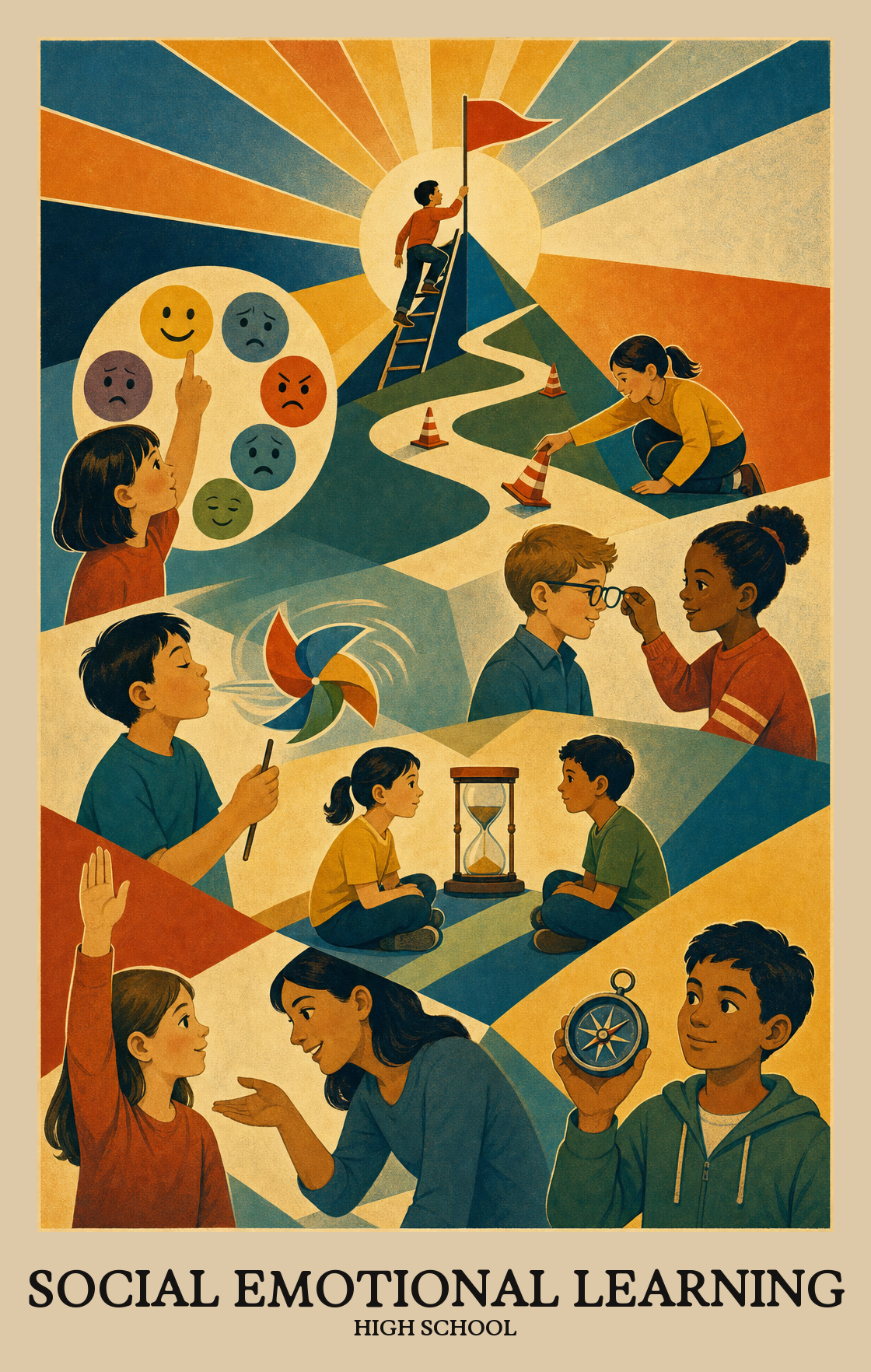
Students take a closer look at who they are, what they value, and what sets them off. They notice their own strengths and the spots where they still need to grow.
Students practice handling pressure from school, work, and life outside of it. They set goals they actually care about and build habits to stay on track when things get busy.
Students work on seeing situations through someone else's eyes, including people whose lives look very different from theirs. They also figure out who to turn to at school, at home, and around town when they need help.
Students practice the everyday skills of getting along: speaking up clearly, listening, working with a group, and working through a disagreement without blowing it up. They also learn when to ask for help and when to offer it.
Students think through real decisions before making them, weighing what could go right, what could go wrong, and how their choice lands on other people. The goal is steady judgment they can carry into adult life.
Students learn to name their own emotions and recognize how those feelings shape their choices. They also take stock of what they do well and where they struggle, building an honest sense of who they are.
Students learn to keep their emotions and reactions in check across different situations, set goals, and follow through on them. This includes handling stress, resisting impulsive choices, and staying organized enough to get things done.
Students practice seeing a situation through someone else's eyes, especially people whose background differs from their own. They also learn to spot the adults, groups, and services available to help them at school, at home, and in their community.
Students practice building real relationships: listening well, working through disagreements, and asking for or offering help. These skills apply with classmates, teammates, and people whose backgrounds differ from their own.
Students practice weighing the costs and benefits of a choice before acting, thinking about how it affects themselves and the people around them. This applies to personal decisions and how they treat others in everyday situations.
| Standard | Definition | Code |
|---|---|---|
| The abilities to understand one's own emotions, thoughts High School | Students learn to name their own emotions and recognize how those feelings shape their choices. They also take stock of what they do well and where they struggle, building an honest sense of who they are. | CT-SEL.1.9-12 |
| The abilities to manage emotions, thoughts High School | Students learn to keep their emotions and reactions in check across different situations, set goals, and follow through on them. This includes handling stress, resisting impulsive choices, and staying organized enough to get things done. | CT-SEL.2.9-12 |
| The abilities to understand the perspectives of and empathise with others… High School | Students practice seeing a situation through someone else's eyes, especially people whose background differs from their own. They also learn to spot the adults, groups, and services available to help them at school, at home, and in their community. | CT-SEL.3.9-12 |
| The abilities to establish and maintain healthy and supportive relationships… High School | Students practice building real relationships: listening well, working through disagreements, and asking for or offering help. These skills apply with classmates, teammates, and people whose backgrounds differ from their own. | CT-SEL.4.9-12 |
| The abilities to make caring and constructive choices about personal behavior… High School | Students practice weighing the costs and benefits of a choice before acting, thinking about how it affects themselves and the people around them. This applies to personal decisions and how they treat others in everyday situations. | CT-SEL.5.9-12 |
Students work on knowing themselves, managing stress, understanding other people, building strong relationships, and making thoughtful choices. The focus shifts from basic feelings vocabulary toward harder situations like deadlines, friendships, conflict, and decisions that affect their future.
Short, regular conversations matter more than big talks. Ask about a hard moment from the day, listen without fixing it right away, and share how adults handle stress or disagreements. Naming feelings out loud at home gives students words to use elsewhere.
Most of this work lives inside existing routines: how class starts, how group work is set up, how conflicts get handled, how feedback is given. A short check-in at the start of class or a structured reflection after a project often does more than a separate lesson.
Avoid direct questions about emotions. Talk side by side instead of face to face, during a drive or a walk. Comment on something specific that happened and wait. Silence is fine. Students often open up when there is no pressure to perform an answer.
Stress management and conflict resolution. Students can often name a feeling but freeze when a deadline piles up or a friendship goes sideways. Concrete strategies like planning backward from a due date or scripting a hard conversation tend to need repeated practice across the year.
Help students plan backward from a due date or a test instead of reminding them to start. Sit down once a week and look at what is coming up. Talk about sleep, screens, and breaks as part of the plan, not as a lecture.
Use texts, case studies, and group tasks that put students in contact with experiences different from their own, then give them a structured way to respond. Sentence starters and short written reflections lower the stakes and pull more students into the conversation.
Progress shows up in behavior over time: how a student handles a setback, asks for help, works in a group, or repairs a conflict. Teachers watch for these moments and note growth. Families often see it in how students talk about hard days.
Look for students who can name what they are feeling, ask for help before things fall apart, follow through on a plan, and think about how a choice affects other people. These habits matter as much as grades in college, work, and adult relationships.