Finding ideas worth making
Students start the year by turning personal experiences and observations into art ideas. They keep a sketchbook, try out different starting points, and learn that an idea can grow before it becomes a finished piece.
This is the year art becomes a way to say something on purpose. Students plan pieces around their own experiences and the world around them, then revise the work until it actually carries the meaning they intended. They also learn to talk about art with real reasons, looking at how time and culture shape what an artist makes. By spring, they can show a finished piece and explain the choices behind it.
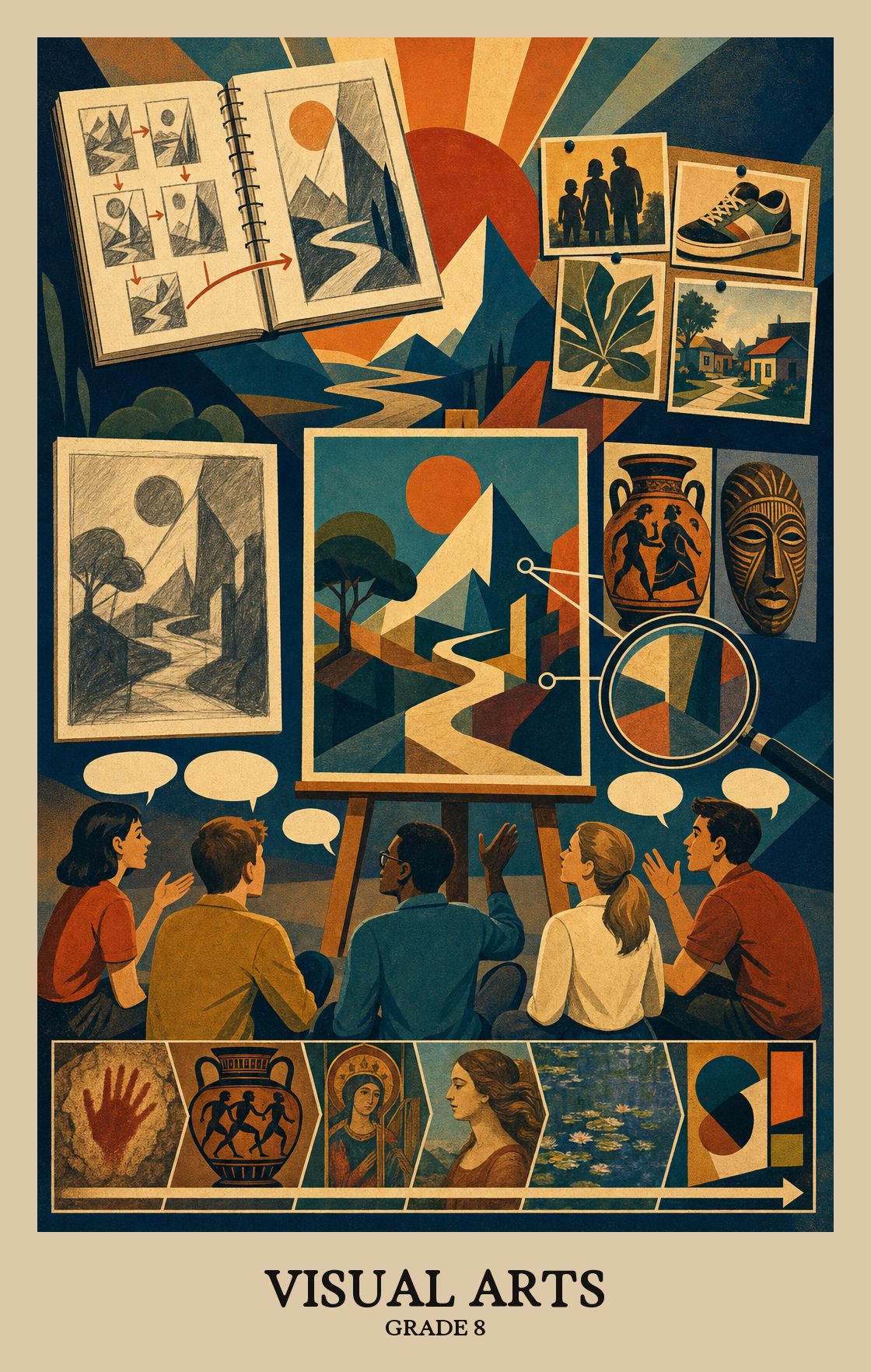
Students start the year by turning personal experiences and observations into art ideas. They keep a sketchbook, try out different starting points, and learn that an idea can grow before it becomes a finished piece.
Students practice techniques in drawing, painting, printmaking, or digital tools. They learn how choices about line, color, and composition change what a viewer sees and feels.
Students look at art from different cultures and time periods and talk about what the artist was responding to. They use that context to shape their own pieces and explain the choices behind them.
Students take a piece from rough draft to finished work. They get feedback, make real changes, and learn to judge their own art against clear criteria before calling it done.
Students choose pieces for a display or portfolio and think about how presentation shapes meaning. They write or speak about their work so a viewer understands the idea behind it.
Students pull from what they know and what they've lived through to make artwork that means something to them personally.
Students look at a piece of art and ask where it came from: what was happening in the world, who made it, and why. That context changes what the work means.
| Standard | Definition | Code |
|---|---|---|
| Synthesize and relate knowledge and personal experiences to make art | Students pull from what they know and what they've lived through to make artwork that means something to them personally. | VA:Cn10.8 |
| Relate artistic ideas and works with societal, cultural | Students look at a piece of art and ask where it came from: what was happening in the world, who made it, and why. That context changes what the work means. | VA:Cn11.8 |
Students brainstorm and develop original ideas before picking up a brush or pencil. The focus is on thinking through a concept, not just making something.
Students refine and arrange their visual ideas into finished artwork, making deliberate choices about composition, materials, and technique along the way.
Students revisit a piece of art they made, look for what isn't working, and revise it until the work says what they meant it to say.
| Standard | Definition | Code |
|---|---|---|
| Generate and conceptualize artistic ideas and work | Students brainstorm and develop original ideas before picking up a brush or pencil. The focus is on thinking through a concept, not just making something. | VA:Cr1.8 |
| Organize and develop artistic ideas and work | Students refine and arrange their visual ideas into finished artwork, making deliberate choices about composition, materials, and technique along the way. | VA:Cr2.8 |
| Refine and complete artistic work | Students revisit a piece of art they made, look for what isn't working, and revise it until the work says what they meant it to say. | VA:Cr3.8 |
Students review a collection of their own artwork, think about what each piece communicates, and choose which works are strong enough to share with an audience.
Students revise and improve their artwork before showing it to an audience, making deliberate choices about technique, materials, and finish so the final piece reflects their best work.
Students choose how to display or arrange their artwork so the viewer understands what the piece is about. The layout, lighting, and order all shape how the work is read.
| Standard | Definition | Code |
|---|---|---|
| Analyze, interpret, and select artistic work for presentation | Students review a collection of their own artwork, think about what each piece communicates, and choose which works are strong enough to share with an audience. | VA:Pr4.8 |
| Develop and refine artistic techniques and work for presentation | Students revise and improve their artwork before showing it to an audience, making deliberate choices about technique, materials, and finish so the final piece reflects their best work. | VA:Pr5.8 |
| Convey meaning through the presentation of artistic work | Students choose how to display or arrange their artwork so the viewer understands what the piece is about. The layout, lighting, and order all shape how the work is read. | VA:Pr6.8 |
Students look closely at a piece of artwork and describe what they notice, then explain how the artist's choices, like color, shape, or composition, create meaning or feeling.
Students look at a finished piece of art and explain what the artist was trying to say. They back up their reading with details from the work itself, like color choices, composition, or subject matter.
Students look at a piece of art and judge it against a specific set of criteria, explaining why it succeeds or falls short on each point.
| Standard | Definition | Code |
|---|---|---|
| Perceive and analyze artistic work | Students look closely at a piece of artwork and describe what they notice, then explain how the artist's choices, like color, shape, or composition, create meaning or feeling. | VA:Re7.8 |
| Interpret intent and meaning in artistic work | Students look at a finished piece of art and explain what the artist was trying to say. They back up their reading with details from the work itself, like color choices, composition, or subject matter. | VA:Re8.8 |
| Apply criteria to evaluate artistic work | Students look at a piece of art and judge it against a specific set of criteria, explaining why it succeeds or falls short on each point. | VA:Re9.8 |
Students move past just making things look nice and start making art that means something. They develop their own ideas, try different materials and techniques, and learn to talk about why an artist made the choices they did. Sketchbooks and revision become a regular part of the work.
A pencil, a sketchbook, and ten quiet minutes go a long way. Ask what the student is working on and what they might change. Visiting a museum, browsing artist videos online, or noticing design choices in everyday objects all count as art thinking.
Skill grows from practice, not talent. Encourage short, low-pressure drawing sessions and praise specific choices rather than the finished product. Looking at how real artists revise, erase, and start over helps students see that struggle is part of the work.
Most teachers weave creating, presenting, responding, and connecting through every project rather than teaching them in blocks. A common arc is to start with idea generation and sketchbook habits, build technique through two or three media, then end with a portfolio review or exhibition where students explain their choices.
Refinement is the big one. Students often want to call a piece done after the first attempt, so plan structured revision checkpoints. Critique language also needs steady practice, since saying more than "I like it" or "it looks good" takes modeling and sentence stems.
No. The work is just as much about thinking, planning, and explaining choices as it is about technical skill. A student who keeps a thoughtful sketchbook and revises their work can do very well even if their drawing still looks rough.
Quite a bit. Students are expected to connect their own art to wider artistic, cultural, and historical ideas. A short artist study or cultural reference tied to each major project usually covers this without turning class into a history lecture.
A student can take an idea from sketch to finished piece, revise based on feedback, and explain the meaning behind their choices. They can also look at someone else's artwork and say what it might mean, what techniques were used, and how well it works.
Skip "that's nice" and ask one real question instead. Try "what were you trying to show here?" or "what part was hardest?" Listening to the answer signals that the thinking behind the piece matters as much as the piece itself.