Moving safely and together
Students learn the rules of the gym and how to share space without crashing. They practice running, skipping, and stopping on a signal while staying aware of classmates around them.
This is the year movement gets more skillful and more social. Students practice running, jumping, skipping, and tossing with better control, and they learn simple rules for playing safely with a partner or a small group. They start to notice how their body feels when it moves and why daily activity matters. By spring, students can take turns in a game, follow directions for a movement, and toss and catch a ball with a partner.
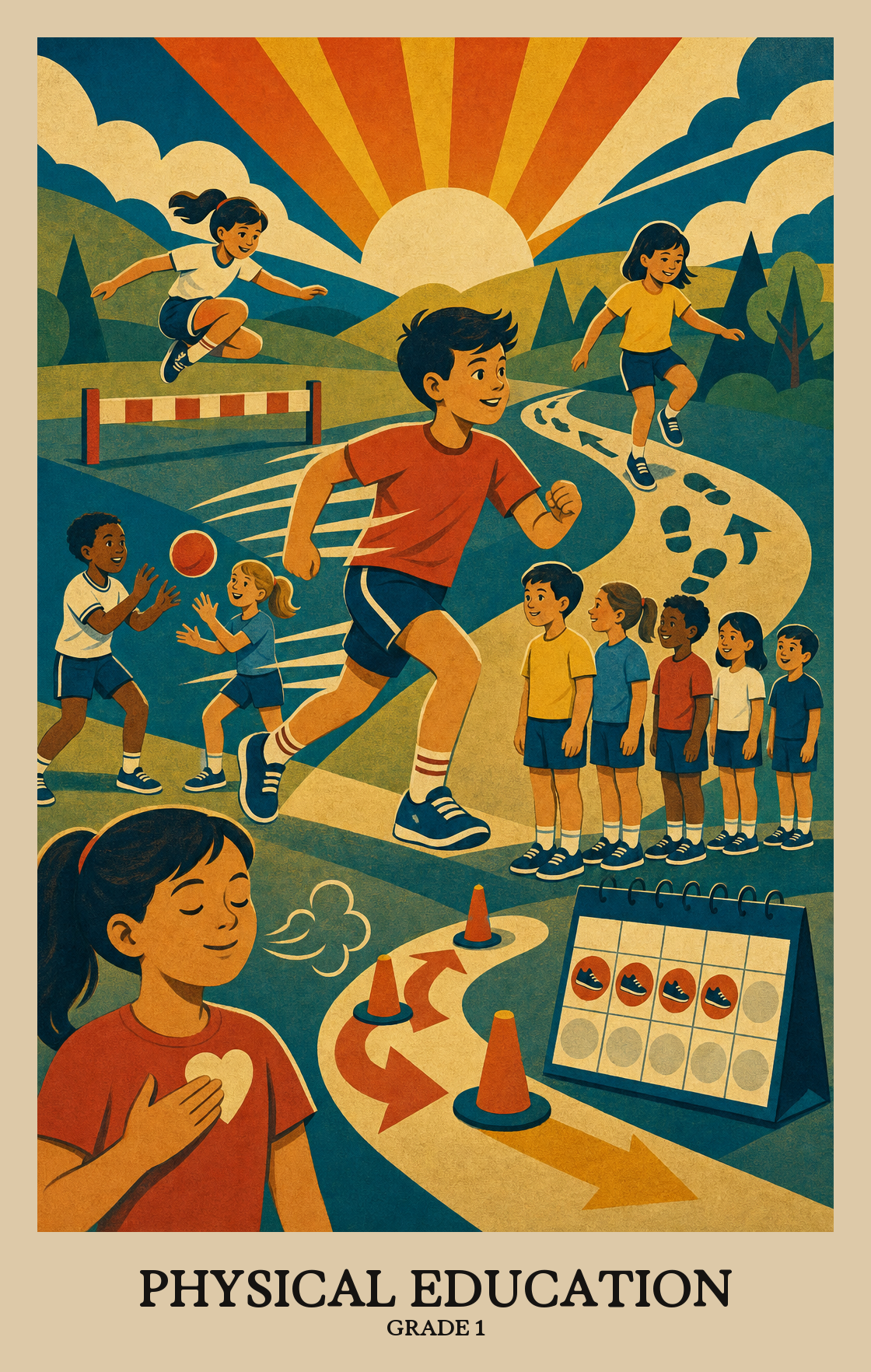
Students learn the rules of the gym and how to share space without crashing. They practice running, skipping, and stopping on a signal while staying aware of classmates around them.
Students start handling balls and beanbags. They work on tossing underhand to a partner, catching with two hands, and kicking a rolling ball toward a target.
Students try movements that stay in one spot, like balancing on one foot, bending, twisting, and jumping. They notice how their bodies feel when their heart beats faster.
Students put their skills into simple games and partner activities. They practice taking turns, cheering classmates on, and talking about why moving every day helps them feel good.
Students practice moving their bodies in different ways: running, jumping, balancing, throwing, and catching. Building these basic movement skills gives students the foundation they need to stay active as they grow.
Students learn basic ideas about how the body moves and stays healthy, then put those ideas to work during physical activities. Think of it as connecting the "why" to the "doing" in gym class.
Students practice getting along while moving: taking turns, listening to classmates, and following group rules during games and activities.
Students practice moving their bodies regularly and start to notice how activity makes them feel. They learn to make simple choices that keep them healthy now and as they grow up.
| Standard | Definition | Code |
|---|---|---|
| Develop a variety of motor skills, including locomotor, non-locomotor | Students practice moving their bodies in different ways: running, jumping, balancing, throwing, and catching. Building these basic movement skills gives students the foundation they need to stay active as they grow. | FL-PE.1.1 |
| Apply knowledge related to movement, performance | Students learn basic ideas about how the body moves and stays healthy, then put those ideas to work during physical activities. Think of it as connecting the "why" to the "doing" in gym class. | FL-PE.2.1 |
| Develop social skills through movement, including respect for self and others… | Students practice getting along while moving: taking turns, listening to classmates, and following group rules during games and activities. | FL-PE.3.1 |
| Develop personal skills, identify personal benefits of movement | Students practice moving their bodies regularly and start to notice how activity makes them feel. They learn to make simple choices that keep them healthy now and as they grow up. | FL-PE.4.1 |
Students should be able to run, hop, skip, and gallop with control, balance on one foot, and throw, catch, and kick a ball without much trouble. They should also play simple group games, follow safety rules, and take turns with classmates.
Ten minutes of active play most days goes a long way. Toss a soft ball back and forth, set up a hopping path with sidewalk chalk, or play freeze tag in the yard. Walks, bike rides, and dancing in the kitchen all count.
At this age, skills like catching and skipping take a lot of practice. Keep it playful and low pressure. Stand closer when tossing a ball, use a bigger or softer ball, and notice effort instead of results. Confidence builds when practice feels like fun.
Start with locomotor skills like running, hopping, and skipping in open space, then add non-locomotor skills like balancing, twisting, and bending. Bring in manipulative skills like rolling, tossing, catching, and kicking once students can move safely around each other. Revisit each skill in new games as the year goes on.
Mastery means students can perform each skill with a recognizable pattern, not perfect form. A first grader should hop on one foot a few times in a row, catch a tossed ball against the chest, and kick a still ball forward. They should also follow simple rules and play safely with a partner.
Skipping, galloping, and catching tend to lag behind running and jumping. Catching often needs work on watching the ball and using two hands. Build in short skill stations each week so students get repeated practice without sitting through a full lesson on one skill.
Students this age should get about 60 minutes of active play every day, spread across school and home. It does not have to happen all at once. Recess, PE class, walking to the bus stop, and outdoor play after school all add up.
Students are ready when they can move safely in a group, follow two or three step directions in a game, and use basic skills like throwing, catching, and kicking without stopping to think about each step. Cooperating with a partner and bouncing back after losing a game are just as important.
Use the same activity with built in choices, such as a closer or farther throwing line, a bigger or smaller ball, or a walking or running pace. Pair students for short partner drills rather than long games. This keeps everyone moving at a level that feels doable.