Sparking ideas from real life
Students start the year by turning their own experiences and interests into ideas for videos, photos, animations, or audio projects. They learn that good media art starts with a clear idea worth sharing.
This is the year students start treating videos, photos, and digital projects as real storytelling, not just play. Students plan an idea, shoot or build it, and then go back to fix what isn't working. They also talk about why a creator made certain choices and how the project lands with viewers. By spring, students can plan a short media project, refine it after feedback, and explain the message behind it.
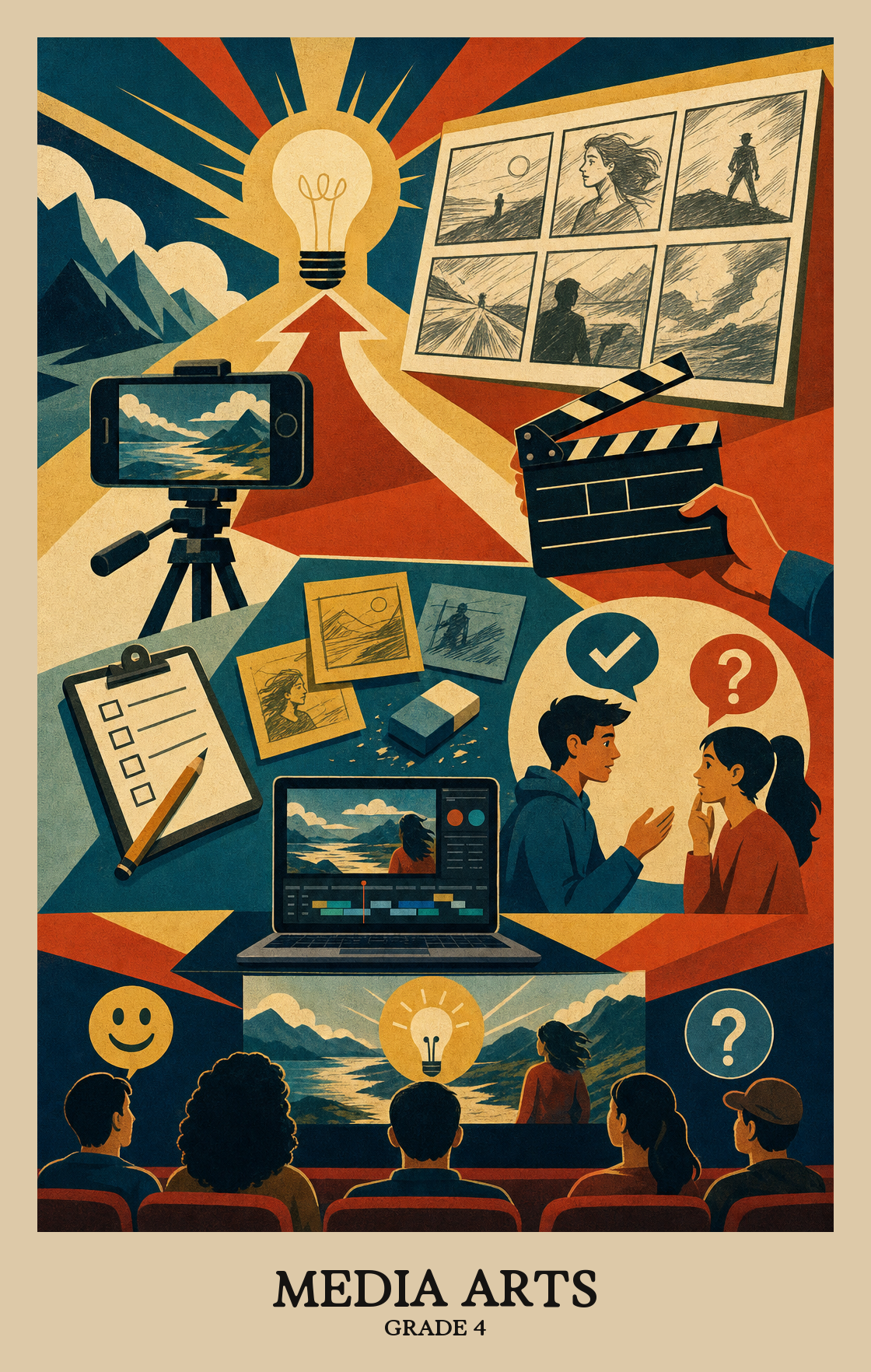
Students start the year by turning their own experiences and interests into ideas for videos, photos, animations, or audio projects. They learn that good media art starts with a clear idea worth sharing.
Students organize their ideas into a plan, then start building. They sketch storyboards, gather images or sounds, and put the pieces together into a first draft of a media project.
Students get hands-on with cameras, recording tools, and editing software. They practice the small skills that make a project look and sound the way they want.
Students revise their projects based on feedback and pick which pieces are ready for an audience. They learn to think about what a viewer will notice and what message comes through.
Students watch and listen to media made by others, including work from different cultures and time periods. They talk about what the artist was trying to say and what makes a piece work or fall flat.
Students connect something from their own life to a media arts project, using that personal experience to shape what they make and why they made it.
Students look at media art (a photo, an animation, a short film) and think about when and where it was made. That context helps them understand what the artist was trying to say.
| Standard | Definition | Code |
|---|---|---|
| Synthesize and relate knowledge and personal experiences to make art | Students connect something from their own life to a media arts project, using that personal experience to shape what they make and why they made it. | MA:Cn10.4 |
| Relate artistic ideas and works with societal, cultural | Students look at media art (a photo, an animation, a short film) and think about when and where it was made. That context helps them understand what the artist was trying to say. | MA:Cn11.4 |
Students brainstorm and sketch out original ideas for media art projects, like short videos, digital images, or animations, before they start making anything.
Students plan and arrange their media art project before making it, deciding how images, sound, or text will work together to get their idea across.
Students revisit a media arts project, make specific improvements based on feedback or their own review, and decide when the work is ready to share.
| Standard | Definition | Code |
|---|---|---|
| Generate and conceptualize artistic ideas and work | Students brainstorm and sketch out original ideas for media art projects, like short videos, digital images, or animations, before they start making anything. | MA:Cr1.4 |
| Organize and develop artistic ideas and work | Students plan and arrange their media art project before making it, deciding how images, sound, or text will work together to get their idea across. | MA:Cr2.4 |
| Refine and complete artistic work | Students revisit a media arts project, make specific improvements based on feedback or their own review, and decide when the work is ready to share. | MA:Cr3.4 |
Students review a collection of media projects and choose the strongest piece to share, explaining why that work best fits the goal of the presentation.
Students practice and improve their media art projects before sharing them with an audience. They make deliberate choices about how the final piece looks, sounds, or moves.
Students choose how to share a media project (a video, a photo series, or a digital image) so the audience understands the idea behind it. The presentation itself is part of the message.
| Standard | Definition | Code |
|---|---|---|
| Analyze, interpret, and select artistic work for presentation | Students review a collection of media projects and choose the strongest piece to share, explaining why that work best fits the goal of the presentation. | MA:Pr4.4 |
| Develop and refine artistic techniques and work for presentation | Students practice and improve their media art projects before sharing them with an audience. They make deliberate choices about how the final piece looks, sounds, or moves. | MA:Pr5.4 |
| Convey meaning through the presentation of artistic work | Students choose how to share a media project (a video, a photo series, or a digital image) so the audience understands the idea behind it. The presentation itself is part of the message. | MA:Pr6.4 |
Students look closely at a media artwork, such as a photo, video, or animation, and explain what they notice about how it was made and what it is trying to say.
Students explain what a media artwork (a photo, short film, or digital image) is trying to say and why the creator made choices like color, sound, or framing to get that message across.
Students look at a piece of media art and explain what makes it work well or fall short, using specific reasons tied to what good media art is supposed to do.
| Standard | Definition | Code |
|---|---|---|
| Perceive and analyze artistic work | Students look closely at a media artwork, such as a photo, video, or animation, and explain what they notice about how it was made and what it is trying to say. | MA:Re7.4 |
| Interpret intent and meaning in artistic work | Students explain what a media artwork (a photo, short film, or digital image) is trying to say and why the creator made choices like color, sound, or framing to get that message across. | MA:Re8.4 |
| Apply criteria to evaluate artistic work | Students look at a piece of media art and explain what makes it work well or fall short, using specific reasons tied to what good media art is supposed to do. | MA:Re9.4 |
Media arts means making things like short videos, animations, slideshows, podcasts, digital drawings, and simple websites. Students learn to plan a project, put pieces together on a screen, and share it with an audience. It blends storytelling with the tools of cameras, microphones, and computers.
Students should be able to come up with an idea, plan it out, make a short media piece, and present it to others. They should also be able to talk about what works in their own project and in projects made by classmates or professionals.
Let students use a phone or tablet to make short videos, stop-motion clips, or voice recordings about things they care about. Ask them what they wanted the viewer to feel and what they would change next time. Ten minutes of planning before filming makes a big difference.
No. A basic phone camera, free editing apps, and household objects are plenty. The thinking matters more than the tools. Strong projects often come from a clear idea and careful planning, not expensive gear.
Start with short, low-stakes projects so students get comfortable with the tools and with sharing work. Move into longer pieces where students plan, draft, revise, and present. Save bigger projects that connect to history, culture, or other subjects for the second half of the year.
Planning before recording and revising after a first draft are the two big sticking points. Students often want to film once and call it done. Building in storyboards, peer feedback, and a required second cut helps the revision habit stick.
Give students a short set of questions to use every time: What is the maker trying to say? What choices stood out? What would make it stronger? Practicing these questions on commercials, short films, and classmates' work builds real critique habits.
Students are ready when they can plan a short project, finish it, present it, and explain the choices behind it. They should also be able to give specific feedback on someone else's work, not just say it was good or bad.
Students might make a short piece about a family tradition, a local landmark, or a historical event from class. The point is to notice that media always comes from somewhere and speaks to someone. Asking where an idea came from is a good starting question at home or in class.