Knowing yourself
Students start the year by looking at how their emotions, values, and habits shape the choices they make at school and at home. They name personal strengths and the spots where they still want to grow.
This is the stretch when students stop reacting and start steering. They learn to name what they are feeling, calm themselves down before a test or a hard conversation, and see a situation from someone else's side. Healthy friendships, clear communication, and asking for help when things get heavy all become teachable skills. By spring, students can talk through a conflict, weigh a tough choice against its real consequences, and point to an adult they trust.
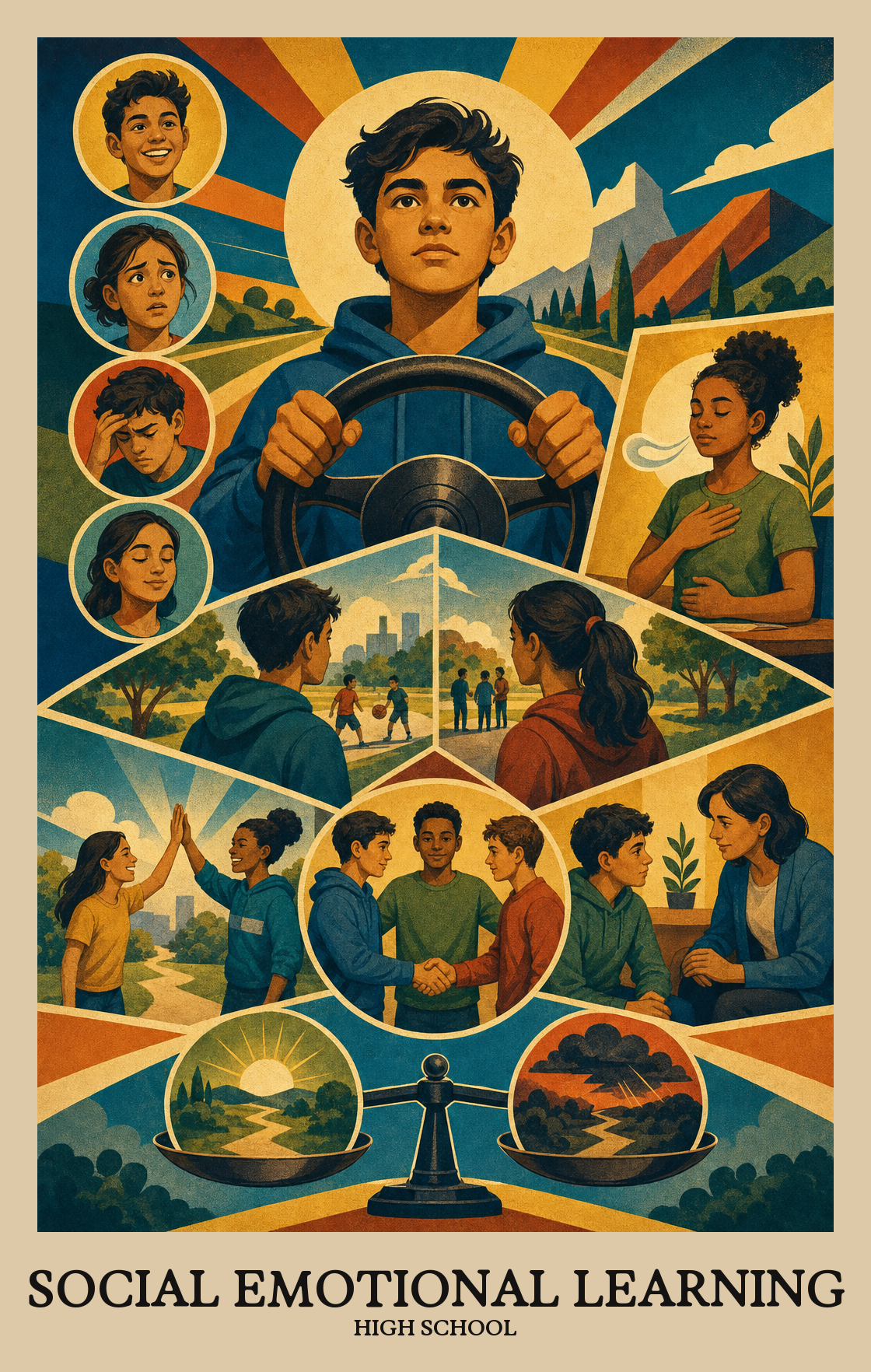
Students start the year by looking at how their emotions, values, and habits shape the choices they make at school and at home. They name personal strengths and the spots where they still want to grow.
Students practice handling pressure from classes, jobs, and sports without falling behind. They set goals, plan their week, and learn what to do when frustration or anxiety starts to take over.
Students work on seeing situations from another person's view, including peers whose background or beliefs differ from their own. They also learn where to turn for support at school, at home, and in the community.
Students focus on what makes a relationship work, from clear communication to honest disagreement. They practice teamwork, repair after conflict, and ask for help when something feels off.
Students close the year by thinking through real decisions about friendships, school, and life after graduation. They weigh short-term benefits against longer consequences for themselves and the people around them.
Students examine their own emotions and values to understand why they act the way they do. They also take stock of what they're good at and where they struggle, building a clearer picture of who they are.
Students practice staying calm under pressure, thinking before acting, and keeping their work organized so they can follow through on goals that matter to them.
Students practice seeing situations from other people's points of view, including people whose backgrounds differ from their own. They also learn to identify who and what they can turn to for support at school, at home, and in their community.
Students practice building and keeping healthy relationships with different kinds of people. That means listening well, working through disagreements, and asking for or offering help when someone needs it.
Students practice weighing the real costs and benefits of a choice before acting, including how that choice affects other people. The focus is on decisions that are honest, fair, and thought through.
| Standard | Definition | Code |
|---|---|---|
| The abilities to understand one's own emotions, thoughts High School | Students examine their own emotions and values to understand why they act the way they do. They also take stock of what they're good at and where they struggle, building a clearer picture of who they are. | FL-SEL.1.9-12 |
| The abilities to manage emotions, thoughts High School | Students practice staying calm under pressure, thinking before acting, and keeping their work organized so they can follow through on goals that matter to them. | FL-SEL.2.9-12 |
| The abilities to understand the perspectives of and empathise with others… High School | Students practice seeing situations from other people's points of view, including people whose backgrounds differ from their own. They also learn to identify who and what they can turn to for support at school, at home, and in their community. | FL-SEL.3.9-12 |
| The abilities to establish and maintain healthy and supportive relationships… High School | Students practice building and keeping healthy relationships with different kinds of people. That means listening well, working through disagreements, and asking for or offering help when someone needs it. | FL-SEL.4.9-12 |
| The abilities to make caring and constructive choices about personal behavior… High School | Students practice weighing the real costs and benefits of a choice before acting, including how that choice affects other people. The focus is on decisions that are honest, fair, and thought through. | FL-SEL.5.9-12 |
Teenagers practice noticing their own moods, handling stress, and getting along with people who are different from them. They also work on bigger choices: how to manage time, how to repair a friendship after a fight, and how to ask for help when things feel heavy.
Name what you see without fixing it right away. Try a short check-in at dinner or in the car: what was hard today, what helped. Even five minutes of listening before offering advice teaches a teenager that strong feelings are normal and manageable.
No. These lessons build everyday habits like calming down before a test, listening during a disagreement, or planning a long project. A teenager who needs more support should still see a counselor or doctor.
Start with self-awareness and stress habits in the fall, when routines are still forming. Move into perspective-taking and relationship skills mid-year, then end with decision-making and goal-setting tied to life after high school. Revisit earlier skills whenever a real classroom moment calls for it.
A graduating student can name what they are feeling, calm down without blowing up at someone, and see a situation from another person's side. They can also weigh the consequences of a choice, ask for help when stuck, and follow through on a goal that matters to them.
Impulse control under stress and conflict repair are the slowest to stick. Most teenagers know the right move in a calm room and forget it in a charged moment. Short practice during real conflicts in class beats another worksheet on feelings.
Wait until the heat is gone before talking. Ask what happened from their side first, then share yours. Modeling a calm repair after an argument at home teaches more than any lecture about communication.
The same habits show up in a first job, a college dorm, and a serious relationship. Managing a schedule, asking a boss for help, and working with people from different backgrounds all rest on the skills practiced here.