Pretending and playing characters
Students step into make-believe. They pretend to be a cat, a parent, or a firefighter, and use their voice and body to show who that character is.
This is the year make-believe becomes a first taste of theater. Students invent characters, act out small stories, and use their own lives as starting points for pretend play. They watch classmates perform and start to notice what a scene is trying to show. By spring, students can take on a role, act out a short story with a friend, and say what they liked about a classmate's performance.
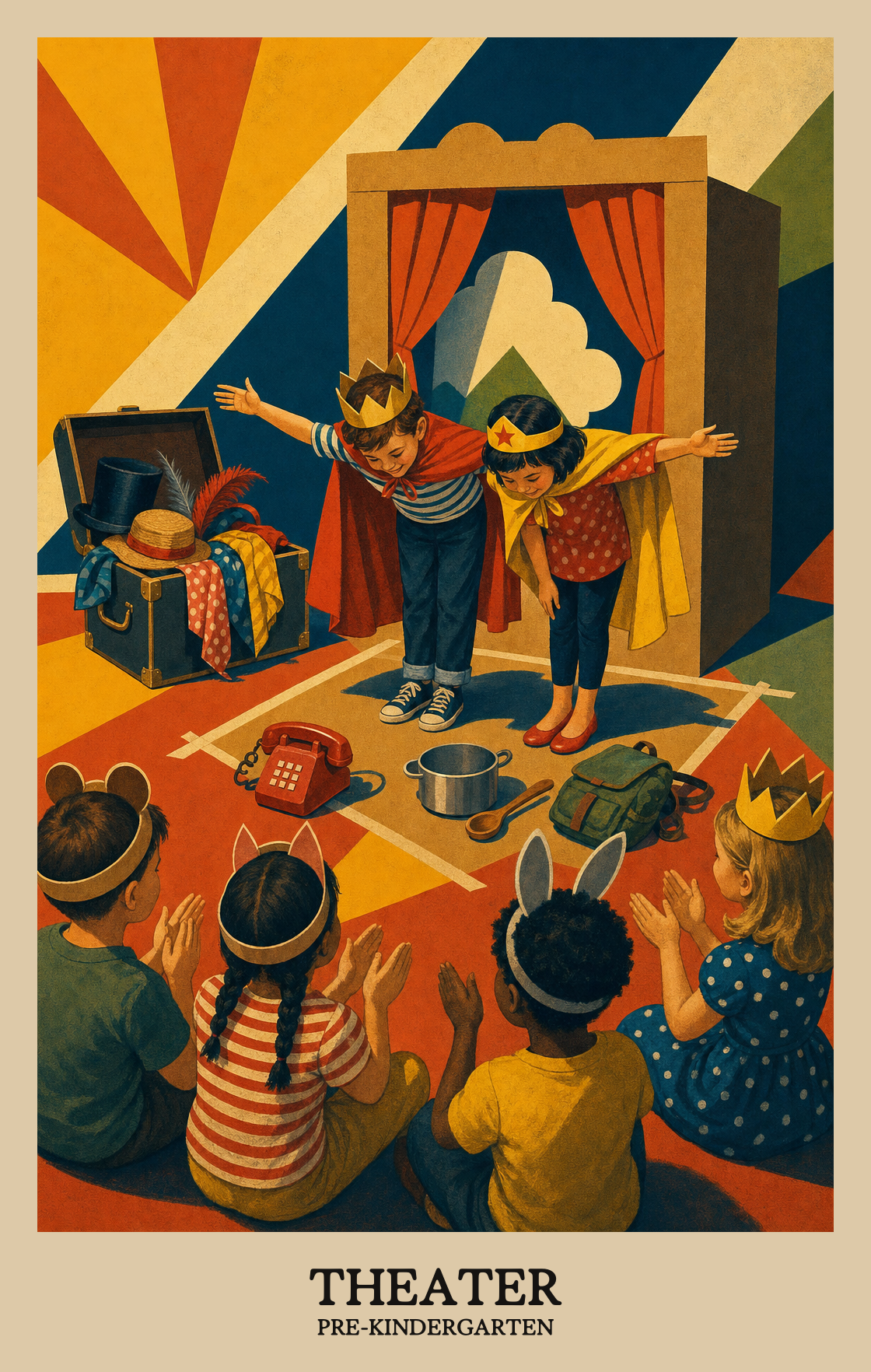
Students step into make-believe. They pretend to be a cat, a parent, or a firefighter, and use their voice and body to show who that character is.
Students invent simple stories with classmates, often based on books they love or things that happened at home. They add settings, problems, and silly ideas as the story grows.
Students pick a short scene or song and run through it more than once. They try new voices, gestures, and faces to make the story clearer for someone watching.
Students perform short skits for the class and watch each other do the same. They talk about what they liked, what made them laugh, and what the story was about.
Students connect something from their own life, like a memory or a feeling, to what they act out or create in class.
Students connect stories, songs, and pretend play to the world around them, noticing how the arts reflect where people live and who they are.
| Standard | Definition | Code |
|---|---|---|
| Making art from what you know and feel | Students connect something from their own life, like a memory or a feeling, to what they act out or create in class. | CA-TH:Cn10.pk.PK |
| Stories and art from different cultures | Students connect stories, songs, and pretend play to the world around them, noticing how the arts reflect where people live and who they are. | CA-TH:Cn11.pk.PK |
Students come up with ideas for pretend play and simple stories, then act them out alone or with classmates.
Students choose what their character does or says in a pretend story, then try it out through play.
Students finish a short play or story scene they started, making small fixes until it feels ready to share.
| Standard | Definition | Code |
|---|---|---|
| Coming up with ideas for pretend play | Students come up with ideas for pretend play and simple stories, then act them out alone or with classmates. | CA-TH:Cr1.pk.PK |
| Make a story with your own ideas | Students choose what their character does or says in a pretend story, then try it out through play. | CA-TH:Cr2.pk.PK |
| Finish a theater project | Students finish a short play or story scene they started, making small fixes until it feels ready to share. | CA-TH:Cr3.pk.PK |
Students pick a character or story to act out and make simple choices about how to show it, like which voice to use or how to move.
Students practice a short performance, like a song or a simple scene, and try it again to make it better before showing it to others.
Students use a simple story, puppet, or pretend scene to share an idea or feeling with others.
| Standard | Definition | Code |
|---|---|---|
| Choosing which performance to share | Students pick a character or story to act out and make simple choices about how to show it, like which voice to use or how to move. | CA-TH:Pr4.pk.PK |
| Practicing a skill to get it right | Students practice a short performance, like a song or a simple scene, and try it again to make it better before showing it to others. | CA-TH:Pr5.pk.PK |
| Sharing what your story means | Students use a simple story, puppet, or pretend scene to share an idea or feeling with others. | CA-TH:Pr6.pk.PK |
Students look at a performance or piece of art and talk about what they notice. They describe what they see, hear, or feel in simple words.
Students look at a short play or puppet show and talk about what they think is happening and how the characters feel.
Students look at a drawing, a dance, or a short play and say what they liked and why. They practice giving a simple reason for their opinion.
| Standard | Definition | Code |
|---|---|---|
| What makes a performance feel different | Students look at a performance or piece of art and talk about what they notice. They describe what they see, hear, or feel in simple words. | CA-TH:Re7.pk.PK |
| What a story means to you | Students look at a short play or puppet show and talk about what they think is happening and how the characters feel. | CA-TH:Re8.pk.PK |
| Deciding what makes a performance good | Students look at a drawing, a dance, or a short play and say what they liked and why. They practice giving a simple reason for their opinion. | CA-TH:Re9.pk.PK |
Theater at this age is mostly pretend play. Students act out stories, take on characters like a doctor or a bear, and use their voice and body to show feelings. There are no scripts to memorize and no stage to walk onto.
Keep a small box of dress-up items near where students play, like scarves, hats, and a pretend phone. Join in when invited and ask simple questions in character, such as what the dragon wants for dinner. Ten minutes a day is plenty.
Start with short imitation games and simple character voices in the fall. Move into acting out familiar stories like The Three Bears in winter. By spring, students can invent short scenes together and share them with the class.
No. Performing at this age usually means sharing a short scene with classmates, not a real audience. Some students jump in right away and others watch for weeks before joining. Both are normal and fine.
Pick stories from a range of cultures and let students act out a favorite part after reading. Ask what the character was feeling and why. This covers the connecting and responding work without needing a separate lesson.
Give them a role behind the scene first, like holding a prop, narrating one line, or making a sound effect. Shy students often warm up when they have a small job that matters. Pushing them to perform usually backfires.
By the end of the year, students should be able to pretend to be a character, act out a short story with a partner, and say what they liked about a classmate's scene. They do not need to read scripts or memorize lines.