Exploring tools and materials
Students get hands-on with crayons, paint, paper, and clay. The focus is trying things out and noticing what each material can do.
This is the year art shifts from messy play to making something on purpose. Students try out crayons, paint, clay, and collage, and start sharing why they made what they made. They also look at pictures by other artists and say what they notice. By spring, students can finish a piece they planned, talk about it in a few words, and point out colors or shapes in a painting at home.
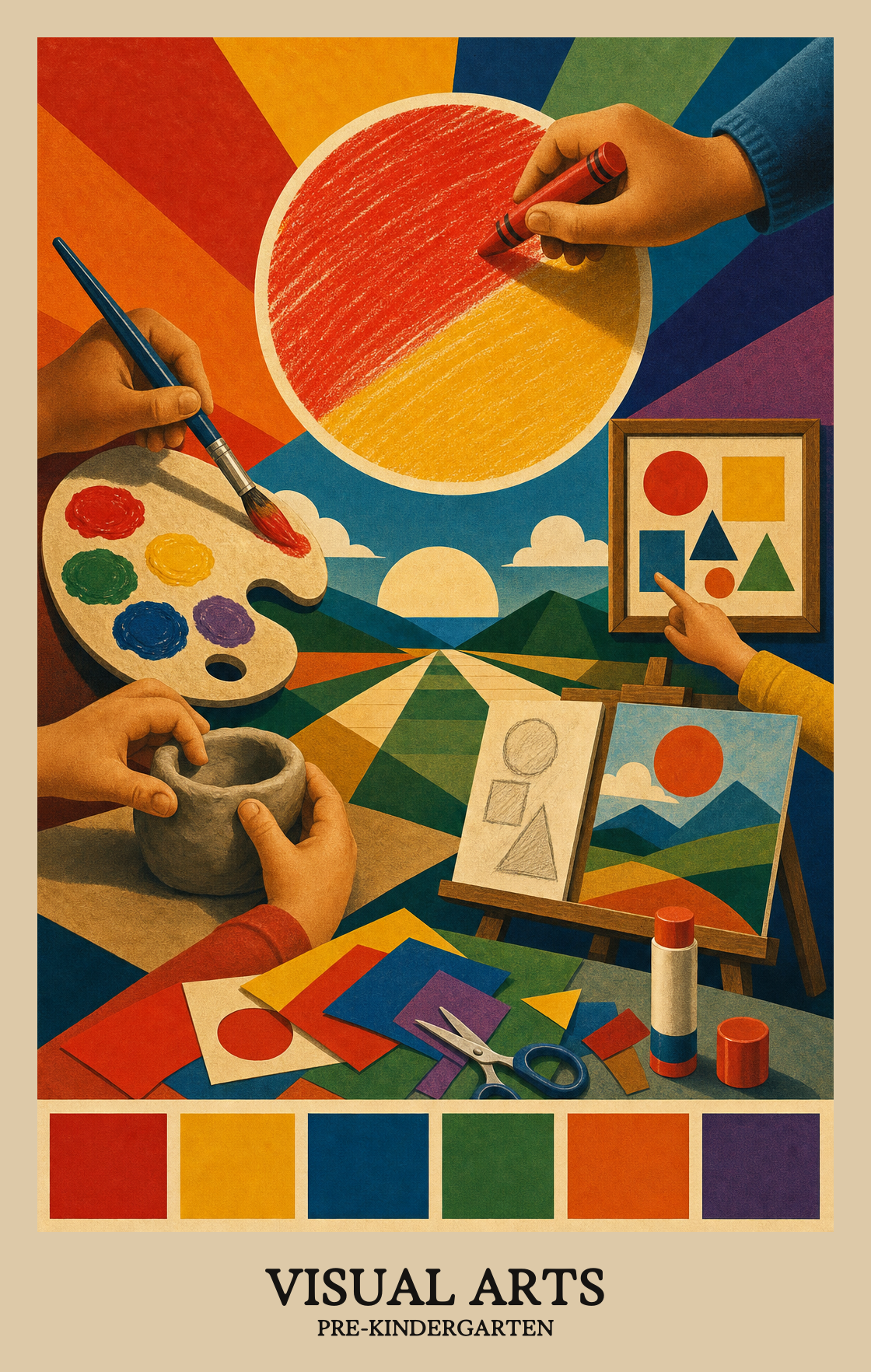
Students get hands-on with crayons, paint, paper, and clay. The focus is trying things out and noticing what each material can do.
Students start drawing and building from things they know, like family, pets, and favorite places. Their pictures begin to tell a small story.
Students talk about pictures and objects they see at school, at home, and in books. They notice colors, shapes, and what an artist might be showing.
Students stick with a project long enough to call it done, then choose a piece to show others. They begin to say what they like about their work and a friend's.
Students draw or create art that connects to something they know or have lived through, like a pet, a favorite meal, or a memory from home.
Students look at artwork and talk about where it came from, who made it, and why. That helps them understand that art tells stories about people and their lives.
| Standard | Definition | Code |
|---|---|---|
| Making art from what you know and feel | Students draw or create art that connects to something they know or have lived through, like a pet, a favorite meal, or a memory from home. | CA-VA:Cn10.pk.PK |
| Art from different times and places | Students look at artwork and talk about where it came from, who made it, and why. That helps them understand that art tells stories about people and their lives. | CA-VA:Cn11.pk.PK |
Students come up with ideas for their own art. They decide what to make and how to make it, drawing on what they imagine or see around them.
Students pick up art materials and make something on purpose. They start to plan a little before they create, choosing colors, shapes, or tools that match what they have in mind.
Students finish a drawing or craft they started, making small changes until it feels done.
| Standard | Definition | Code |
|---|---|---|
| Coming up with art ideas | Students come up with ideas for their own art. They decide what to make and how to make it, drawing on what they imagine or see around them. | CA-VA:Cr1.pk.PK |
| Making art from your own ideas | Students pick up art materials and make something on purpose. They start to plan a little before they create, choosing colors, shapes, or tools that match what they have in mind. | CA-VA:Cr2.pk.PK |
| Finish and refine your artwork | Students finish a drawing or craft they started, making small changes until it feels done. | CA-VA:Cr3.pk.PK |
Students pick which of their drawings or artwork to show others and start to explain why they chose it.
Students practice a drawing or craft more than once, working to make it look the way they want before sharing it with others.
Students share their drawings or creations and talk about what they made and why. The artwork carries a message or feeling the student wants others to see.
| Standard | Definition | Code |
|---|---|---|
| Choosing art to share with others | Students pick which of their drawings or artwork to show others and start to explain why they chose it. | CA-VA:Pr4.pk.PK |
| Making art ready to share | Students practice a drawing or craft more than once, working to make it look the way they want before sharing it with others. | CA-VA:Pr5.pk.PK |
| Sharing art and what it means | Students share their drawings or creations and talk about what they made and why. The artwork carries a message or feeling the student wants others to see. | CA-VA:Pr6.pk.PK |
Students look closely at a picture or artwork and talk about what they see, such as the colors, shapes, or what is happening in the scene.
Students look at a drawing or painting and talk about what they think the artist was feeling or trying to show.
Students look at their own drawings or art projects and say what they like, what they tried to do, and what they might change. It's an early form of thinking out loud about their own work.
| Standard | Definition | Code |
|---|---|---|
| Looking closely at art | Students look closely at a picture or artwork and talk about what they see, such as the colors, shapes, or what is happening in the scene. | CA-VA:Re7.pk.PK |
| What art makes you feel | Students look at a drawing or painting and talk about what they think the artist was feeling or trying to show. | CA-VA:Re8.pk.PK |
| Deciding what makes art good | Students look at their own drawings or art projects and say what they like, what they tried to do, and what they might change. It's an early form of thinking out loud about their own work. | CA-VA:Re9.pk.PK |
Students explore drawing, painting, cutting, gluing, and building with simple materials. The focus is on trying things out and talking about what they made, not on producing a finished picture that looks like something specific.
Keep crayons, paper, scissors, and glue where students can reach them. Ask open questions like what is happening in your picture or why did you pick that color. Listening matters more than directing the work.
No. Scribbles are how young students practice grip, control, and ideas. Over the year the marks become more intentional, with shapes, lines, and figures that start to stand for real things.
Build the year around a small set of materials and revisit them often. Start with mark-making and color, add cutting and gluing, then move into building and mixed media. Repetition lets students refine technique instead of starting from zero each week.
Ask what they see, what they notice, and how a piece makes them feel. At home, look at picture books, family photos, or art in the neighborhood and trade observations. Naming colors, shapes, and lines gives students words to use about their own work.
Students can pick a material, make something on purpose, and say a little about what it is or why they made it. They can also look at a classmate's work and share something they notice without judging it as good or bad.
Rotate a small gallery in the classroom or on the fridge so students see their work taken seriously. Save a few pieces from across the year in a folder. Comparing fall work to spring work shows growth better than any single piece.
Share art from students' families and communities, and look at work from different places and times. Keep the conversation concrete: what materials did the artist use, what story might it tell, what does it remind students of.