Sparking ideas from experience
Students start the year by turning their own memories, interests, and observations into art ideas. Expect sketchbooks filling up with rough drawings, brainstorms, and notes that lead to a first project.
This is the year art shifts from making what looks good to making art with a point of view. Students plan a piece around an idea drawn from their own life or something happening in the world, then push past the first try by revising the work. They also learn to talk about art with reasons, not just opinions. By spring, students can show a finished piece and explain what it means and why they made the choices they did.
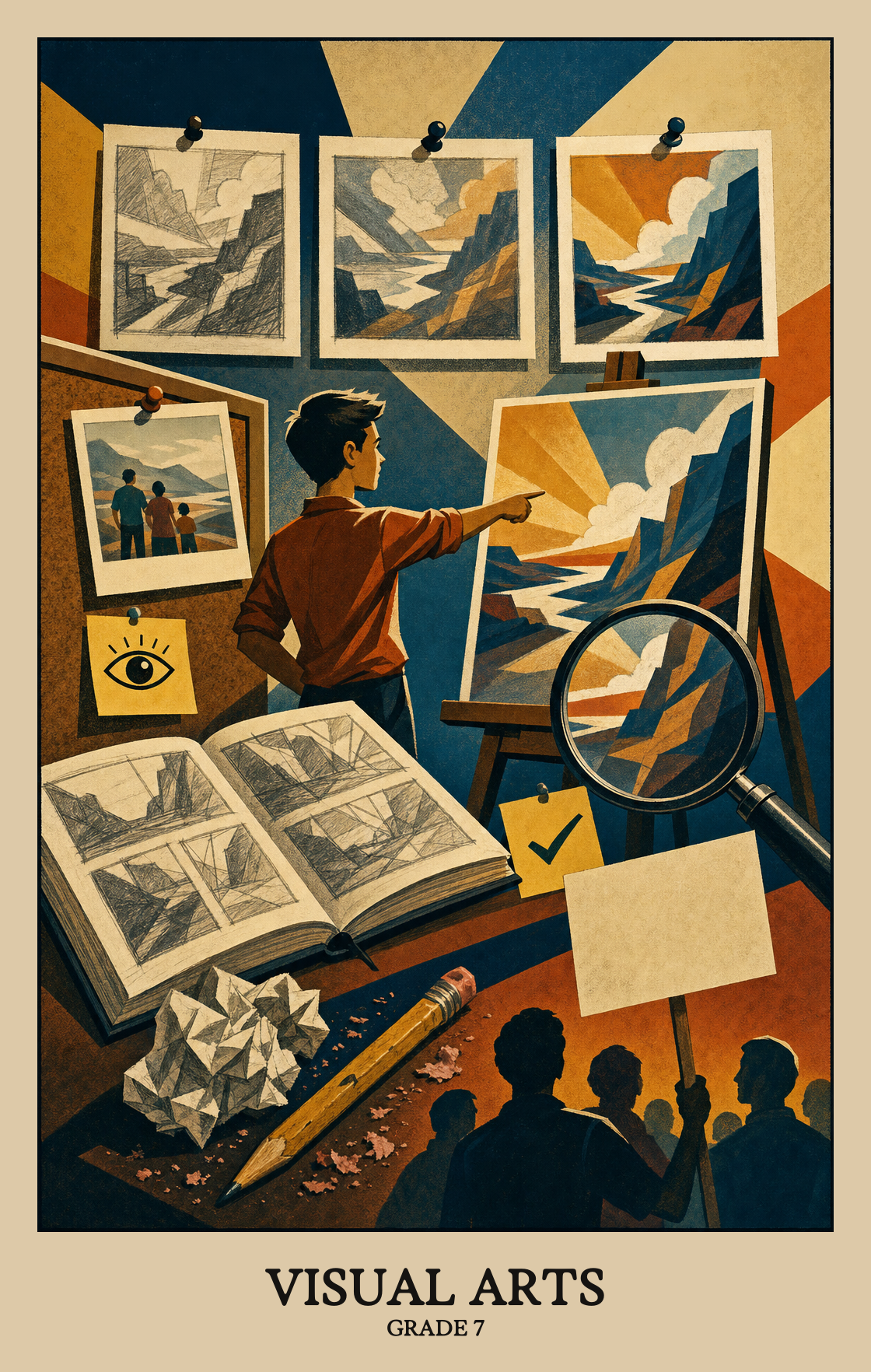
Students start the year by turning their own memories, interests, and observations into art ideas. Expect sketchbooks filling up with rough drawings, brainstorms, and notes that lead to a first project.
Students practice techniques in drawing, painting, and other hands-on media. The focus shifts from quick sketches to careful work, with time spent learning how to handle tools and fix mistakes along the way.
Students look at art from different cultures and time periods and think about why artists made the choices they did. They connect what they see to their own projects and start making art that says something.
Students learn to talk about art using specific reasons, not just whether they like it. They use a clear set of standards to evaluate their own pieces and the work of classmates, then revise based on what they notice.
Students choose pieces from the year, polish them, and decide how to present them. They think about how the setup, order, and framing of a show changes what viewers take away.
Students pull from what they already know and what they have lived through to make choices in their artwork. Personal experience becomes raw material, not just background.
Students look at a piece of art and ask where it came from: what was happening in the world, who made it, and why it mattered to that community. That context changes what the artwork means.
| Standard | Definition | Code |
|---|---|---|
| Using your own life to make art | Students pull from what they already know and what they have lived through to make choices in their artwork. Personal experience becomes raw material, not just background. | CA-VA:Cn10.7.7 |
| Art in its time and place | Students look at a piece of art and ask where it came from: what was happening in the world, who made it, and why it mattered to that community. That context changes what the artwork means. | CA-VA:Cn11.7.7 |
Students brainstorm ideas for original artwork, then sketch or plan how to turn those ideas into a finished piece.
Students take an early sketch or idea and refine it into a finished piece, making deliberate choices about composition, materials, and technique along the way.
Students revisit a piece of artwork, make deliberate changes based on their own judgment, and decide when the work is finished.
| Standard | Definition | Code |
|---|---|---|
| Coming up with ideas for your art | Students brainstorm ideas for original artwork, then sketch or plan how to turn those ideas into a finished piece. | CA-VA:Cr1.7.7 |
| Develop and organize your art ideas | Students take an early sketch or idea and refine it into a finished piece, making deliberate choices about composition, materials, and technique along the way. | CA-VA:Cr2.7.7 |
| Finishing and refining your artwork | Students revisit a piece of artwork, make deliberate changes based on their own judgment, and decide when the work is finished. | CA-VA:Cr3.7.7 |
Students look at several of their own artworks, decide which ones are strongest, and explain why those pieces are worth sharing with an audience.
Students review and revise their artwork before it goes on display, making deliberate choices about technique and finishing details until the piece is ready to show.
Students choose how to display or share their artwork so that the idea or feeling behind it comes through to the viewer.
| Standard | Definition | Code |
|---|---|---|
| Choosing art worth sharing with others | Students look at several of their own artworks, decide which ones are strongest, and explain why those pieces are worth sharing with an audience. | CA-VA:Pr4.7.7 |
| Refining artwork for display | Students review and revise their artwork before it goes on display, making deliberate choices about technique and finishing details until the piece is ready to show. | CA-VA:Pr5.7.7 |
| Sharing art that means something | Students choose how to display or share their artwork so that the idea or feeling behind it comes through to the viewer. | CA-VA:Pr6.7.7 |
Students look closely at a piece of art and explain what they notice, describing how the artist made specific choices to create meaning or mood.
Students look at an artwork and explain what they think the artist was trying to say, using specific details from the work to back up their reading.
Students look at a piece of artwork and judge it using a specific set of criteria, such as how well the artist used color, composition, or technique. They explain why the work succeeds or falls short, using evidence from the piece itself.
| Standard | Definition | Code |
|---|---|---|
| Reading and analyzing artwork | Students look closely at a piece of art and explain what they notice, describing how the artist made specific choices to create meaning or mood. | CA-VA:Re7.7.7 |
| Reading meaning in artwork | Students look at an artwork and explain what they think the artist was trying to say, using specific details from the work to back up their reading. | CA-VA:Re8.7.7 |
| Judging whether artwork meets its goals | Students look at a piece of artwork and judge it using a specific set of criteria, such as how well the artist used color, composition, or technique. They explain why the work succeeds or falls short, using evidence from the piece itself. | CA-VA:Re9.7.7 |
Students make their own art, think about why other artists made certain choices, and share finished pieces with an audience. They also learn to talk about art using specific reasons, not just whether they liked it.
Ask what the piece is about before asking if it looks good. Keep a small sketchbook around for doodles, photos, and clipped images. Ideas usually come from noticing things in daily life, not from waiting for inspiration.
At this age, students often compare their work to polished images online and give up early. Praise the thinking behind a piece, not the talent. Encourage them to redo or revise a drawing instead of starting over from scratch.
Most teachers start with idea generation and sketchbook habits, move into a few medium-focused projects, and end with a portfolio or exhibition piece students refine over several class periods. Building revision into each project matters more than covering more media.
Revision and critique. Students want to call a piece done after one pass, and they often give vague feedback like "it's cool." Plan short, structured critiques with sentence starters tied to specific criteria.
Students look at where an artwork came from, who made it, and what was happening at the time. A project on masks, portraits, or protest posters works well because students can compare their own choices to artists from other places and periods.
No. A pencil, an eraser, a cheap sketchbook, and access to a phone camera cover most at-home practice. Ten minutes of drawing from observation a few nights a week does more than any kit.
Students can take a piece from a rough idea through planning, drafts, and a finished version they can explain. They can also look at someone else's work and point to specific choices the artist made and the effect those choices have.