Exploring ideas and tools
Students start the year noticing media art around them, like videos, photos, and cartoons. They share ideas for their own projects and try out simple tools with a teacher's help.
This is the year students start making things with cameras, drawings, sounds, and simple computer tools. Students come up with ideas from their own lives, try them out, and share what they made with the class. They also look at media made by others and talk about what they see and how it makes them feel. By spring, students can plan a small project, finish it, and explain why they made it that way.
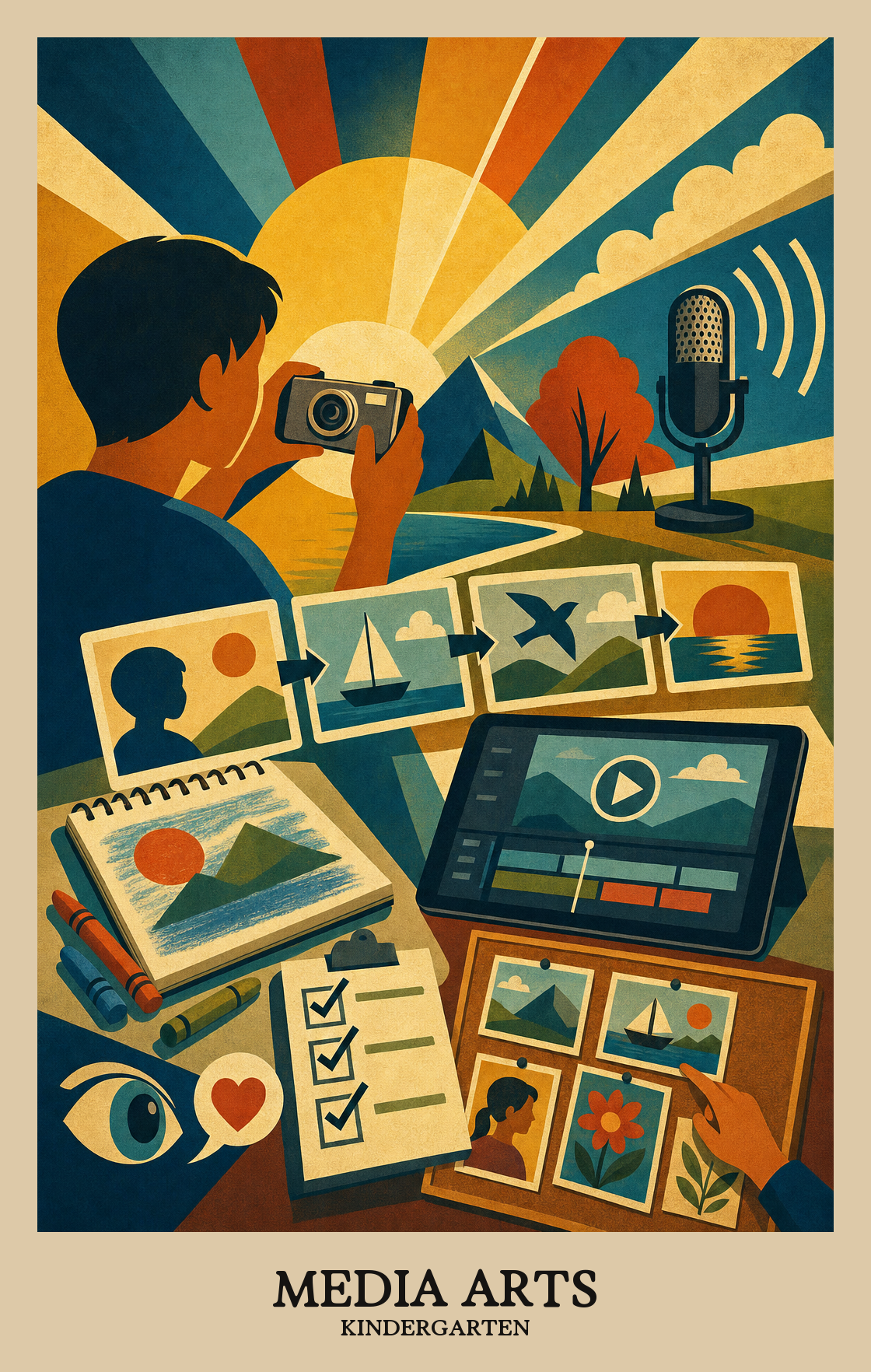
Students start the year noticing media art around them, like videos, photos, and cartoons. They share ideas for their own projects and try out simple tools with a teacher's help.
Students begin building small media projects, such as a digital drawing, a short recording, or a photo story. They learn to plan a little before they make and to keep going when something does not work the first time.
Students pick a favorite project and clean it up to show others. They practice presenting it to the class and talking about what their work is trying to say.
Students watch and look at media made by classmates and others. They describe what they see, guess what the maker meant, and say what they liked and what could be better.
Students connect what they already know and what they've lived through to the media art they make, using real memories or ideas as the starting point for their work.
Students look at a photo, drawing, or video and talk about where it came from or what was happening in the world when it was made.
| Standard | Definition | Code |
|---|---|---|
| Synthesize and relate knowledge and personal experiences to make art | Students connect what they already know and what they've lived through to the media art they make, using real memories or ideas as the starting point for their work. | MA:Cn10.k |
| Relate artistic ideas and works with societal, cultural | Students look at a photo, drawing, or video and talk about where it came from or what was happening in the world when it was made. | MA:Cn11.k |
Students come up with ideas for media art projects, like deciding what kind of picture, video, or sound to make before they start creating.
Students sort and arrange their media art ideas, like choosing which pictures or sounds go together, to build a simple project that makes sense to them.
Students finish a media arts project by looking it over and making small fixes before calling it done.
| Standard | Definition | Code |
|---|---|---|
| Generate and conceptualize artistic ideas and work | Students come up with ideas for media art projects, like deciding what kind of picture, video, or sound to make before they start creating. | MA:Cr1.k |
| Organize and develop artistic ideas and work | Students sort and arrange their media art ideas, like choosing which pictures or sounds go together, to build a simple project that makes sense to them. | MA:Cr2.k |
| Refine and complete artistic work | Students finish a media arts project by looking it over and making small fixes before calling it done. | MA:Cr3.k |
Students choose which of their media projects to share with the class and explain why they picked it.
Students practice and improve a media arts project (like a drawing, photo, or short video) until it is ready to share with others.
Students share a drawing, photo, or short video they made and explain what they wanted it to say or show.
| Standard | Definition | Code |
|---|---|---|
| Analyze, interpret, and select artistic work for presentation | Students choose which of their media projects to share with the class and explain why they picked it. | MA:Pr4.k |
| Develop and refine artistic techniques and work for presentation | Students practice and improve a media arts project (like a drawing, photo, or short video) until it is ready to share with others. | MA:Pr5.k |
| Convey meaning through the presentation of artistic work | Students share a drawing, photo, or short video they made and explain what they wanted it to say or show. | MA:Pr6.k |
Students look at photos, videos, or digital images and talk about what they notice. They describe what they see and share what they think it means.
Students look at a photo, video, or drawing and say what they think it means or how it makes them feel.
Students look at a piece of media art and say what they like about it and why. They practice using simple reasons to judge whether something works.
| Standard | Definition | Code |
|---|---|---|
| Perceive and analyze artistic work | Students look at photos, videos, or digital images and talk about what they notice. They describe what they see and share what they think it means. | MA:Re7.k |
| Interpret intent and meaning in artistic work | Students look at a photo, video, or drawing and say what they think it means or how it makes them feel. | MA:Re8.k |
| Apply criteria to evaluate artistic work | Students look at a piece of media art and say what they like about it and why. They practice using simple reasons to judge whether something works. | MA:Re9.k |
Students make and share work using things like cameras, tablets, drawings, sounds, and short videos. Most of the year is about exploring tools, telling small stories, and talking about what they see and hear.
Let students take photos, record short voice messages, or make a quick video of a pet or a toy. Ask them to tell the story behind it. Five minutes of play with a phone or tablet, with an adult nearby, goes a long way.
No. A phone camera, a tablet, paper, crayons, and a quiet corner cover almost everything at this age. The skill is in noticing, choosing, and explaining, not in the device.
Start with exploring one tool at a time, such as photos, then drawings on a tablet, then short recorded sounds. Move into tiny projects where students plan a picture or story, make it, and share it with the class.
A lot. Most growth this year comes from students saying what their picture or video is about, what they liked, and what they might change. Short turn-and-talks after a project work better than long discussions.
Ask what part they like and what part feels tricky. Then suggest one small change, like trying again with better light or a clearer voice. Kindergartners need to learn that redoing a piece is normal, not a punishment.
By spring, students can come up with an idea for a picture, photo, or short video, make it with some help, and tell a classmate what it means. They can also point to something they like in someone else's work and say why.