Getting ideas for media projects
Students start the year brainstorming ideas for videos, photos, audio, and digital art. They pull from their own lives and the media they already watch to plan projects worth making.
This is the year students start treating media projects like real productions, not one-off assignments. Students plan a video, podcast, or digital piece from idea to finished cut, making choices about audience and message along the way. They also learn to talk about media with more care, comparing their work to examples and explaining why something works. By spring, students can take a project from rough plan to polished final version and explain the choices behind it.
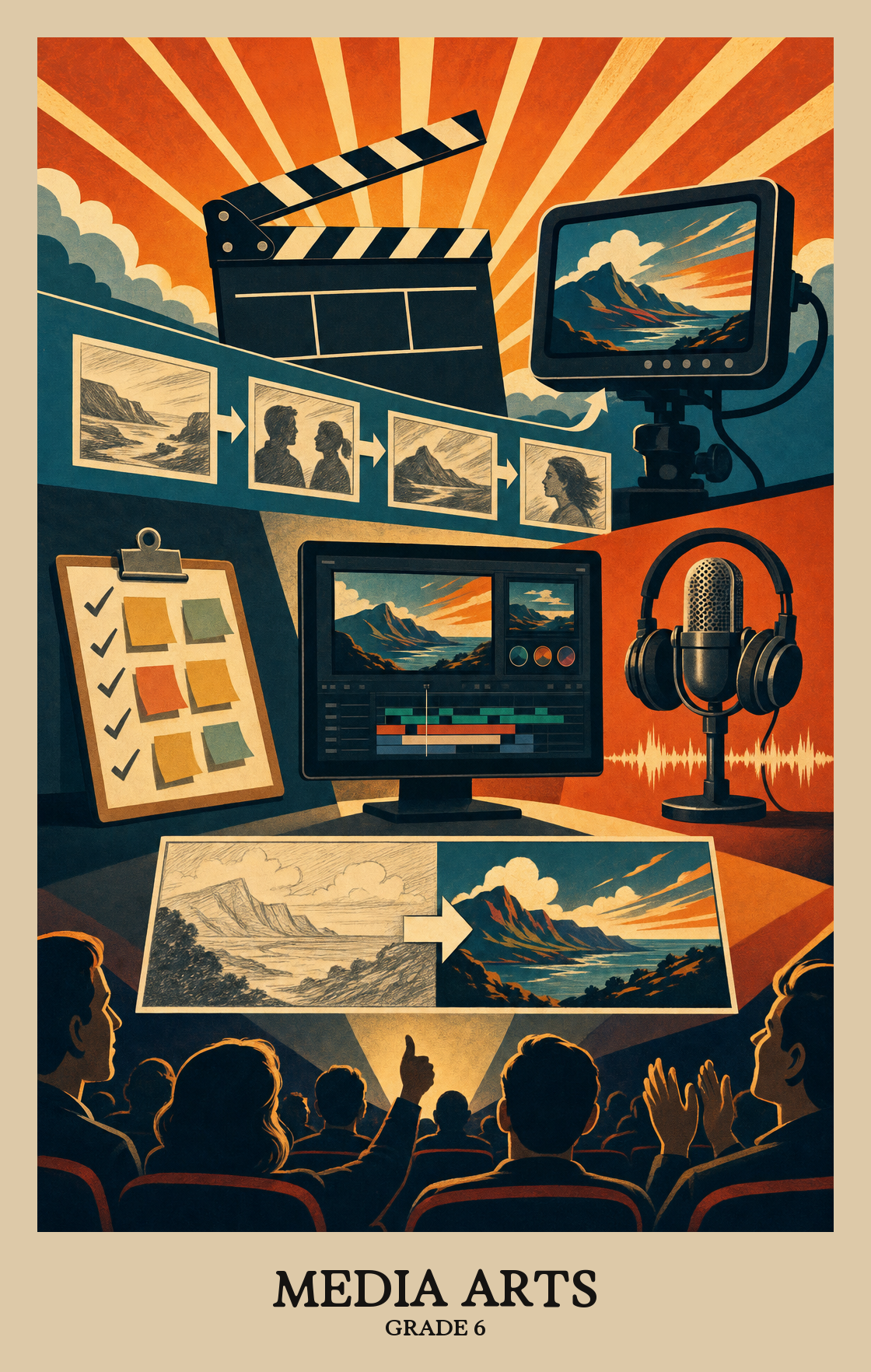
Students start the year brainstorming ideas for videos, photos, audio, and digital art. They pull from their own lives and the media they already watch to plan projects worth making.
Students move from idea to draft. They organize their plans, try out tools and techniques, and revise their work based on what is and is not landing.
Students slow down to study videos, ads, songs, and images other people made. They notice the choices behind each piece and talk about what those choices do to a viewer.
Students pick their strongest pieces and get them ready to share. They sharpen the craft, think about who will see it, and make sure the final version says what they meant it to say.
Students close the year by giving and receiving honest feedback. They use a set of criteria to judge their own projects and the work of classmates, and they connect what they make to the wider world.
Students connect something from their own life to a media arts project, using that personal experience to shape the choices they make while creating it.
Students look at a piece of media art and ask where it came from: what was happening in the world, who made it, and why. That context changes what the work means.
| Standard | Definition | Code |
|---|---|---|
| Synthesize and relate knowledge and personal experiences to make art | Students connect something from their own life to a media arts project, using that personal experience to shape the choices they make while creating it. | MA:Cn10.6 |
| Relate artistic ideas and works with societal, cultural | Students look at a piece of media art and ask where it came from: what was happening in the world, who made it, and why. That context changes what the work means. | MA:Cn11.6 |
Students brainstorm and develop original ideas for media art projects, choosing what story, message, or visual concept they want to explore before they start creating.
Students plan and refine a media project, making deliberate choices about images, sound, or text to shape the message they want to communicate.
Students review their media project with fresh eyes, fix what isn't working, and finish it to a standard they can stand behind.
| Standard | Definition | Code |
|---|---|---|
| Generate and conceptualize artistic ideas and work | Students brainstorm and develop original ideas for media art projects, choosing what story, message, or visual concept they want to explore before they start creating. | MA:Cr1.6 |
| Organize and develop artistic ideas and work | Students plan and refine a media project, making deliberate choices about images, sound, or text to shape the message they want to communicate. | MA:Cr2.6 |
| Refine and complete artistic work | Students review their media project with fresh eyes, fix what isn't working, and finish it to a standard they can stand behind. | MA:Cr3.6 |
Students review a collection of media projects and choose which ones to present, explaining what makes each piece worth sharing with an audience.
Students practice and improve a media art piece, such as a video or photo series, until it's ready to share with an audience. The focus is on refining the details that make the work clearer and stronger.
Students choose how to share a finished piece so the audience walks away with a clear idea or feeling the student intended.
| Standard | Definition | Code |
|---|---|---|
| Analyze, interpret, and select artistic work for presentation | Students review a collection of media projects and choose which ones to present, explaining what makes each piece worth sharing with an audience. | MA:Pr4.6 |
| Develop and refine artistic techniques and work for presentation | Students practice and improve a media art piece, such as a video or photo series, until it's ready to share with an audience. The focus is on refining the details that make the work clearer and stronger. | MA:Pr5.6 |
| Convey meaning through the presentation of artistic work | Students choose how to share a finished piece so the audience walks away with a clear idea or feeling the student intended. | MA:Pr6.6 |
Students look closely at a media artwork (a film clip, website, or ad) and explain what choices the creator made and why those choices shape how the audience responds.
Students explain what a media artist was trying to say and why specific choices, like color, sound, or camera angle, support that meaning.
Students look at a piece of media art and judge how well it works using a set of criteria. They explain what makes it effective or where it falls short, backing their opinion with specific reasons.
| Standard | Definition | Code |
|---|---|---|
| Perceive and analyze artistic work | Students look closely at a media artwork (a film clip, website, or ad) and explain what choices the creator made and why those choices shape how the audience responds. | MA:Re7.6 |
| Interpret intent and meaning in artistic work | Students explain what a media artist was trying to say and why specific choices, like color, sound, or camera angle, support that meaning. | MA:Re8.6 |
| Apply criteria to evaluate artistic work | Students look at a piece of media art and judge how well it works using a set of criteria. They explain what makes it effective or where it falls short, backing their opinion with specific reasons. | MA:Re9.6 |
Media arts is the class where students make things like short videos, podcasts, animations, slideshows, and digital images. Students learn how to plan a project, put the pieces together on a computer or phone, and share the final work with an audience.
By spring, students should be able to plan a short media project, gather their own images, sound, or video, edit it into a clear finished piece, and explain the choices they made. The work should have a clear message and feel intentional, not just thrown together.
Ask students to show a project and explain why they picked the music, the images, or the order of clips. Watching a short film or ad together and talking about what the maker was trying to say is also great practice, and it only takes a few minutes.
No. A phone camera, a free editing app, and a quiet spot to record audio cover almost everything sixth graders are asked to do. School devices and tools usually fill in the rest.
A common arc is to start with short, low-stakes projects that build one skill at a time, such as framing a shot or trimming audio. Move into projects that combine skills, then finish the year with a longer piece where students plan, produce, and revise on their own.
Planning before producing is the big one. Sixth graders often want to jump straight to filming or editing, so storyboards, shot lists, and clear goals for the piece are worth revisiting all year. Giving and using specific feedback during revision also takes practice.
Projects are judged on the idea, the craft of the finished piece, and how well students can explain their choices. A rough-looking video with a clear message and thoughtful revision often scores higher than a polished piece with no point.
Students should be able to start with an idea, sketch a plan, produce a short piece, take feedback, and revise without being walked through each step. They should also be able to look at someone else's work and say what is working and what could be stronger.