Moving safely and together
Students start the year learning how to share space, follow directions, and warm up before activity. They practice basic running, skipping, and stopping without bumping into classmates.
This is the year movement gets sharper and more on purpose. Students practice running, jumping, throwing, catching, and kicking with better control, and they start to notice how their heart, lungs, and muscles feel during activity. They also learn to play fair, take turns, and work with a partner without it falling apart. By spring, students can join a group game, follow the rules, and explain one reason staying active is good for them.
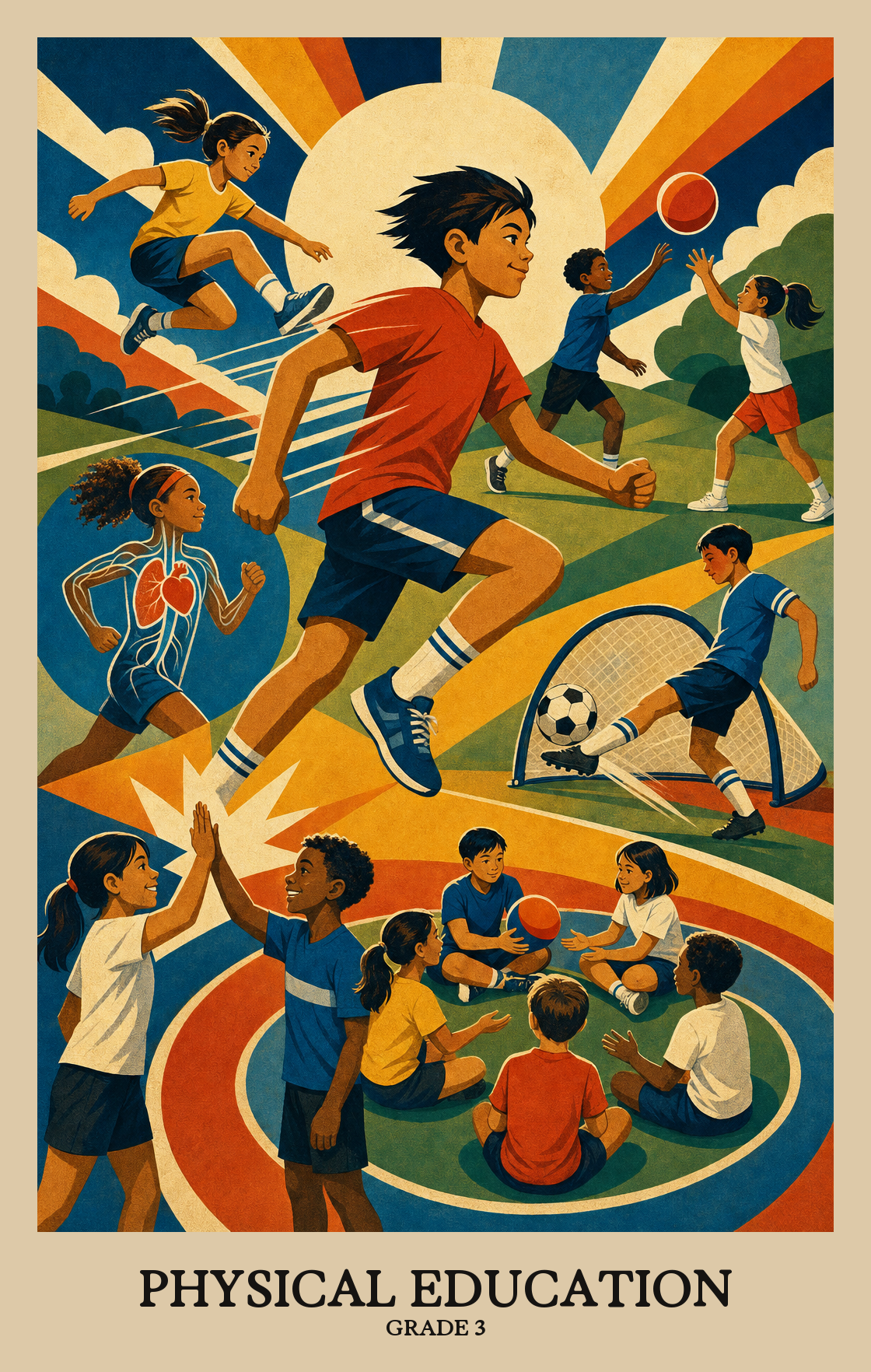
Students start the year learning how to share space, follow directions, and warm up before activity. They practice basic running, skipping, and stopping without bumping into classmates.
Students work on handling balls and other equipment with more control. They practice throwing to a partner, catching with two hands, and kicking toward a target.
Students put their skills into small group games and simple team activities. They take turns, cheer on classmates, and learn how to handle winning and losing.
Students learn how exercise affects the body and why a strong heart matters. They notice their breathing and pulse during activity and try out stretches and short fitness routines.
Students think about which activities they enjoy and how to keep moving outside of school. They set small personal goals and try rhythm, dance, or balance activities.
Students practice moving their bodies in different ways: running, jumping, balancing, throwing, and catching. Building these skills gives students the foundation to stay active in sports, games, and everyday movement.
Students connect what they know about how their body moves and stays healthy to make better choices during games, exercises, and active play.
Students practice working with classmates during movement activities: taking turns, listening, and following group rules. The focus is on treating others fairly and making responsible choices during physical activity.
Students practice physical skills and learn why staying active matters for their health. They make choices about movement that build habits they can carry into everyday life.
| Standard | Definition | Code |
|---|---|---|
| Develop a variety of motor skills, including locomotor, non-locomotor | Students practice moving their bodies in different ways: running, jumping, balancing, throwing, and catching. Building these skills gives students the foundation to stay active in sports, games, and everyday movement. | CT-PE.1.3 |
| Apply knowledge related to movement, performance | Students connect what they know about how their body moves and stays healthy to make better choices during games, exercises, and active play. | CT-PE.2.3 |
| Develop social skills through movement, including respect for self and others… | Students practice working with classmates during movement activities: taking turns, listening, and following group rules. The focus is on treating others fairly and making responsible choices during physical activity. | CT-PE.3.3 |
| Develop personal skills, identify personal benefits of movement | Students practice physical skills and learn why staying active matters for their health. They make choices about movement that build habits they can carry into everyday life. | CT-PE.4.3 |
Students should skip, gallop, jump, throw, catch, kick, and strike a ball with some control. They should also play simple games with classmates, follow rules, and explain why moving every day is good for the body.
Play catch in the yard, jump rope on the driveway, or kick a ball back and forth at the park. Ten minutes of active play most days is enough. Mix in different movements so students practice throwing one day and balancing or hopping the next.
Coordination grows with practice, not pressure. Start with bigger, softer balls and shorter distances, then make it harder as students get steadier. Praise the effort and the try, not just the catch.
A common arc moves from locomotor skills in the fall, to throwing, catching, and kicking in the winter, to striking and small-sided games in the spring. Revisit fitness concepts and cooperation every unit so they build instead of getting taught once and dropped.
Catching with the hands rather than the chest, throwing with the opposite foot forward, and striking with a steady eye on the ball are the usual sticking points. Plan short skill stations and quick cues rather than long whole-class drills.
Use small groups of two to four so every student touches the ball and has a role. Teach simple routines for taking turns, encouraging a partner, and handling disagreements before games start. Name the behavior when you see it.
Students should notice that their heart beats faster when they run, that muscles feel tired after climbing, and that stretching helps them move better. The goal is awareness and habit, not workouts or fitness tests.
Students should be able to join a game without much help, follow the rules, share equipment, and keep moving for most of a class period. They should also be able to talk about an activity they enjoy and do at home.