Movement skills and warm-up routines
Students start the year refreshing the basic moves used in most sports and games. They practice running, dodging, throwing, catching, and striking, and learn how to warm up safely before activity.
This is the year gym class turns into a personal fitness plan. Students sharpen the running, throwing, and dodging skills they have built since kindergarten, then connect those skills to why fitness matters for their own health. They practice working with teammates who frustrate them and leading warm-ups without a coach standing over them. By spring, students can name a sport or workout they actually enjoy and explain how it keeps their heart and body strong.
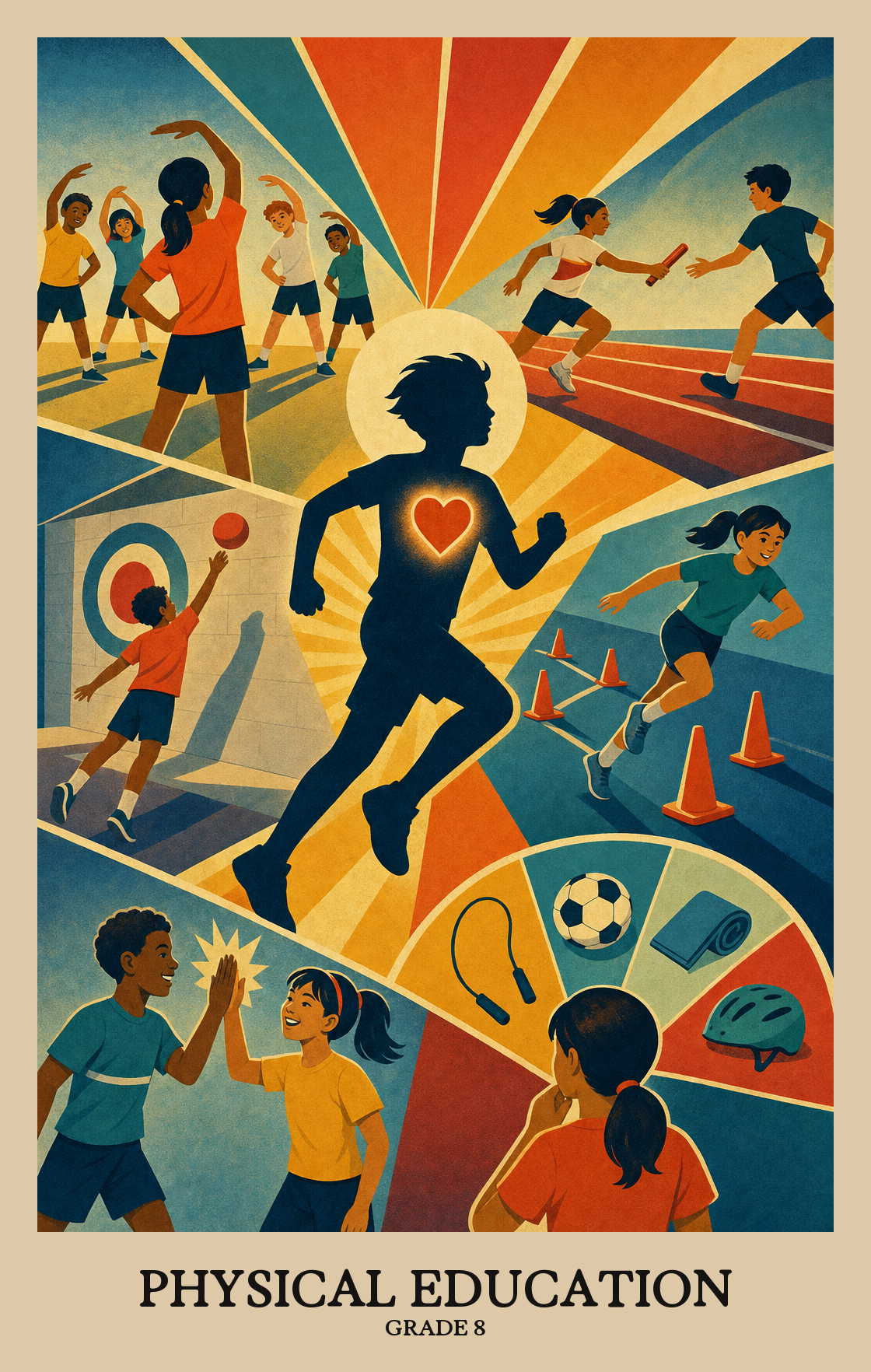
Students start the year refreshing the basic moves used in most sports and games. They practice running, dodging, throwing, catching, and striking, and learn how to warm up safely before activity.
Students put skills into team and partner games. They work on passing to open teammates, defending space, and talking through plays without putting each other down.
Students learn what builds strength, endurance, and flexibility, and try workouts that target each one. They check their own heart rate and set small goals to track over a few weeks.
Students explore activities they might keep doing as adults, from hiking to weight training to dance. They reflect on what they enjoy and plan a routine that fits their own life.
Students practice moving in different ways, like running, balancing, and throwing, to build the physical skills needed to stay active for life.
Students use what they know about how the body moves and stays fit to make better choices during exercise and physical activity.
Students practice working with others during physical activities: listening, taking turns, and handling wins or losses with respect. The focus is on how they treat teammates and opponents, not just how well they move.
Students identify which physical activities they enjoy and why, then make a plan to keep doing them. The goal is building habits that support health long after gym class ends.
| Standard | Definition | Code |
|---|---|---|
| Develop a variety of motor skills, including locomotor, non-locomotor | Students practice moving in different ways, like running, balancing, and throwing, to build the physical skills needed to stay active for life. | DE-PE.1.8 |
| Apply knowledge related to movement, performance | Students use what they know about how the body moves and stays fit to make better choices during exercise and physical activity. | DE-PE.2.8 |
| Develop social skills through movement, including respect for self and others… | Students practice working with others during physical activities: listening, taking turns, and handling wins or losses with respect. The focus is on how they treat teammates and opponents, not just how well they move. | DE-PE.3.8 |
| Develop personal skills, identify personal benefits of movement | Students identify which physical activities they enjoy and why, then make a plan to keep doing them. The goal is building habits that support health long after gym class ends. | DE-PE.4.8 |
Students build the skills and habits to stay active for life. They play team sports and individual activities, learn how their bodies respond to exercise, and practice working with others. The focus shifts from learning basic movements to using them well in real games and workouts.
Pick something the family can do together a few times a week, like a walk after dinner, a bike ride, or shooting hoops in the driveway. Aim for about 60 minutes of movement a day across school and home. Let students choose the activity when possible so it feels like fun, not homework.
Students should be able to play common sports and fitness activities with reasonable skill, warm up and cool down on their own, and explain why exercise matters. They should also work with a partner or team without needing constant reminders about fair play and effort.
Focus on effort and improvement, not winning. Try activities that do not depend on team skill, like hiking, swimming, dance, biking, or strength workouts. Many students find an activity they enjoy once they stop comparing themselves to the most athletic kids in class.
Start with the basics of warm-up, heart rate, and effort, then layer in the five components of fitness across units. Tie each concept to whatever activity the class is doing so students see why it matters. Revisit fitness testing at the start, middle, and end so students can track their own progress.
Cooperation and self-management often need the most work at this age. Students also tend to skip warm-ups, rush through skill practice, and need reminders about safe behavior in fast-moving games. Build short routines at the start of each class so these habits become automatic.
No. Grades reflect effort, skill growth, and how students treat classmates, not how athletic they are. A student who tries hard, follows the rules, and works well with others will do fine even if they are still learning the sport.
Offer two or three versions of each drill or game so students can pick a challenge that fits. Group flexibly based on the day's goal, not fixed ability. Lifetime activities like fitness circuits, dance, and outdoor pursuits often level the playing field better than traditional team sports.