Health basics and personal habits
Students start the year by learning how daily choices about sleep, food, movement, and stress affect their bodies and minds. They build a working vocabulary for talking about their own health.
This is the stretch when health class shifts from learning the rules to running their own lives. Students dig into the real pressures that shape their choices, like friends, social media, family habits, and stress, and they learn how to spot a trustworthy source from a sketchy one. They practice hard conversations, set goals they actually mean to keep, and think through decisions before making them. By spring, students can talk through a real health choice, name what is pushing on them, and lay out a plan they can stick to.
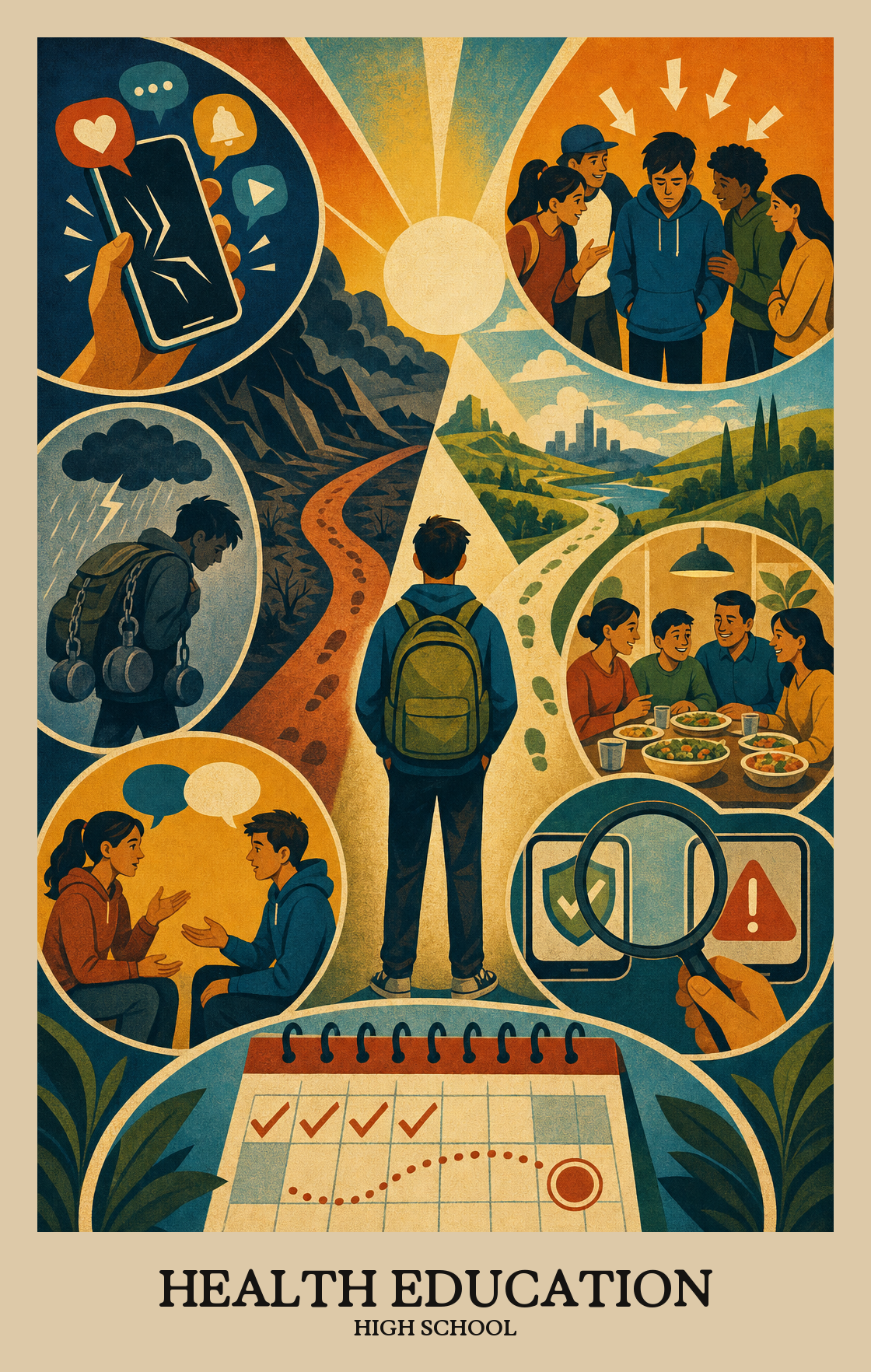
Students start the year by learning how daily choices about sleep, food, movement, and stress affect their bodies and minds. They build a working vocabulary for talking about their own health.
Students look at what shapes their choices, from family and friends to social media and ads. They practice telling a trustworthy source from a sketchy one when they look up a health question.
Students work on real conversations: saying no, asking for help, and handling conflict with friends or family. They walk through a step-by-step way to think before making a choice that affects their health.
Students set a personal health goal and track progress over time. They finish the year by speaking up for something that matters to them, whether it's a habit at home or an issue at school.
Students apply what they know about health, like how sleep, stress, or nutrition affects the body, to make real decisions for themselves and the people around them.
Students look at what shapes health choices, including ads, friends, family, and social media, and weigh how those pressures affect their own decisions and the people around them.
Students practice finding trustworthy sources, like a doctor's website or a public health hotline, when they have a health question. They learn to tell the difference between reliable information and unreliable information.
Students practice real conversations around hard topics, like setting limits with a friend or checking in on someone who seems off. The goal is handling those moments in a way that protects their health and the health of people around them.
Students work through a step-by-step decision-making process to weigh options and choose actions that protect their own health and the health of people around them.
Students pick a health goal, map out the steps to reach it, and track their progress. The focus can be their own well-being or someone else's.
Students practice real health habits, like washing hands, getting enough sleep, or checking in on a friend, that protect their own well-being and support the people around them.
Students choose a health issue that matters to them and take a real position on it, then communicate that stance to others through writing, speaking, or organized action.
| Standard | Definition | Code |
|---|---|---|
| Use functional knowledge of health concepts to support health and well-being of… High School | Students apply what they know about health, like how sleep, stress, or nutrition affects the body, to make real decisions for themselves and the people around them. | DE-HE.1.9-12 |
| Analyze influences that affect health and well-being of self and others High School | Students look at what shapes health choices, including ads, friends, family, and social media, and weigh how those pressures affect their own decisions and the people around them. | DE-HE.2.9-12 |
| Access valid and reliable resources to support health and well-being of self… High School | Students practice finding trustworthy sources, like a doctor's website or a public health hotline, when they have a health question. They learn to tell the difference between reliable information and unreliable information. | DE-HE.3.9-12 |
| Use interpersonal communication skills to support health and well-being of self… High School | Students practice real conversations around hard topics, like setting limits with a friend or checking in on someone who seems off. The goal is handling those moments in a way that protects their health and the health of people around them. | DE-HE.4.9-12 |
| Use a decision-making process to support health and well-being of self and… High School | Students work through a step-by-step decision-making process to weigh options and choose actions that protect their own health and the health of people around them. | DE-HE.5.9-12 |
| Use a goal-setting process to support health and well-being of self and others High School | Students pick a health goal, map out the steps to reach it, and track their progress. The focus can be their own well-being or someone else's. | DE-HE.6.9-12 |
| Demonstrate practices and behaviors to support health and well-being of self… High School | Students practice real health habits, like washing hands, getting enough sleep, or checking in on a friend, that protect their own well-being and support the people around them. | DE-HE.7.9-12 |
| Advocate to promote health and well-being of self and others High School | Students choose a health issue that matters to them and take a real position on it, then communicate that stance to others through writing, speaking, or organized action. | DE-HE.8.9-12 |
Students study how to take care of their bodies and minds across topics like nutrition, sleep, mental health, relationships, substance use, and safety. They also practice skills such as making decisions, talking through hard conversations, setting goals, and finding trustworthy information online.
Talk openly about everyday choices: what is for dinner, how much sleep students got, who they spent time with, how they handled a stressful day. Short, regular conversations matter more than one big talk. Modeling the habits helps too.
A common arc starts with mental and emotional health, moves into relationships and communication, then nutrition and physical activity, then substance use and safety, and closes with advocacy projects. Front-load the decision-making and goal-setting skills so students can reuse them in every later unit.
Students should be able to spot a health risk, find a credible source, weigh options, make a choice, and explain it. They should also be able to set a realistic goal, track it for a few weeks, and adjust when life gets in the way.
Skip the lecture and ask short questions while doing something else, like driving or cooking. Try openers such as what is something people at school are stressed about, or what would you do if a friend asked for advice. Listen more than respond.
Accessing valid sources and analyzing influences trip students up the most. They tend to trust the first search result and underestimate how much social media, peers, and marketing shape their choices. Build in repeated practice with real headlines, ads, and short video clips.
These topics are taught with clear ground rules, accurate information, and a focus on skills rather than scare tactics. Students learn warning signs, how to ask for help, and where to go for support. Parents can ask the teacher for the unit outline ahead of time.
Students pick a real health issue in the school or community, gather evidence, identify an audience, and propose a specific change. A short campaign, a letter to a decision-maker, or a peer presentation all work. The goal is a clear ask backed by reliable information.
Watch for students who can manage their own sleep, stress, and schedule, find accurate health information without help, and speak up for themselves at a doctor visit or with a roommate. If they can do those things in class scenarios, they are ready to do them on their own.