Setting personal fitness goals
Students start the year by checking their current fitness levels and writing goals they want to reach. They learn how to plan workouts that fit their own interests and schedules.
This is the year students start treating fitness as a personal plan, not a class requirement. Students pick activities they actually enjoy, track their own progress, and learn how warm-ups, pacing, and recovery affect performance. They also practice the social side of sport: communicating with teammates and handling competition without losing their cool. By spring, students can describe a weekly routine that keeps them active outside of school.
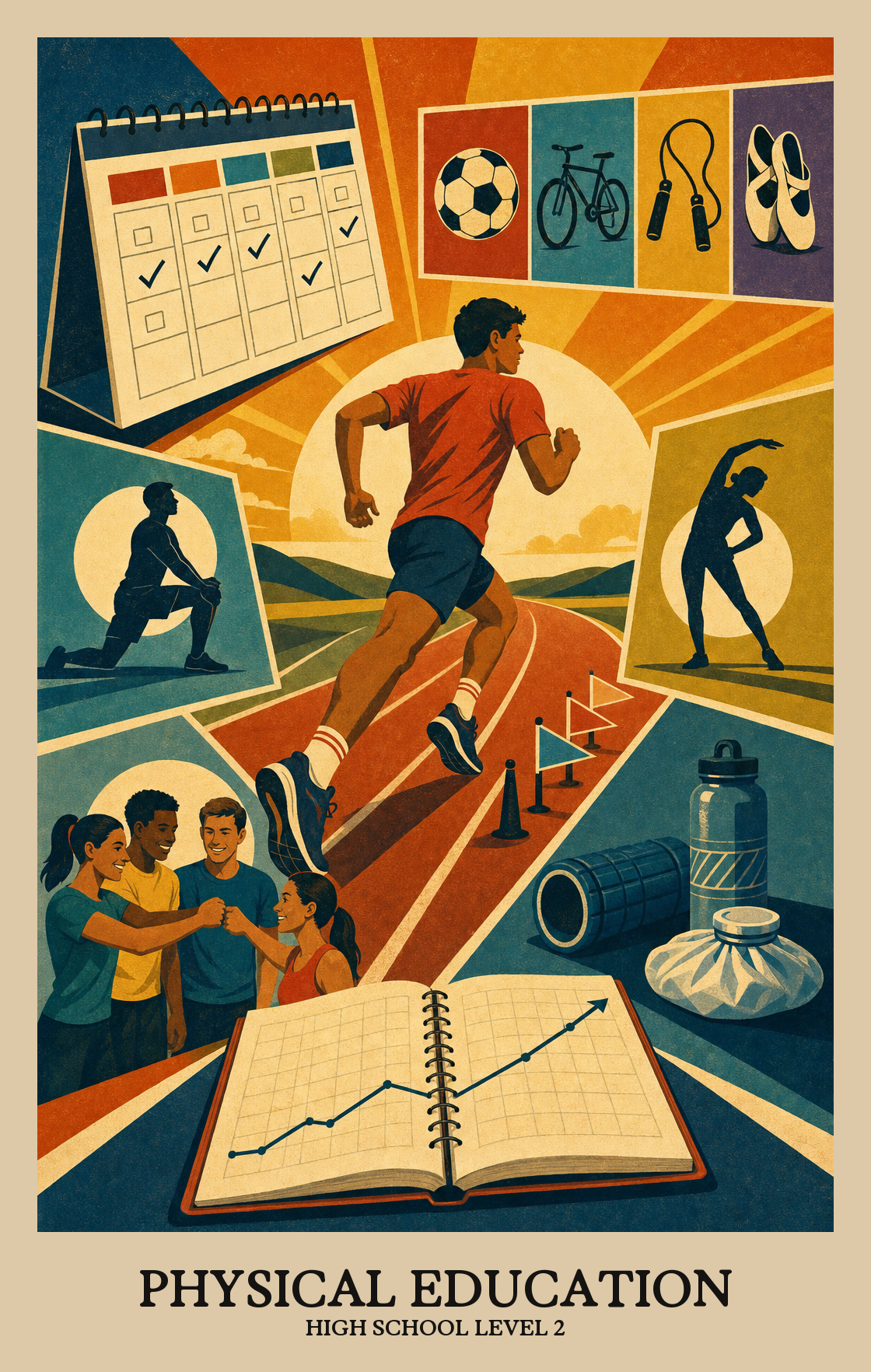
Students start the year by checking their current fitness levels and writing goals they want to reach. They learn how to plan workouts that fit their own interests and schedules.
Students practice a range of activities, from team sports to individual challenges. They sharpen movement skills like throwing, striking, and dodging while learning the rules and strategy behind each game.
Students focus on teamwork, fair play, and communication during activity. They practice leading a group, giving feedback to teammates, and handling competition with respect.
Students dig into how the body responds to exercise and how to train safely. They try activities like strength work, cardio, and flexibility routines that can carry into adult life.
Students reflect on what they enjoy and build a plan for staying active after the school year ends. They look at outside options like clubs, gyms, and community sports.
Students practice moving, balancing, and handling objects with enough skill to stay active for life. This standard covers the full range of physical movement, from running and jumping to throwing, catching, and pivoting.
Students connect what they know about how the body moves and stays fit to make smarter choices during physical activity. That means adjusting effort, form, or pacing based on what the activity actually demands.
Students practice working with others during physical activities by listening, cooperating, and handling wins and losses with respect. The focus is on how students treat teammates and opponents, not just how well they move.
Students identify what keeps them personally motivated to stay active, then build habits around movement they actually enjoy. The goal is staying healthy for life, not just for a grade or a season.
| Standard | Definition | Code |
|---|---|---|
| Develop a variety of motor skills, including locomotor, non-locomotor High School Level 2 | Students practice moving, balancing, and handling objects with enough skill to stay active for life. This standard covers the full range of physical movement, from running and jumping to throwing, catching, and pivoting. | DE-PE.1.hs-level-2 |
| Apply knowledge related to movement, performance High School Level 2 | Students connect what they know about how the body moves and stays fit to make smarter choices during physical activity. That means adjusting effort, form, or pacing based on what the activity actually demands. | DE-PE.2.hs-level-2 |
| Develop social skills through movement, including respect for self and others… High School Level 2 | Students practice working with others during physical activities by listening, cooperating, and handling wins and losses with respect. The focus is on how students treat teammates and opponents, not just how well they move. | DE-PE.3.hs-level-2 |
| Develop personal skills, identify personal benefits of movement High School Level 2 | Students identify what keeps them personally motivated to stay active, then build habits around movement they actually enjoy. The goal is staying healthy for life, not just for a grade or a season. | DE-PE.4.hs-level-2 |
Students build on basic sport and movement skills and start connecting them to fitness and lifelong habits. Expect a mix of team games, individual activities, and fitness work. By the end of the year, students should be able to design simple workouts and explain why staying active matters.
Find one activity students enjoy and make time for it a few days a week. Walking, biking, dancing, shooting hoops, or yoga all count. The goal is steady movement, not perfect form.
PE at this level is about personal fitness, not winning games. Students can meet expectations through hiking, weight training, swimming, dance, or any activity that gets the heart rate up. Helping students find one activity they like matters more than pushing a specific sport.
Many teachers open with fitness testing and goal setting, then rotate through team activities, individual and lifetime activities, and a fitness or conditioning unit. Revisit fitness concepts inside every unit so students see the connection. Close the year with a personal fitness plan students design and try.
Pacing during cardio work, proper form on strength exercises, and reading a heart rate are common gaps. Students also struggle to set realistic fitness goals and track progress over time. Build short check-ins into each unit so these skills stay sharp.
Watch for students who include classmates of different skill levels, communicate during team play, and handle losing or sitting out without conflict. Brief peer feedback tasks and small-group roles make these behaviors easier to observe. Rubrics with two or three clear behaviors work better than long checklists.
Aim for about 60 minutes of moderate to vigorous activity most days. That can be a sport practice, a walk with the dog, yard work, or a workout video. Sleep and time off screens help just as much as the activity itself.
Students should be able to explain how a workout targets strength, endurance, or flexibility, and adjust the workout if it feels too easy or too hard. They should also work with a partner or team without much teacher prompting. A written or spoken fitness plan is a good final check.