Movement skills and games
Students sharpen the basics of running, dodging, throwing, and catching in team games and individual activities. Expect them to come home talking about which sports clicked and which ones pushed them.
This is the year gym class shifts from learning the basics of a sport to using those skills in real games and workouts. Students apply what they know about fitness and movement to keep going longer, move smarter, and pace themselves. They also practice the social side of sports, like cooperating with teammates and handling competition without losing their cool. By spring, students can set a simple fitness goal and stick with an activity they enjoy outside of class.
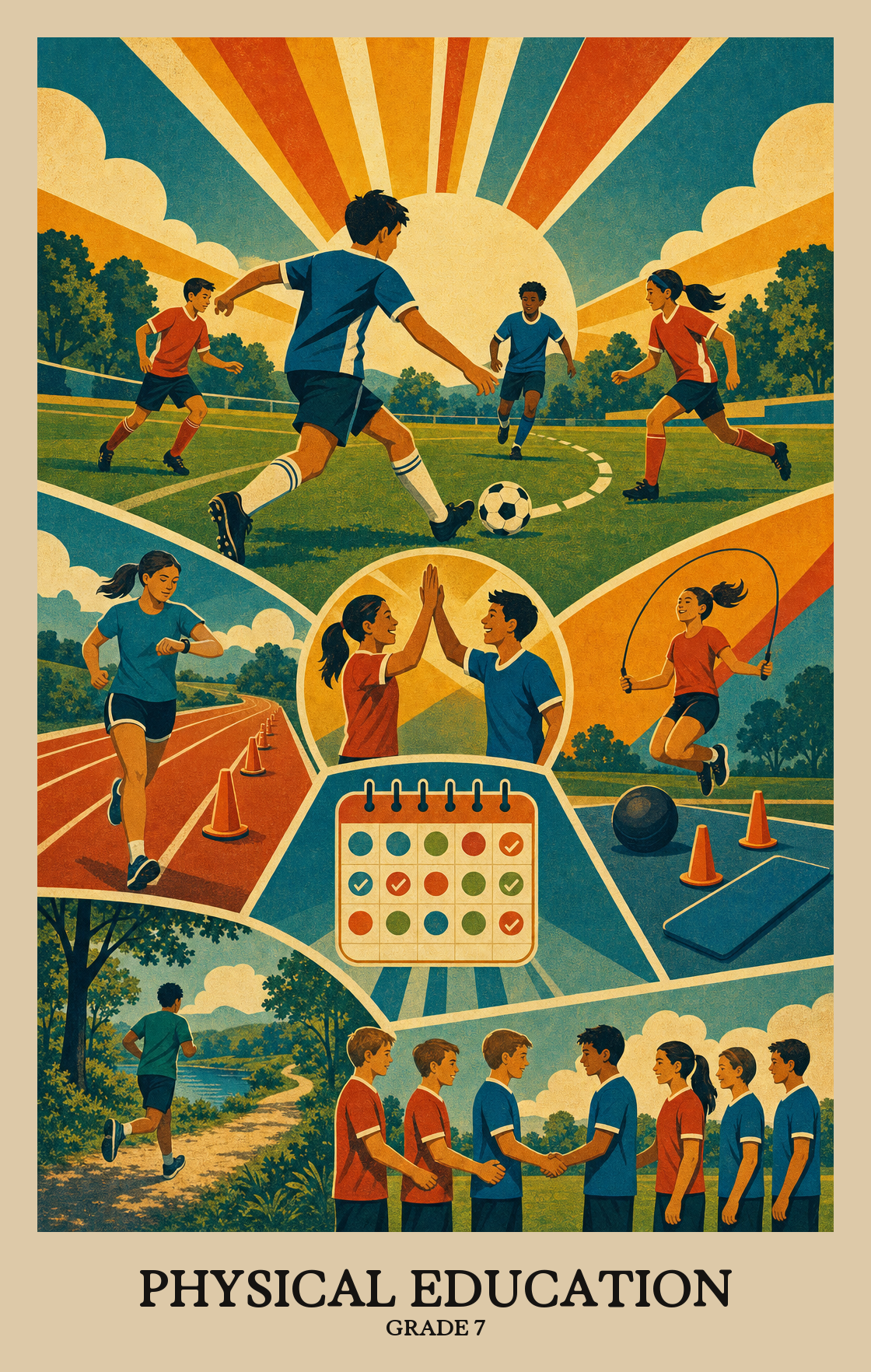
Students sharpen the basics of running, dodging, throwing, and catching in team games and individual activities. Expect them to come home talking about which sports clicked and which ones pushed them.
Students learn the why behind the workout. They start using terms like pacing, form, and target heart rate to explain what their body is doing during activity.
Students practice cooperating with classmates they did not choose, handling wins and losses, and calling their own fouls. Parents may notice steadier reactions to disappointment at home.
Students set personal goals, track progress, and find activities they actually want to keep doing outside of class. The aim is a habit that lasts past seventh grade.
Students practice moving, balancing, and handling equipment like balls and jump ropes in ways that build a foundation for staying active long-term.
Students connect what they know about how the body moves and stays fit to make better choices during physical activity. This standard is about using that knowledge in real situations, not just reciting it.
Students practice working with others during physical activities, taking turns, listening, and handling disagreements respectfully. The focus is on how students treat teammates and opponents, not just how well they move.
Students set personal fitness goals, name the benefits regular movement brings to their own health, and make choices that build a habit of staying active over time.
| Standard | Definition | Code |
|---|---|---|
| Develop a variety of motor skills, including locomotor, non-locomotor | Students practice moving, balancing, and handling equipment like balls and jump ropes in ways that build a foundation for staying active long-term. | DE-PE.1.7 |
| Apply knowledge related to movement, performance | Students connect what they know about how the body moves and stays fit to make better choices during physical activity. This standard is about using that knowledge in real situations, not just reciting it. | DE-PE.2.7 |
| Develop social skills through movement, including respect for self and others… | Students practice working with others during physical activities, taking turns, listening, and handling disagreements respectfully. The focus is on how students treat teammates and opponents, not just how well they move. | DE-PE.3.7 |
| Develop personal skills, identify personal benefits of movement | Students set personal fitness goals, name the benefits regular movement brings to their own health, and make choices that build a habit of staying active over time. | DE-PE.4.7 |
Students build on basic movement skills and apply them in real games and activities like volleyball, soccer, dance, and fitness circuits. They also learn how exercise affects the heart, lungs, and muscles, and how to work well with teammates.
Look for 30 to 60 minutes of moving each day. A walk after dinner, shooting hoops in the driveway, biking with a friend, or a weekend hike all count. Let students pick the activity when possible so they build habits they actually enjoy.
Steer the conversation toward effort and improvement instead of winning. Try activities that do not feel competitive, like hiking, swimming, or dance. The goal at this age is finding something active that feels good, not making a team.
A common pattern is to open with fitness testing and team invasion games in the fall, move to net and court games in the winter, then finish with striking, fielding, and individual fitness in the spring. Revisit cooperation and communication skills inside every unit instead of teaching them once.
Students can use skills like passing, dribbling, or striking inside a real game, not just in drills. They can explain why warm ups matter, take a resting heart rate, set a simple fitness goal, and work with a partner or small group without constant prompting.
No. Grades reward effort, participation, fair play, and growth in fitness, not athletic talent. Students who prefer individual activities like running, yoga, or biking can do very well in this class.
Game sense and decision making lag behind the physical skills. Students can pass and dribble in isolation but freeze when defenders show up. Small sided games with three or four players give more touches and force quicker reads than full sided games.
By spring, students should join a game without sitting out, recover after hard activity, and talk about fitness in basic terms like strength, endurance, and flexibility. They should also handle disagreements with teammates without needing a teacher to step in every time.