Knowing yourself
Students learn to name what they are feeling and notice how their moods shape their choices at school and at home. They start to spot their own strengths and the spots where they still need practice.
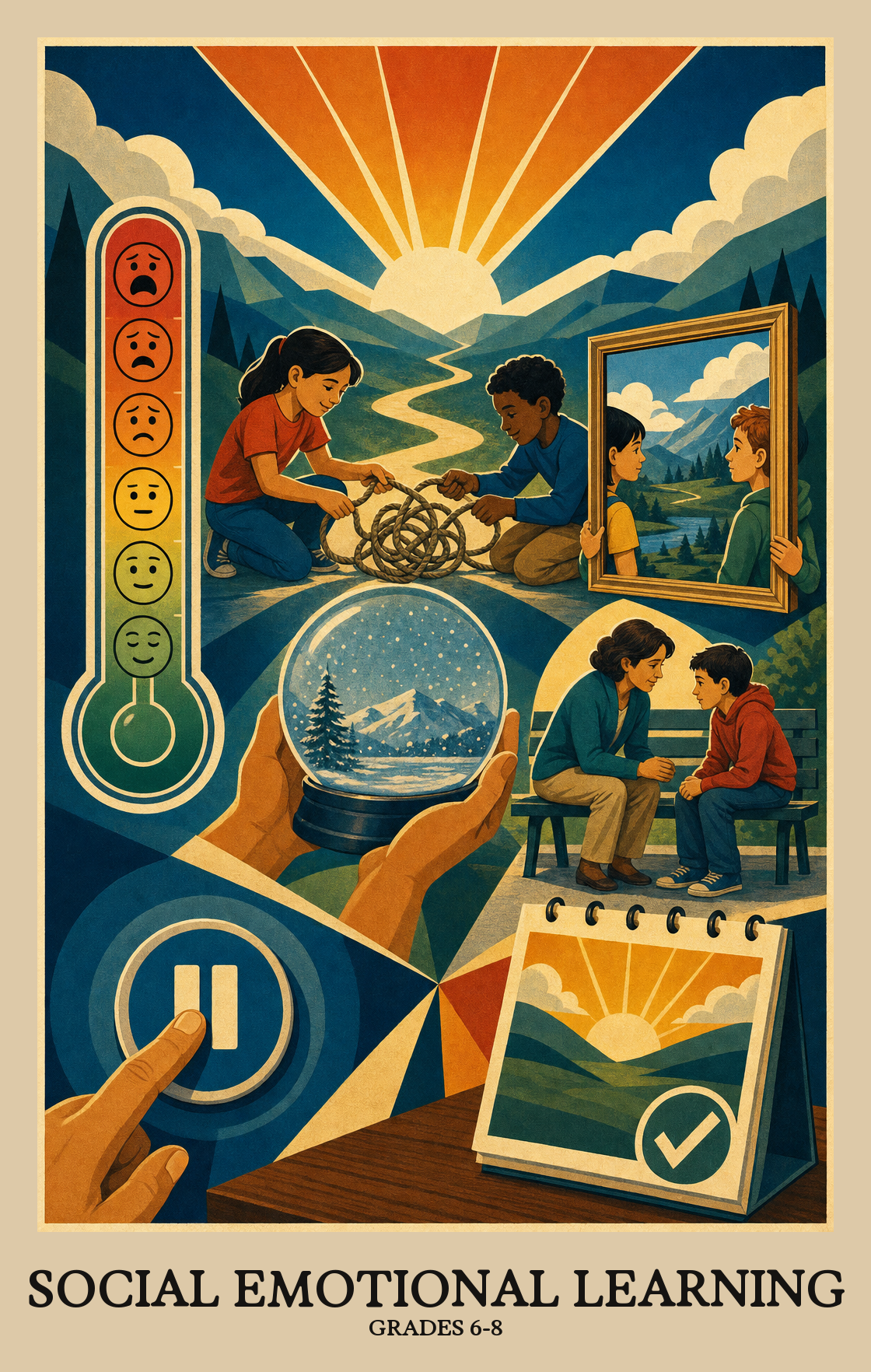
These are the middle school years when feelings get bigger and friendships get more complicated. Students learn to name what they are feeling, calm themselves down before reacting, and see a situation from someone else's side. They practice working through disagreements with friends and asking a trusted adult for help when something is too heavy to carry alone. By spring, students can pause before a big reaction, talk through a conflict, and make a choice they would still feel good about the next day.
Students learn to name what they are feeling and notice how their moods shape their choices at school and at home. They start to spot their own strengths and the spots where they still need practice.
Students practice calming down when stressed, pausing before reacting, and keeping track of assignments and time. The goal is steadier days and follow-through on goals they set for themselves.
Students work on understanding why classmates from different backgrounds may think or feel differently. They also learn who to turn to for help at school, at home, and around town.
Students practice clear communication, teamwork on group projects, and working through disagreements without things blowing up. They also learn how to ask for help and offer it to others.
Students weigh the upsides and downsides of a decision before acting, both online and in person. They think about how their choices affect themselves and the people around them.
Students learn to name their emotions, spot their own strengths and blind spots, and understand how their feelings shape the choices they make in different situations.
Students practice noticing their own emotions and reactions, then making choices that keep them on track. That includes managing stress, slowing down before acting, and staying organized enough to follow through on their goals.
Students practice seeing situations from someone else's point of view, including people with very different backgrounds. They also learn to identify adults and community resources they can turn to for help.
Students practice getting along with different kinds of people by listening well, working through disagreements, and asking for help or offering it when someone struggles.
Students practice weighing the likely outcomes of a choice before acting, thinking about how that choice affects other people as well as themselves. This applies to everyday decisions, from how they speak to someone to how they handle a disagreement.
| Standard | Definition | Code |
|---|---|---|
| The abilities to understand one's own emotions, thoughts Grades 6-8 | Students learn to name their emotions, spot their own strengths and blind spots, and understand how their feelings shape the choices they make in different situations. | DE-SEL.1.6-8 |
| The abilities to manage emotions, thoughts Grades 6-8 | Students practice noticing their own emotions and reactions, then making choices that keep them on track. That includes managing stress, slowing down before acting, and staying organized enough to follow through on their goals. | DE-SEL.2.6-8 |
| The abilities to understand the perspectives of and empathise with others… Grades 6-8 | Students practice seeing situations from someone else's point of view, including people with very different backgrounds. They also learn to identify adults and community resources they can turn to for help. | DE-SEL.3.6-8 |
| The abilities to establish and maintain healthy and supportive relationships… Grades 6-8 | Students practice getting along with different kinds of people by listening well, working through disagreements, and asking for help or offering it when someone struggles. | DE-SEL.4.6-8 |
| The abilities to make caring and constructive choices about personal behavior… Grades 6-8 | Students practice weighing the likely outcomes of a choice before acting, thinking about how that choice affects other people as well as themselves. This applies to everyday decisions, from how they speak to someone to how they handle a disagreement. | DE-SEL.5.6-8 |
Students work on knowing themselves, handling big feelings, getting along with others, and making good choices. The skills show up in real moments like a tough group project, a friendship fight, or a hard test. Practice happens in short conversations and check-ins, not in long lessons.
Notice when a student looks frustrated or shut down, then ask what is going on before offering advice. Help them name the feeling and pick one small next step, like a short walk, a snack, or finishing one thing on the homework list. Calm and short questions work better than a lecture.
Start with self-awareness and routines in the first weeks, when students are figuring out a new class. Move into managing emotions and goal setting once trust is built, then spend the back half of the year on perspective taking, conflict resolution, and decision making. Loop back to earlier skills whenever the group dynamic shifts.
Take it seriously and stay calm. Ask what is going on and listen without rushing to fix it. If the talk keeps coming up, or includes anything about hurting themselves, contact the school counselor or a doctor. Middle schoolers often say strong things in the moment, but patterns matter.
Impulse control, conflict resolution, and asking for help are the big ones. Students this age often know the right move but struggle to use it when emotions spike or friends are watching. Short repeated practice with real scenarios works better than a single big lesson.
Ask what happened, what they tried, and what they want to happen next. Resist the urge to call the other parent or solve it for them. Help them practice what to say in a calm moment, then let them handle it. Step in if there is bullying, threats, or anything unsafe.
Use texts, news stories, and class discussions where students hear from people whose lives look different from theirs. Ask questions like what might that person be feeling, or what would be hard about that situation. Pair this with clear norms so students can disagree without shutting each other down.
They can name what they feel, calm themselves down enough to keep working, and ask for help from an adult or peer when stuck. They can work with people they did not choose, handle a disagreement without it blowing up, and think about consequences before acting. Progress in these areas matters more than being perfect at any of them.