Moving safely and together
Students settle into the gym routine. They practice running, skipping, and stopping on cue while learning how to share space, take turns, and listen during games.
This is the year movement gets more skillful and more social. Students sharpen the basics like skipping, throwing, catching, and dribbling, and start combining them in games and group activities. They learn to cooperate with teammates, follow rules, and talk through disagreements without melting down. By spring, students can play a simple game with classmates, take turns, and explain one reason staying active is good for them.
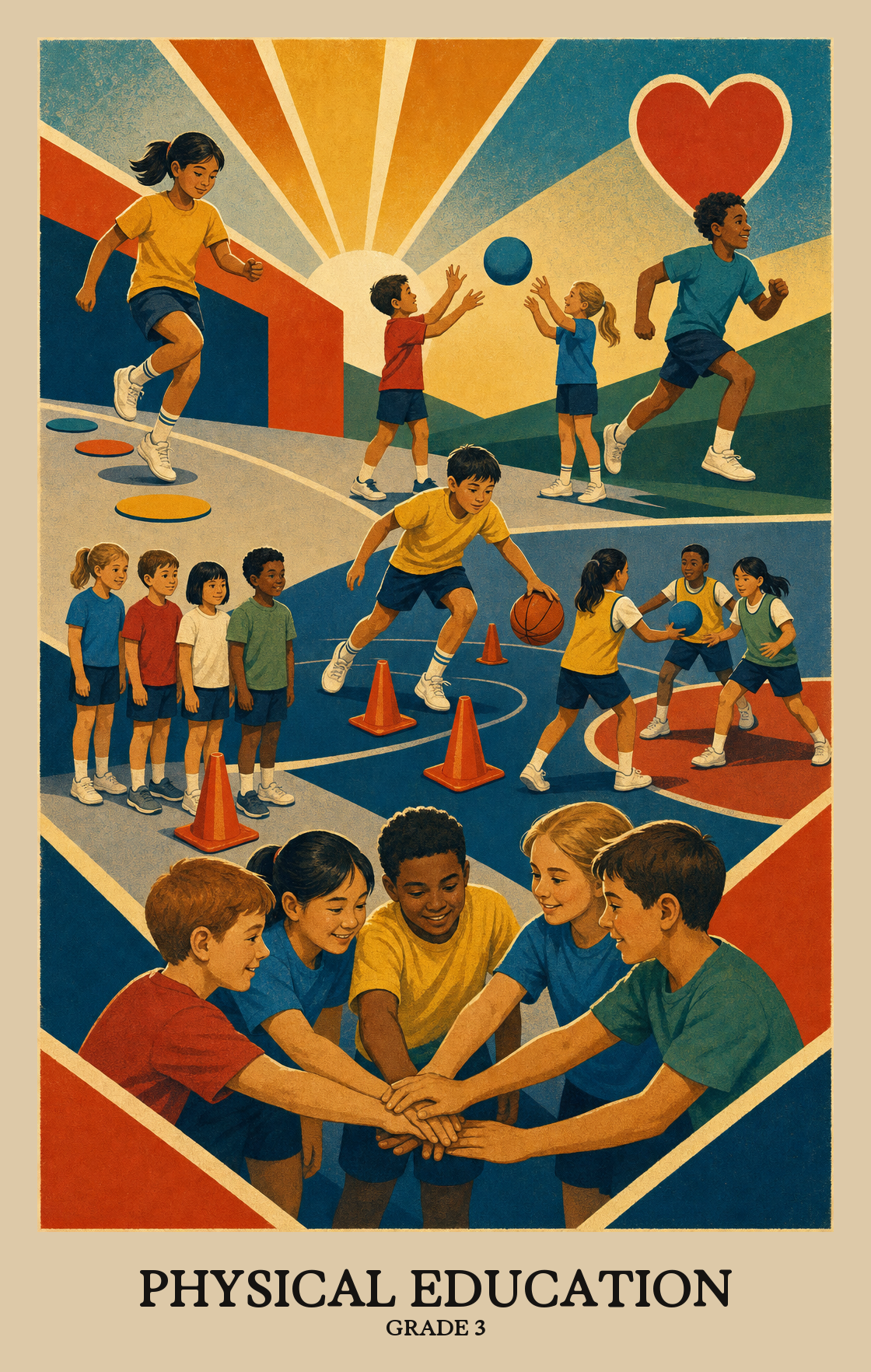
Students settle into the gym routine. They practice running, skipping, and stopping on cue while learning how to share space, take turns, and listen during games.
Students work on the building blocks of most sports. They throw and catch with a partner, kick a ball toward a target, and start to control where the ball goes.
Students learn why their heart beats faster during a game and what muscles are doing when they stretch or jump. They try short fitness activities and notice how their body feels.
Students put skills together in small group games. They practice good sportsmanship, encourage teammates, and handle winning and losing without it ruining the game.
Students reflect on which activities they enjoy and why moving feels good. They set small goals and think about ways to stay active at home, at recess, and on weekends.
Students practice moving in different ways: running, jumping, balancing, throwing, and catching. Building these basic movement skills gives them the physical foundation to stay active as they grow.
Students use what they know about how the body moves and stays healthy to take part in activities the right way. That might mean pacing themselves on a run or holding the right form when throwing.
Students practice working together and treating classmates fairly during movement activities. That means taking turns, listening, and making choices that help the group succeed.
Students practice movement skills and start recognizing what regular activity does for their body and mind. The goal is building habits they can carry into everyday life.
| Standard | Definition | Code |
|---|---|---|
| Develop a variety of motor skills, including locomotor, non-locomotor | Students practice moving in different ways: running, jumping, balancing, throwing, and catching. Building these basic movement skills gives them the physical foundation to stay active as they grow. | DE-PE.1.3 |
| Apply knowledge related to movement, performance | Students use what they know about how the body moves and stays healthy to take part in activities the right way. That might mean pacing themselves on a run or holding the right form when throwing. | DE-PE.2.3 |
| Develop social skills through movement, including respect for self and others… | Students practice working together and treating classmates fairly during movement activities. That means taking turns, listening, and making choices that help the group succeed. | DE-PE.3.3 |
| Develop personal skills, identify personal benefits of movement | Students practice movement skills and start recognizing what regular activity does for their body and mind. The goal is building habits they can carry into everyday life. | DE-PE.4.3 |
Students skip, gallop, hop, and jump with control. They throw, catch, kick, and dribble a ball with more accuracy than last year. They also follow game rules and take turns without needing constant reminders.
Play catch with a tennis ball, kick a soccer ball back and forth in the yard, or jump rope on the driveway. Ten minutes a day is plenty. The goal is steady practice, not a workout.
Focus on one skill at a time and keep it light. Bouncing a ball ten times in a row or hopping on one foot across the kitchen builds confidence quickly. Praise effort and improvement, not winning.
Start with locomotor patterns like skipping and galloping, then move into throwing, catching, and kicking. Save dribbling and striking for later units once balance and coordination are stronger. Revisit earlier skills inside new games.
Catching a ball with hands instead of trapping it against the chest is the big one. Overhand throwing form also tends to regress under game pressure. Build in short skill stations before each game day.
Offer two or three versions of the same task: a softer ball, a closer target, or a slower pace. Students pick the level that challenges them. This keeps everyone practicing instead of waiting.
Aim for about an hour of active play most days. It does not have to be a sport. Bike riding, tag, dancing in the kitchen, or walking the dog all count.
Students share equipment, take turns, and use kind words when a teammate misses. They also start to settle small disagreements without an adult stepping in. Model this by talking through wins and losses at home.
They can combine skills, like running and then throwing, or dribbling and then passing. They follow multi-step game rules and play fairly in small group games. Fitness routines like jogging laps or stretching feel familiar.