Health basics and daily habits
Students start the year by learning how sleep, food, movement, and hygiene affect how they feel and how they handle a school day. They practice small routines that protect their health at home and at school.
Middle school is when health class shifts from following rules to making real choices. Students learn how friends, family, and social media shape decisions about food, sleep, stress, and safety, and they practice spotting which sources actually give good advice. They work on talking through tough moments with peers and adults, setting a goal they can stick with, and speaking up for healthier habits at school or home. By spring, students can walk through a decision like handling peer pressure or a stressful situation and explain the steps they took.
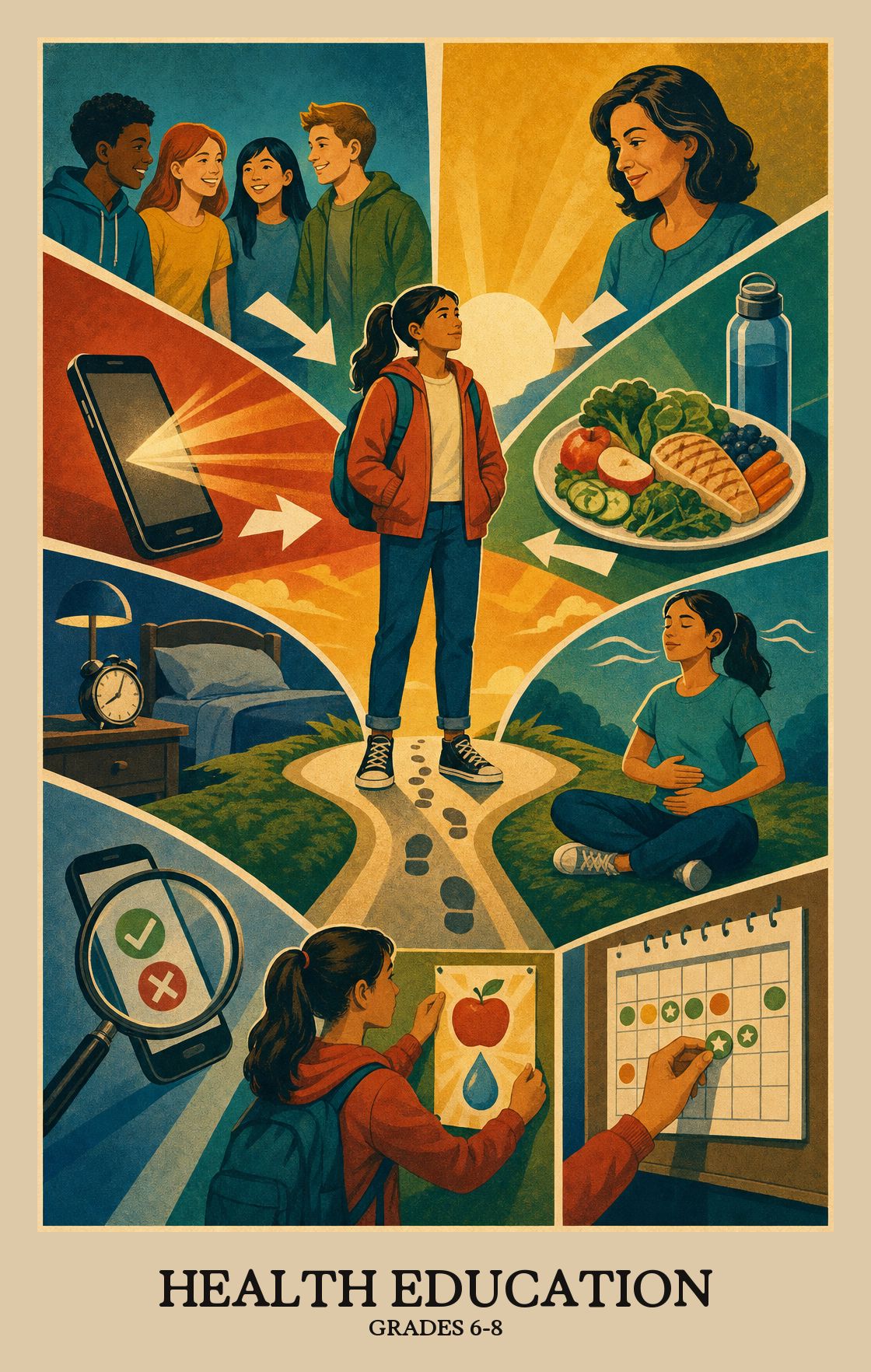
Students start the year by learning how sleep, food, movement, and hygiene affect how they feel and how they handle a school day. They practice small routines that protect their health at home and at school.
Students look at what shapes their decisions, from friends and family to phones, ads, and social media. They learn to notice when something is nudging them toward a choice that may not be good for them.
Students practice telling the difference between a reliable health source and a random post online. They learn which adults, websites, and services to turn to when they have a real question about their body or mind.
Students work on speaking up, listening well, and handling pressure from other kids. They practice clear ways to say no, ask for help, or step out of a situation that feels wrong.
Students walk through a step-by-step way to make a choice when something is hard, like a conflict with a friend or a tough moment online. They also set a small health goal and track their progress.
Students put the year together by practicing healthy behaviors and standing up for the health of others. They share what they have learned with classmates, family, or their school community.
Students apply what they know about health to make real decisions, like choosing how to handle stress, support a friend, or respond to a risky situation.
Students look at what shapes health choices, from friends and family to ads and social media, and explain how those pressures push people toward healthier or riskier decisions.
Students practice finding trustworthy sources, like a doctor's website or a public health hotline, to answer real health questions. The goal is knowing where to look and how to tell a good source from a bad one.
Students practice how to speak up, listen, and respond in ways that protect their own health and support the people around them.
Students practice a step-by-step process for making tough choices about health, like whether to act when a friend is in a risky situation. The focus is on thinking through options before deciding, not just going with a gut reaction.
Students pick a health goal, like getting more sleep or being more active, then map out the steps needed to reach it. The focus is on making a real plan, not just a wish.
Students practice real habits that keep themselves and the people around them healthier. That means making choices about sleep, food, stress, and relationships, then explaining why those choices matter.
Students make a case for healthier choices, whether for themselves or for their school and community. That means writing a letter, giving a speech, or building an argument that could actually change a policy or habit.
| Standard | Definition | Code |
|---|---|---|
| Use functional knowledge of health concepts to support health and well-being of… Grades 6-8 | Students apply what they know about health to make real decisions, like choosing how to handle stress, support a friend, or respond to a risky situation. | FL-HE.1.6-8 |
| Analyze influences that affect health and well-being of self and others Grades 6-8 | Students look at what shapes health choices, from friends and family to ads and social media, and explain how those pressures push people toward healthier or riskier decisions. | FL-HE.2.6-8 |
| Access valid and reliable resources to support health and well-being of self… Grades 6-8 | Students practice finding trustworthy sources, like a doctor's website or a public health hotline, to answer real health questions. The goal is knowing where to look and how to tell a good source from a bad one. | FL-HE.3.6-8 |
| Use interpersonal communication skills to support health and well-being of self… Grades 6-8 | Students practice how to speak up, listen, and respond in ways that protect their own health and support the people around them. | FL-HE.4.6-8 |
| Use a decision-making process to support health and well-being of self and… Grades 6-8 | Students practice a step-by-step process for making tough choices about health, like whether to act when a friend is in a risky situation. The focus is on thinking through options before deciding, not just going with a gut reaction. | FL-HE.5.6-8 |
| Use a goal-setting process to support health and well-being of self and others Grades 6-8 | Students pick a health goal, like getting more sleep or being more active, then map out the steps needed to reach it. The focus is on making a real plan, not just a wish. | FL-HE.6.6-8 |
| Demonstrate practices and behaviors to support health and well-being of self… Grades 6-8 | Students practice real habits that keep themselves and the people around them healthier. That means making choices about sleep, food, stress, and relationships, then explaining why those choices matter. | FL-HE.7.6-8 |
| Advocate to promote health and well-being of self and others Grades 6-8 | Students make a case for healthier choices, whether for themselves or for their school and community. That means writing a letter, giving a speech, or building an argument that could actually change a policy or habit. | FL-HE.8.6-8 |
Students learn how their choices affect their bodies, minds, and friendships. They practice habits like sleep, food, exercise, and stress management, and they talk through real situations like peer pressure, online life, and asking an adult for help.
Pick one habit at a time and make it normal at home, like a regular bedtime, water with meals, or a short walk after dinner. Talking about what worked and what got in the way matters more than being perfect.
Start with the basics that touch every other unit, like sleep, food, movement, and feelings. Build into social topics such as friendships, communication, and refusal skills, then move to decisions about safety, substances, and online life once trust is established.
Short, low-pressure moments work better than sit-down talks. Bring up a question in the car, at dinner, or while watching a show, and let the answer be a few words. Coming back to it later is fine.
Students compare sources and learn which sites, adults, and clinics are trustworthy. At home, look up a question together and ask why one source seems more careful than another.
Students pick a small, specific goal, plan the steps, track progress for a couple of weeks, and adjust. A goal like drinking more water or going to bed by 10 works better than a vague goal like being healthier.
Students practice a simple process: name the choice, list options, think through what could happen, and pick the next step. Role-play with scenarios about substances, online messages, and friendship conflicts so the process feels familiar before it is needed.
Students should explain how habits affect health, find a trusted source, talk through a decision out loud, set a realistic goal, and speak up for themselves or a friend. Performance tasks and short conferences show this better than a final test.
Most assignments are short reflections, family interviews, or habit trackers. Asking about one thing learned this week is usually enough to keep the conversation going at home.