Finding ideas worth making
Students start the year by turning personal experiences, memories, and questions into starting points for art. They keep a sketchbook of ideas and try out different approaches before settling on a direction.
This is the year art moves from making projects to making choices students can defend. Students plan a piece with a clear idea behind it, then revise it based on feedback before it goes on the wall. They learn to talk about why an artist made certain choices and how time and place shaped the work. By spring, students can show a finished piece and explain what it means and how they made it.
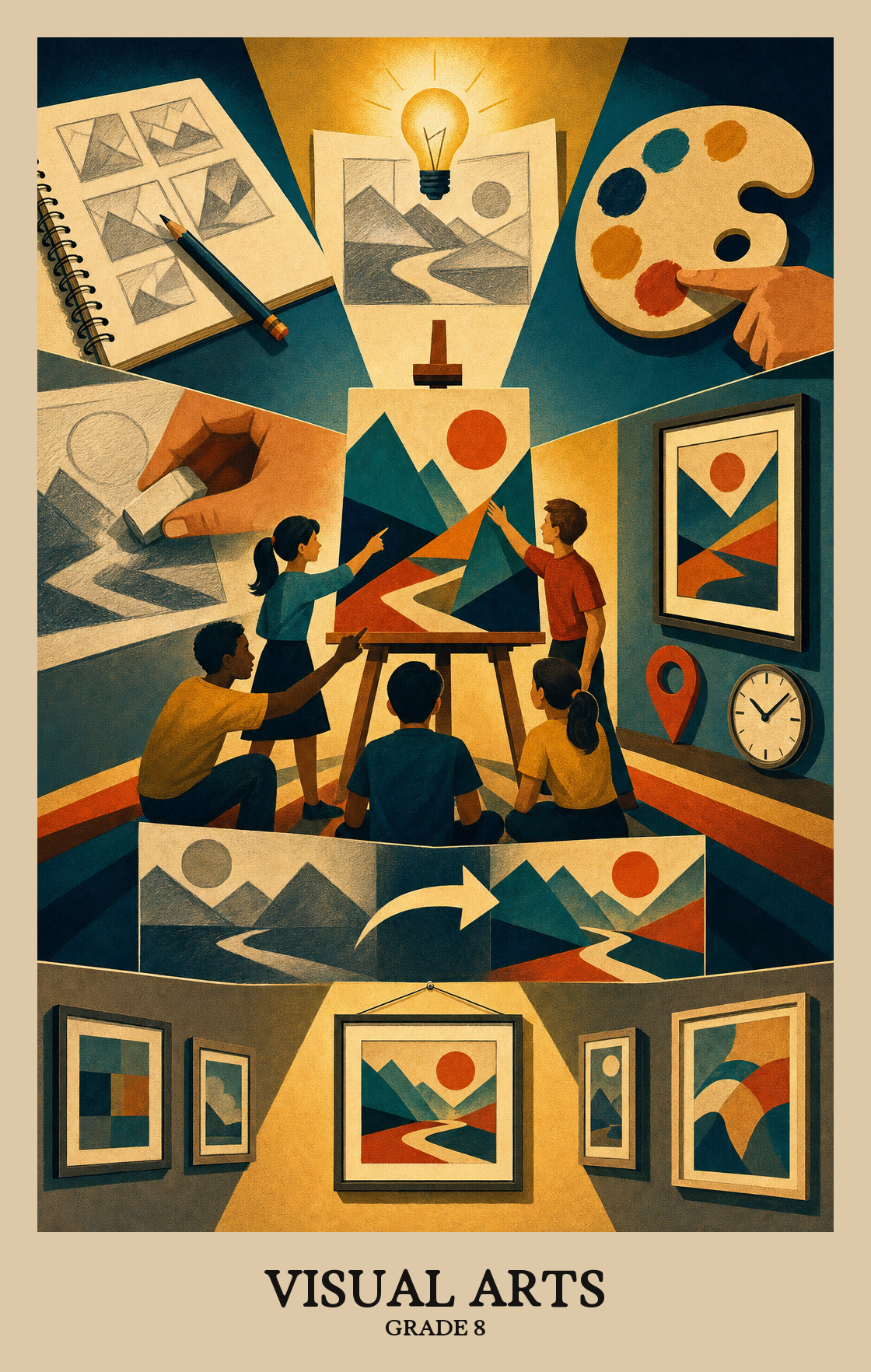
Students start the year by turning personal experiences, memories, and questions into starting points for art. They keep a sketchbook of ideas and try out different approaches before settling on a direction.
Students practice techniques in drawing, painting, sculpture, or digital tools. They learn how choices about line, color, and texture change what a piece says to a viewer.
Students study artwork from different cultures and time periods and talk about what the artist might have meant. They use specific reasons to explain why a piece works or does not.
Students take a project from rough draft to finished work, reworking parts based on feedback. They learn that strong art usually goes through several rounds of changes.
Students choose pieces for a show or portfolio and decide how to display them so the meaning comes through. They write or speak about the choices behind their work.
Students pull from what they know and what they've lived through to make creative choices in their artwork. Personal experience becomes part of the work itself.
Students examine a painting, sculpture, or other artwork by asking when and where it was made and what was happening in the world at the time. That context changes what the work means.
| Standard | Definition | Code |
|---|---|---|
| Synthesize and relate knowledge and personal experiences to make art | Students pull from what they know and what they've lived through to make creative choices in their artwork. Personal experience becomes part of the work itself. | VA:Cn10.8 |
| Relate artistic ideas and works with societal, cultural | Students examine a painting, sculpture, or other artwork by asking when and where it was made and what was happening in the world at the time. That context changes what the work means. | VA:Cn11.8 |
Students brainstorm and develop original ideas before picking up a brush or pencil. They plan what they want to make and why, thinking through concepts before starting the actual work.
Students take a visual idea from rough sketch to finished piece, making deliberate choices about composition, materials, and technique along the way.
Students revisit a piece of art they started, fix what isn't working, and bring it to a finished state. The focus is on making deliberate choices to improve the work before calling it done.
| Standard | Definition | Code |
|---|---|---|
| Generate and conceptualize artistic ideas and work | Students brainstorm and develop original ideas before picking up a brush or pencil. They plan what they want to make and why, thinking through concepts before starting the actual work. | VA:Cr1.8 |
| Organize and develop artistic ideas and work | Students take a visual idea from rough sketch to finished piece, making deliberate choices about composition, materials, and technique along the way. | VA:Cr2.8 |
| Refine and complete artistic work | Students revisit a piece of art they started, fix what isn't working, and bring it to a finished state. The focus is on making deliberate choices to improve the work before calling it done. | VA:Cr3.8 |
Students review a collection of their own artwork and choose specific pieces to display, explaining why each one best represents their skills or ideas.
Students revisit a piece of artwork, make deliberate improvements, and prepare it to show others. The focus is on refining the craft, not just finishing.
Students choose how to display or share their artwork so the viewer understands what the piece is about. The way it's presented is part of the message.
| Standard | Definition | Code |
|---|---|---|
| Analyze, interpret, and select artistic work for presentation | Students review a collection of their own artwork and choose specific pieces to display, explaining why each one best represents their skills or ideas. | VA:Pr4.8 |
| Develop and refine artistic techniques and work for presentation | Students revisit a piece of artwork, make deliberate improvements, and prepare it to show others. The focus is on refining the craft, not just finishing. | VA:Pr5.8 |
| Convey meaning through the presentation of artistic work | Students choose how to display or share their artwork so the viewer understands what the piece is about. The way it's presented is part of the message. | VA:Pr6.8 |
Students look closely at a piece of art and describe what they notice: the choices the artist made, how the work is put together, and what effect those choices create.
Students look closely at a piece of art and explain what the artist was trying to say. They back up their reading with details from the work itself, not just a gut feeling.
Students use a set of criteria, like a checklist or rubric, to judge whether a piece of art is working and explain why.
| Standard | Definition | Code |
|---|---|---|
| Perceive and analyze artistic work | Students look closely at a piece of art and describe what they notice: the choices the artist made, how the work is put together, and what effect those choices create. | VA:Re7.8 |
| Interpret intent and meaning in artistic work | Students look closely at a piece of art and explain what the artist was trying to say. They back up their reading with details from the work itself, not just a gut feeling. | VA:Re8.8 |
| Apply criteria to evaluate artistic work | Students use a set of criteria, like a checklist or rubric, to judge whether a piece of art is working and explain why. | VA:Re9.8 |
Students make art that connects to their own lives and the world around them. They work through ideas, try out techniques, and finish pieces they can talk about. They also study art from different cultures and time periods, and learn to talk about what art means.
Ask about the choices behind a piece, not whether it looks good. Questions like why a color was picked or what the piece is about open up real thinking. Keep simple supplies around, such as pencils, paper, and scissors, and let students sketch ideas before starting.
A common path starts with idea generation and sketchbook habits, moves into building technical skills in a few media, and ends with a portfolio or exhibition piece. Weave in art history and critique throughout so students have references when they plan their own work.
No. A sketchbook, pencils, an eraser, and a small set of markers or colored pencils cover most home practice. The thinking and revision matter more than the materials.
Revision is the hardest shift. Students often want to finish a piece in one sitting instead of refining it. Critique language also needs steady practice, since students tend to say a piece is good or bad without pointing to specific choices.
Students can take an idea from a sketch to a finished piece, explain the choices they made, and connect their work to a cultural or historical reference. They can also look at someone else's art and describe what it means and how it was made.
Sit with the frustration before fixing it. Ask what the piece is supposed to say and what part is not working yet. Suggest setting it aside for a day, or trying a small version on scrap paper first. Starting over is sometimes the right call.
Short and frequent works better than long units. Ten minutes a week looking at one artwork, naming what students notice, and tying it to a culture or period gives them a reference bank they can pull from when planning their own pieces.
Students should keep a sketchbook, finish what they start, and talk about their work with specific words instead of just liking or disliking it. Being open to feedback and willing to revise matters more than natural talent.