Moving well on your own
Students sharpen the basics of running, jumping, skipping, and balancing. They learn to control their bodies in space so they can keep up in any game or activity.
This is the year P.E. shifts from learning basic moves to combining them in real games and routines. Students sharpen running, jumping, throwing, catching, and kicking, and start using fitness ideas like pacing, stretching, and heart rate to plan how they play. They also practice teamwork: taking turns, calling out plays, and handling wins and losses. By spring, students can lead a warm-up and explain why staying active matters.
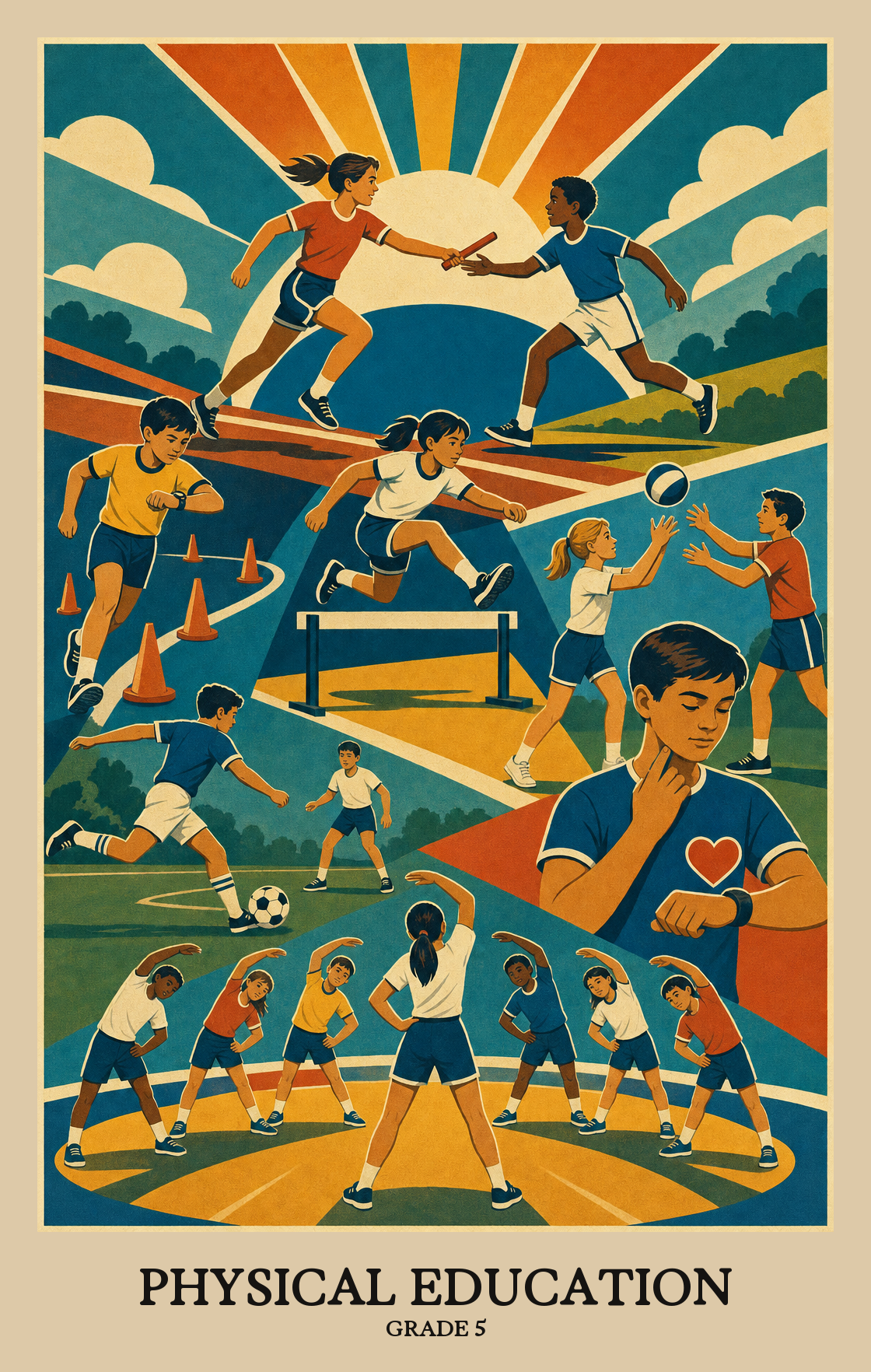
Students sharpen the basics of running, jumping, skipping, and balancing. They learn to control their bodies in space so they can keep up in any game or activity.
Students practice throwing, catching, kicking, dribbling, and striking. These skills carry over into games at recess and most team sports students will try later.
Students learn what makes a workout count. They explore heart rate, strength, flexibility, and warm-ups, and they use that knowledge to play harder and stay safe.
Students practice teamwork during games. They take turns, follow rules, settle small disagreements, and show respect to teammates and opponents.
Students set personal goals, track their progress, and find activities they actually enjoy. The aim is to leave fifth grade with habits that stick beyond the gym.
Students practice moving their bodies in different ways: running, jumping, balancing, throwing, and catching. Building these skills gives students more ways to stay active as they grow.
Students use what they know about how the body moves and stays healthy to make better choices during games, exercise, and physical activity.
Students practice working with others during physical activities: taking turns, listening, and handling wins and losses without drama. The focus is on how students treat teammates and opponents, not just how well they move.
Students practice setting goals around staying active and reflect on how movement makes them feel. The focus is building habits that stick past gym class.
| Standard | Definition | Code |
|---|---|---|
| Develop a variety of motor skills, including locomotor, non-locomotor | Students practice moving their bodies in different ways: running, jumping, balancing, throwing, and catching. Building these skills gives students more ways to stay active as they grow. | FL-PE.1.5 |
| Apply knowledge related to movement, performance | Students use what they know about how the body moves and stays healthy to make better choices during games, exercise, and physical activity. | FL-PE.2.5 |
| Develop social skills through movement, including respect for self and others… | Students practice working with others during physical activities: taking turns, listening, and handling wins and losses without drama. The focus is on how students treat teammates and opponents, not just how well they move. | FL-PE.3.5 |
| Develop personal skills, identify personal benefits of movement | Students practice setting goals around staying active and reflect on how movement makes them feel. The focus is building habits that stick past gym class. | FL-PE.4.5 |
Students keep building running, jumping, throwing, catching, kicking, and striking skills, and start using them in real games and routines. They also learn how their heart, muscles, and breathing respond to activity, and how to work well with teammates.
Aim for an hour of movement most days. That can be a bike ride, a walk after dinner, shooting baskets in the driveway, or dancing in the kitchen. Activities that get students breathing harder for 10 to 15 minutes are exactly what fifth grade asks for.
Students should throw, catch, kick, and strike well enough to play small-sided games. They should know how to warm up, cool down, and talk about why exercise matters. They should also cooperate with a partner or team without an adult standing over them.
A common path is fitness baselines and cooperative games in the fall, invasion and net games through the winter, and striking and target games in the spring. Revisit fitness concepts inside every unit so students connect the skill to the why behind it.
Striking with an implement, catching a fast or off-target pass, and pacing during longer runs tend to lag. Build in short skill stations each week and keep groups small so every student gets repetitions instead of waiting in line.
The goal at this age is broad movement, not competition. Walking, hiking, swimming, biking, martial arts, dance, climbing, and yard games all count. Help students find one or two activities they actually enjoy and let them keep doing those.
Assessment focuses on personal growth, not class rankings. Look at whether students can describe how exercise affects the body, set a simple fitness goal, track progress over a few weeks, and show effort in a range of activities.
Fifth graders are learning to lose without sulking, win without bragging, and include classmates who are still learning a skill. Talk through tough moments from recess or practice and praise effort and fair play more than scoring.
Rotate roles such as captain, scorekeeper, equipment manager, and coach during small-sided games. Use short team huddles before and after activities so students practice giving feedback, settling disagreements, and resetting after a tough play.