Sketching ideas from life
Students start the year gathering ideas from things they know, like family stories, places they've been, and objects around them. They keep a sketchbook and try out different ways to show one idea before picking a favorite.
This is the year art shifts from making pictures to making choices on purpose. Students plan their work, pull from their own lives, and learn how artists from different times and places shaped what they made. They also practice talking about art with real reasons, not just whether they like it. By spring, students can finish a piece, explain the meaning behind it, and prepare it for a display or portfolio.
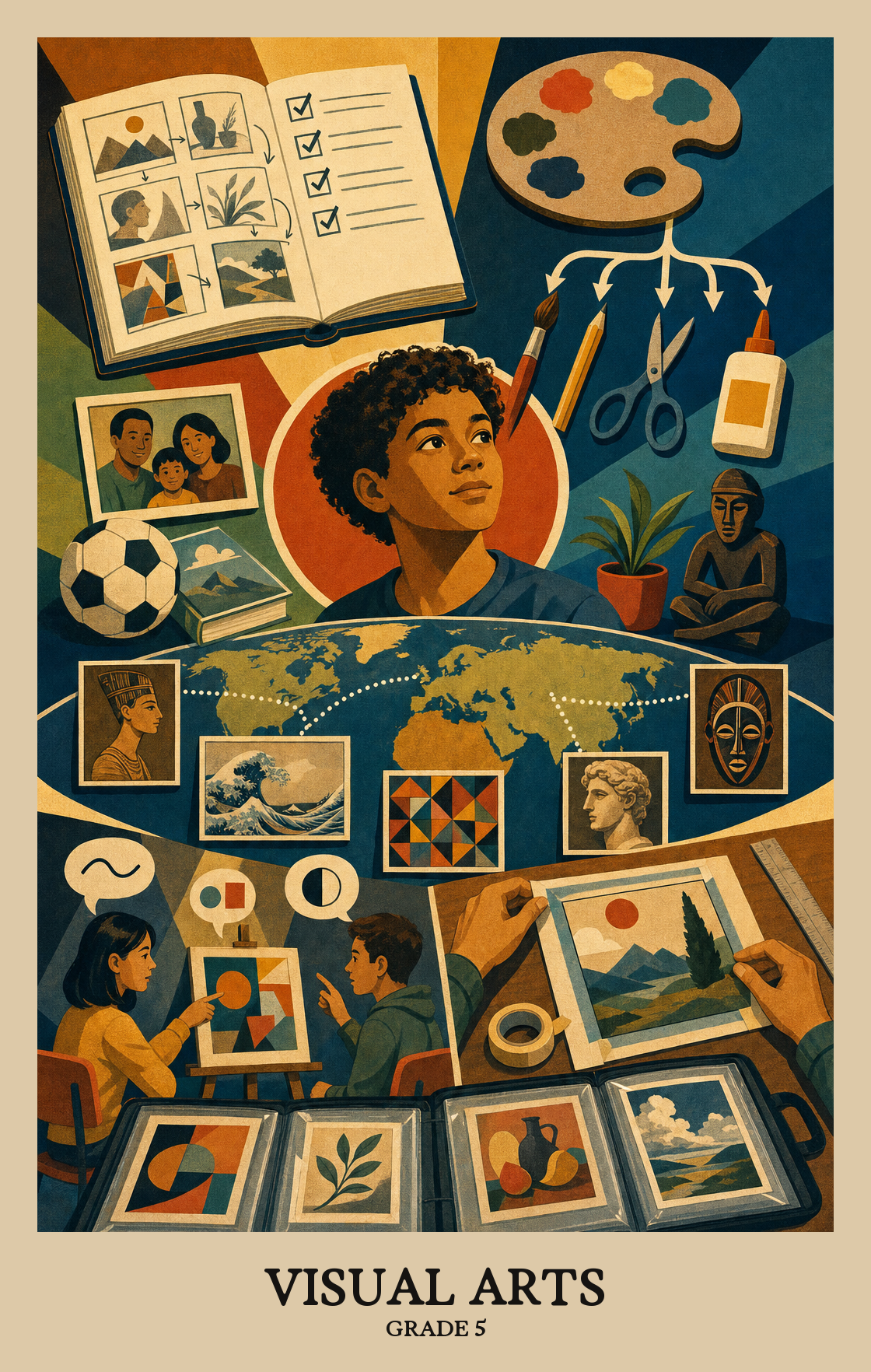
Students start the year gathering ideas from things they know, like family stories, places they've been, and objects around them. They keep a sketchbook and try out different ways to show one idea before picking a favorite.
Students practice handling paint, clay, pencil, and other materials with more control. They learn how artists plan a piece before starting, and they revise their work instead of stopping at the first try.
Students look at art from different countries and time periods and notice what the artists were trying to say. They connect what they see to their own lives and use those ideas in their own pieces.
Students slow down in front of a piece of art and describe what they notice before deciding if it works. They use clear reasons, not just likes and dislikes, and they apply the same thinking to their own pieces.
Students finish pieces they are proud of and decide how to show them. They think about what they want a viewer to feel or understand, and they arrange the work so the meaning comes through.
Students draw on what they know and what they have lived through to make their own artwork. Personal memories, observations, and outside subjects all become raw material for the work.
Students look at a painting, sculpture, or other artwork and connect it to the time period, place, or culture it came from. That context helps explain why the work looks the way it does and what it meant to the people who made it.
| Standard | Definition | Code |
|---|---|---|
| Synthesize and relate knowledge and personal experiences to make art | Students draw on what they know and what they have lived through to make their own artwork. Personal memories, observations, and outside subjects all become raw material for the work. | VA:Cn10.5 |
| Relate artistic ideas and works with societal, cultural | Students look at a painting, sculpture, or other artwork and connect it to the time period, place, or culture it came from. That context helps explain why the work looks the way it does and what it meant to the people who made it. | VA:Cn11.5 |
Students brainstorm original ideas for artwork, sketching or planning before they pick up a brush or begin the final piece.
Students plan and refine their artwork by making deliberate choices about composition, materials, and technique before considering the piece finished.
Students revisit a piece of artwork, make deliberate changes to improve it, and decide when it is finished. The focus is on revision, not just adding more.
| Standard | Definition | Code |
|---|---|---|
| Generate and conceptualize artistic ideas and work | Students brainstorm original ideas for artwork, sketching or planning before they pick up a brush or begin the final piece. | VA:Cr1.5 |
| Organize and develop artistic ideas and work | Students plan and refine their artwork by making deliberate choices about composition, materials, and technique before considering the piece finished. | VA:Cr2.5 |
| Refine and complete artistic work | Students revisit a piece of artwork, make deliberate changes to improve it, and decide when it is finished. The focus is on revision, not just adding more. | VA:Cr3.5 |
Students look at a collection of their artwork, think about what each piece shows, and choose which ones to present or display based on how well the work reflects their ideas.
Students practice and improve a piece of artwork until it's ready to share. That might mean fixing proportions, cleaning up lines, or choosing a better color before calling it finished.
Students choose how to display or share their artwork so the viewer understands what the piece is about. The way they present it, from framing to placement, is part of the message.
| Standard | Definition | Code |
|---|---|---|
| Analyze, interpret, and select artistic work for presentation | Students look at a collection of their artwork, think about what each piece shows, and choose which ones to present or display based on how well the work reflects their ideas. | VA:Pr4.5 |
| Develop and refine artistic techniques and work for presentation | Students practice and improve a piece of artwork until it's ready to share. That might mean fixing proportions, cleaning up lines, or choosing a better color before calling it finished. | VA:Pr5.5 |
| Convey meaning through the presentation of artistic work | Students choose how to display or share their artwork so the viewer understands what the piece is about. The way they present it, from framing to placement, is part of the message. | VA:Pr6.5 |
Students look closely at a piece of artwork and explain what they notice, from the colors and shapes on the surface to the choices the artist made and why those choices matter.
Students look closely at a piece of art and explain what they think the artist was trying to say. They support their thinking with details from the work itself.
Students look at a piece of art and judge it using a set of criteria, explaining why the work succeeds or falls short based on specific things they can point to, like color, composition, or how well it fits its purpose.
| Standard | Definition | Code |
|---|---|---|
| Perceive and analyze artistic work | Students look closely at a piece of artwork and explain what they notice, from the colors and shapes on the surface to the choices the artist made and why those choices matter. | VA:Re7.5 |
| Interpret intent and meaning in artistic work | Students look closely at a piece of art and explain what they think the artist was trying to say. They support their thinking with details from the work itself. | VA:Re8.5 |
| Apply criteria to evaluate artistic work | Students look at a piece of art and judge it using a set of criteria, explaining why the work succeeds or falls short based on specific things they can point to, like color, composition, or how well it fits its purpose. | VA:Re9.5 |
Students make art with a clear purpose behind it, not just a finished project. They plan ideas, try different techniques, revise their work, and talk about what their art means. They also look closely at art made by others and explain what they notice.
Keep simple supplies around and ask questions while students work. Try things like, what made you pick this color, or what part do you want to change. Visit a museum website or flip through a picture book together and ask what story the pictures tell.
No. The focus is on thinking, planning, and improving a piece over time, not on producing a perfect drawing. Praise the effort to revise and the choices students explain, not just how realistic something looks.
Students should start with an idea, plan it out, pick materials on purpose, and finish a piece they can talk about. They should also be able to look at a painting or sculpture and explain what it might mean and why.
Start with idea generation and sketchbooks so students get used to planning before making. Move into longer projects that require revision, then add work where students prepare pieces for display and write or speak about meaning. Save formal critique routines for after students are comfortable sharing.
Revision is the hardest part. Students often want to call a piece done after the first try. Build in planned checkpoints where students step back, mark one thing to change, and keep going. Talking about meaning in someone else's art also takes practice.
Ask what part they like and what part is bothering them. Then ask what one small change would help. Starting over erases the chance to learn from fixing something, so try to keep them working on the same piece a little longer.
Use criteria students know in advance, such as planning, use of technique, revision, and explanation of meaning. Score the process and the choices, not personal taste. Having students talk or write about their piece makes the thinking visible and easier to assess fairly.
Students should be able to take an idea from sketch to finished piece, choose materials for a reason, and improve work based on feedback. They should also connect art to history or culture in simple ways, such as why a artist made certain choices for their time.