Exploring sound and voice
Students start the year listening closely to music and the world around them. They try out loud and soft, fast and slow, and learn to use their singing voice.
This is the year music becomes something students make, not just hear. Students learn to match a steady beat, sing simple songs, and tell loud from soft or fast from slow. They start sharing what a song reminds them of and why they like it. By spring, they can sing a short song on pitch and clap along to the beat without losing their place.
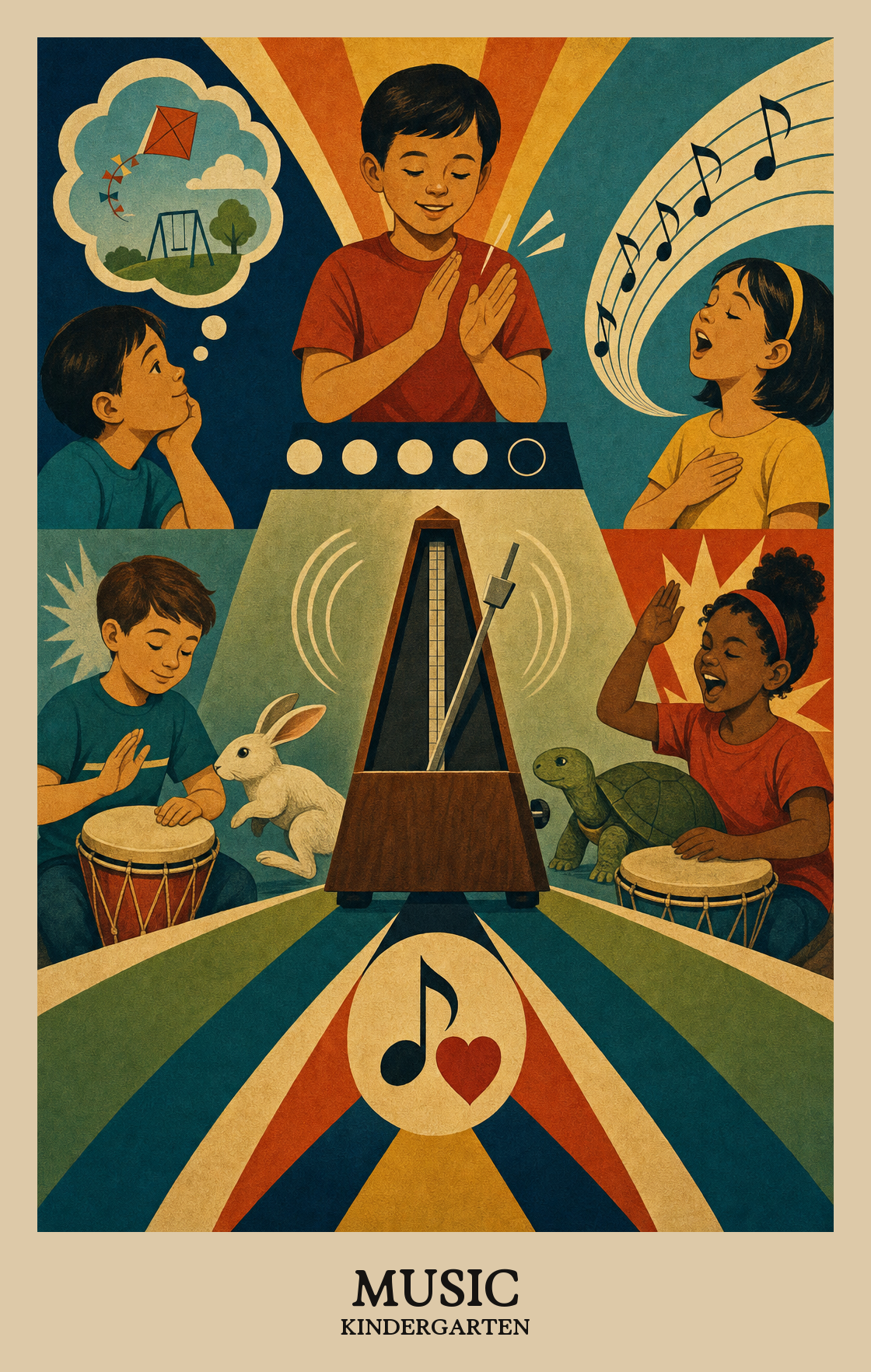
Students start the year listening closely to music and the world around them. They try out loud and soft, fast and slow, and learn to use their singing voice.
Students clap simple beats, sing short songs, and play classroom instruments with the group. They begin to keep a steady beat and follow along with the class.
Students make up short patterns of sound, movement, and rhythm. They try out their own ideas, pick the ones they like best, and share them with classmates.
Students rehearse songs and short pieces to perform for the class or family. They talk about what a song means to them and how music connects to home, holidays, and stories.
Students connect what they already know and what they've lived through to the music they make and respond to.
Songs and music come from real places, real times, and real communities. Students listen to music from different cultures and talk about what it tells them about the people who made it.
| Standard | Definition | Code |
|---|---|---|
| Synthesize and relate knowledge and personal experiences to make art | Students connect what they already know and what they've lived through to the music they make and respond to. | MU:Cn10.k |
| Relate artistic ideas and works with societal, cultural | Songs and music come from real places, real times, and real communities. Students listen to music from different cultures and talk about what it tells them about the people who made it. | MU:Cn11.k |
Students come up with their own musical ideas, like clapping a rhythm, humming a tune, or making up a short song.
Students pick a simple song, beat, or sound idea and find a way to share it, whether by clapping, humming, or moving. This is the first step in turning a musical idea into something others can hear.
Students pick a song or rhythm they have been working on and decide when it sounds the way they want it to sound.
| Standard | Definition | Code |
|---|---|---|
| Generate and conceptualize artistic ideas and work | Students come up with their own musical ideas, like clapping a rhythm, humming a tune, or making up a short song. | MU:Cr1.k |
| Organize and develop artistic ideas and work | Students pick a simple song, beat, or sound idea and find a way to share it, whether by clapping, humming, or moving. This is the first step in turning a musical idea into something others can hear. | MU:Cr2.k |
| Refine and complete artistic work | Students pick a song or rhythm they have been working on and decide when it sounds the way they want it to sound. | MU:Cr3.k |
Students choose a song or piece of music to perform and think about how they want it to sound.
Students practice a song or rhythm until it sounds the way they want it to. They learn that rehearsing helps a performance go better.
Students perform a song or rhythm for others and put feeling into it, not just the notes.
| Standard | Definition | Code |
|---|---|---|
| Analyze, interpret, and select artistic work for presentation | Students choose a song or piece of music to perform and think about how they want it to sound. | MU:Pr4.k |
| Develop and refine artistic techniques and work for presentation | Students practice a song or rhythm until it sounds the way they want it to. They learn that rehearsing helps a performance go better. | MU:Pr5.k |
| Convey meaning through the presentation of artistic work | Students perform a song or rhythm for others and put feeling into it, not just the notes. | MU:Pr6.k |
Students listen to a short piece of music and share what they notice, like whether it feels fast or slow, loud or quiet, or happy or sad.
Students listen to a short piece of music and share what they think it feels like or what it makes them picture. There are no wrong answers, just reasons behind them.
Students listen to a short piece of music and say what they like or don't like about it, and why. They start learning that opinions about music can be backed up with a reason.
| Standard | Definition | Code |
|---|---|---|
| Perceive and analyze artistic work | Students listen to a short piece of music and share what they notice, like whether it feels fast or slow, loud or quiet, or happy or sad. | MU:Re7.k |
| Interpret intent and meaning in artistic work | Students listen to a short piece of music and share what they think it feels like or what it makes them picture. There are no wrong answers, just reasons behind them. | MU:Re8.k |
| Apply criteria to evaluate artistic work | Students listen to a short piece of music and say what they like or don't like about it, and why. They start learning that opinions about music can be backed up with a reason. | MU:Re9.k |
Students sing simple songs, clap rhythms, and play small instruments like shakers and drums. They also start making up their own short tunes and patterns. Most of the learning happens through games, movement, and listening, not worksheets.
Sing in the car, clap along to favorite songs, and let students bang on pots or shake a jar of beans to keep a beat. Five minutes a day is plenty. The point is to make sound on purpose and listen to what it does.
No. Reading notes and playing real instruments come later. Right now students are learning to match a pitch, keep a steady beat, and notice when music is fast or slow, loud or quiet.
Sing a short song on their own, clap a steady beat with a group, make up a simple rhythm, and talk about what they hear in a piece of music. They should also be able to share why they like a song.
Keep singing with them anyway. Voices at this age are still finding their range, and matching pitch is a skill that grows with practice. Pick songs in a comfortable key and sing slowly so students can hear each note.
Start with steady beat and call-and-response singing in the fall, then layer in high and low, loud and soft, and fast and slow. Save short composition activities and simple performance pieces for the spring once students have a shared vocabulary.
Keeping a steady beat under a song and matching pitch are the two that take the longest. Plan to come back to both every week, even after the unit ends. Short daily practice works better than long once-a-month review.
Students can echo a short rhythm, sing a familiar song with the group, and tell the difference between a beat and a rhythm when asked. They can also point to one thing they notice in a piece of music, such as the speed or the mood.
Songs build vocabulary, rhyme, and memory, which support early reading. Counting beats and clapping patterns reinforce early math. Music from different cultures and holidays also gives students a way into social studies conversations.