Exploring tools and materials
Students try out crayons, markers, paint, glue, and scissors. They learn how to hold each tool, share supplies, and clean up so making art feels comfortable from the start.
This is the year art becomes a way to share what students see and feel. Students try out crayons, paint, paper, and clay, and learn that an artist makes choices on purpose. They start talking about their own pictures and looking carefully at other people's work. By spring, students can make a piece of art, explain what it shows, and point out one thing they notice in someone else's drawing.
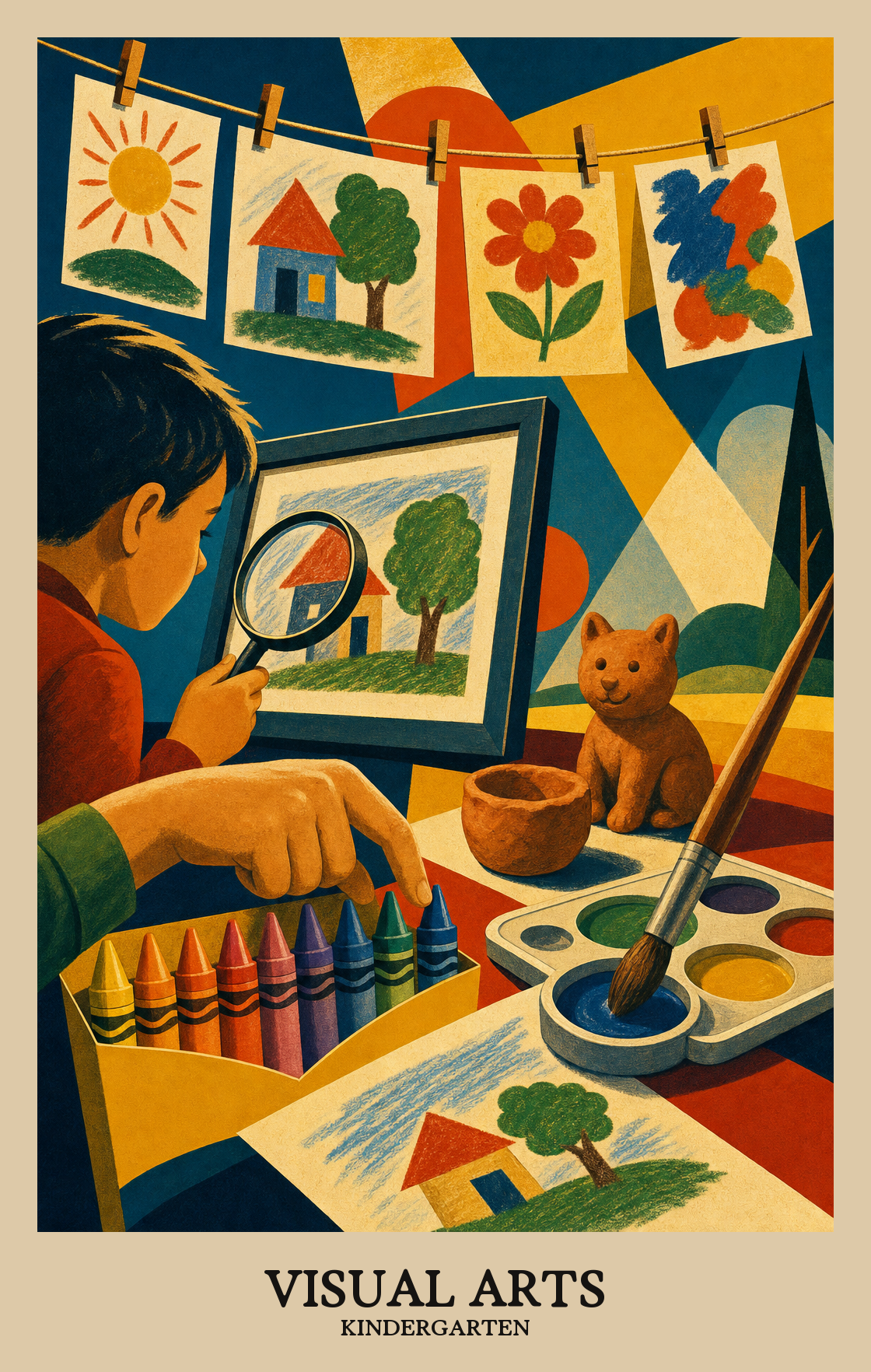
Students try out crayons, markers, paint, glue, and scissors. They learn how to hold each tool, share supplies, and clean up so making art feels comfortable from the start.
Students draw and build from things they know, like family, pets, food, and the playground. They start to see that their own ideas and memories are worth turning into pictures.
Students study pictures, sculptures, and crafts from different places and times. They talk about what they notice, what they think is happening, and how a piece of art makes them feel.
Students pick a piece they are proud of, add finishing touches, and get it ready to display. They practice talking about what they made and why they chose it.
Students draw on things they know and moments they remember to make their artwork. A picture of home, a favorite animal, or a memory from yesterday can become the starting point for something new.
Students look at a piece of art and talk about where it came from: who made it, when, and what life was like then. That context helps art make more sense.
| Standard | Definition | Code |
|---|---|---|
| Synthesize and relate knowledge and personal experiences to make art | Students draw on things they know and moments they remember to make their artwork. A picture of home, a favorite animal, or a memory from yesterday can become the starting point for something new. | VA:Cn10.k |
| Relate artistic ideas and works with societal, cultural | Students look at a piece of art and talk about where it came from: who made it, when, and what life was like then. That context helps art make more sense. | VA:Cn11.k |
Students come up with ideas for their own artwork. They think about what they want to make before they start drawing, building, or painting.
Students make choices about colors, shapes, and materials to build a picture or object. They try different ideas before deciding what their finished work will look like.
Students look at their drawing or artwork, decide what needs fixing, and finish it. This is about learning that making something good takes more than one try.
| Standard | Definition | Code |
|---|---|---|
| Generate and conceptualize artistic ideas and work | Students come up with ideas for their own artwork. They think about what they want to make before they start drawing, building, or painting. | VA:Cr1.k |
| Organize and develop artistic ideas and work | Students make choices about colors, shapes, and materials to build a picture or object. They try different ideas before deciding what their finished work will look like. | VA:Cr2.k |
| Refine and complete artistic work | Students look at their drawing or artwork, decide what needs fixing, and finish it. This is about learning that making something good takes more than one try. | VA:Cr3.k |
Students choose which of their drawings or projects to share with others, and explain why they picked it.
Students practice making their artwork look the way they want it to before sharing it with others. They try again, adjust details, and get their piece ready to display.
Students choose a drawing or artwork to share and explain what it means to them or what they wanted to show.
| Standard | Definition | Code |
|---|---|---|
| Analyze, interpret, and select artistic work for presentation | Students choose which of their drawings or projects to share with others, and explain why they picked it. | VA:Pr4.k |
| Develop and refine artistic techniques and work for presentation | Students practice making their artwork look the way they want it to before sharing it with others. They try again, adjust details, and get their piece ready to display. | VA:Pr5.k |
| Convey meaning through the presentation of artistic work | Students choose a drawing or artwork to share and explain what it means to them or what they wanted to show. | VA:Pr6.k |
Students look closely at a piece of art and talk about what they notice: colors, shapes, and how the picture makes them feel.
Students look at a piece of art and say what they think the artist was trying to show or how it makes them feel. There are no wrong answers, just reasons.
Students look at a drawing or painting and explain what they think makes it good, using simple reasons like color, shape, or how it makes them feel.
| Standard | Definition | Code |
|---|---|---|
| Perceive and analyze artistic work | Students look closely at a piece of art and talk about what they notice: colors, shapes, and how the picture makes them feel. | VA:Re7.k |
| Interpret intent and meaning in artistic work | Students look at a piece of art and say what they think the artist was trying to show or how it makes them feel. There are no wrong answers, just reasons. | VA:Re8.k |
| Apply criteria to evaluate artistic work | Students look at a drawing or painting and explain what they think makes it good, using simple reasons like color, shape, or how it makes them feel. | VA:Re9.k |
Students try out drawing, painting, cutting, gluing, and shaping clay or dough. They make art from their own ideas and from things they know, like family, pets, and favorite stories. They also look at art other people made and talk about what they see.
Keep crayons, markers, and scrap paper somewhere easy to reach, and skip the comments about whether it looks real. Ask what the picture is about and what part was the hardest. Five minutes of drawing after dinner does more than any art lesson.
Not really. The point at this age is noticing things in pictures, like colors, shapes, and what the people or animals are doing. If a museum trip or a library book comes up, point at one picture and ask what they notice.
Start with line, shape, and color so students build a small toolkit before tackling anything bigger. Add texture, cutting, and simple sculpture once they can hold tools safely. Save group projects and longer pieces for spring, when stamina is stronger.
Scissor grip, glue amounts, and cleanup routines. Most students also need repeated practice finishing a piece instead of starting over every five minutes. Short, specific demonstrations help more than long instructions.
Students should be able to come up with an idea for a picture, stick with it long enough to finish, and say a sentence or two about what it shows. They should also be able to point at a piece of art and say something they notice.
Look for students who can plan a piece before grabbing materials, talk about their choices, and respond to a classmate's work with more than just liked it or did not. Steady tool use and basic cleanup habits matter as much as the artwork itself.
Pick a few favorites each month and put them in a folder or take a photo. Ask the artist which ones to keep and why. That short conversation builds the habit of looking back at past work and noticing growth.