Exploring sound and voice
Students start the year noticing sounds around them and trying out their singing voices. They listen to different songs and begin to match a steady beat by clapping or tapping along.
This is the year music becomes something students make, not just hear. Students try out their own sounds, sing simple songs, and tap along to a steady beat. They start to notice how music makes them feel and share what they like about a song. By spring, they can perform a short song or rhythm for the class and say what it reminded them of.
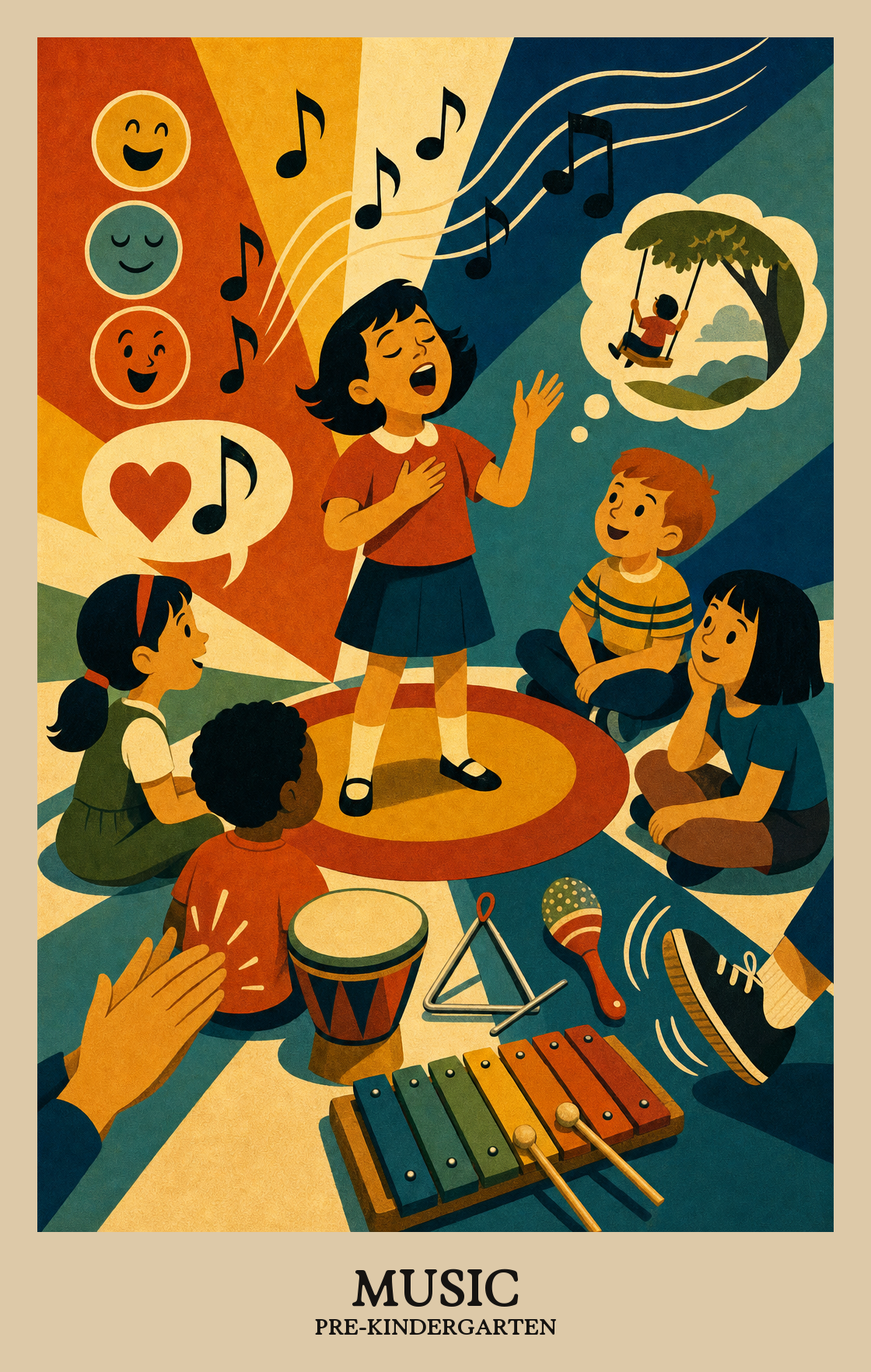
Students start the year noticing sounds around them and trying out their singing voices. They listen to different songs and begin to match a steady beat by clapping or tapping along.
Students invent their own short songs, sound patterns, and movements. They might tap a rhythm on a drum, hum a tune, or act out a song with their bodies.
Students practice songs and rhymes and perform them for classmates or family. They learn to start together, use a clear voice, and show feelings through the music they share.
Students listen to music from holidays, family traditions, and different places. They talk about what a song reminds them of and which parts they liked, building early opinions about music.
Students connect what they already know and feel to the music they make and hear. A song about rain means more when students think about splashing in puddles.
Songs and musical traditions connect to where people come from and how they live. Students begin noticing that the music they hear tells stories about communities, families, and the world around them.
| Standard | Definition | Code |
|---|---|---|
| Synthesize and relate knowledge and personal experiences to make art | Students connect what they already know and feel to the music they make and hear. A song about rain means more when students think about splashing in puddles. | MU:Cn10.pk |
| Relate artistic ideas and works with societal, cultural | Songs and musical traditions connect to where people come from and how they live. Students begin noticing that the music they hear tells stories about communities, families, and the world around them. | MU:Cn11.pk |
Students try out sounds, rhythms, and musical ideas through play. This is where making music begins.
Students pick sounds or songs they like and put them together to make something of their own, with a little help from a teacher or friend.
Students pick a song or sound they made and decide if they want to change anything before sharing it with others.
| Standard | Definition | Code |
|---|---|---|
| Generate and conceptualize artistic ideas and work | Students try out sounds, rhythms, and musical ideas through play. This is where making music begins. | MU:Cr1.pk |
| Organize and develop artistic ideas and work | Students pick sounds or songs they like and put them together to make something of their own, with a little help from a teacher or friend. | MU:Cr2.pk |
| Refine and complete artistic work | Students pick a song or sound they made and decide if they want to change anything before sharing it with others. | MU:Cr3.pk |
Students choose a song or sound to perform and think about how they want it to sound. Even at this age, picking what to play or sing is part of making music.
Students practice a song or rhythm until they can perform it the way they intended. The goal is doing it well enough to share with others.
Singing a song or tapping a beat for others is its own form of communication. Students share music to express a feeling or tell a simple story, even before they can write a word.
| Standard | Definition | Code |
|---|---|---|
| Analyze, interpret, and select artistic work for presentation | Students choose a song or sound to perform and think about how they want it to sound. Even at this age, picking what to play or sing is part of making music. | MU:Pr4.pk |
| Develop and refine artistic techniques and work for presentation | Students practice a song or rhythm until they can perform it the way they intended. The goal is doing it well enough to share with others. | MU:Pr5.pk |
| Convey meaning through the presentation of artistic work | Singing a song or tapping a beat for others is its own form of communication. Students share music to express a feeling or tell a simple story, even before they can write a word. | MU:Pr6.pk |
Students listen to a short piece of music and talk about what they notice, like whether it sounds fast or slow, loud or quiet.
Students listen to a short song or piece of music and share what they think it feels like or what story it might tell.
Students listen to a song or watch a performance and say what they liked or what they noticed. This is an early step in learning to give reasons for their opinions about music.
| Standard | Definition | Code |
|---|---|---|
| Perceive and analyze artistic work | Students listen to a short piece of music and talk about what they notice, like whether it sounds fast or slow, loud or quiet. | MU:Re7.pk |
| Interpret intent and meaning in artistic work | Students listen to a short song or piece of music and share what they think it feels like or what story it might tell. | MU:Re8.pk |
| Apply criteria to evaluate artistic work | Students listen to a song or watch a performance and say what they liked or what they noticed. This is an early step in learning to give reasons for their opinions about music. | MU:Re9.pk |
Students sing simple songs, move to the beat, and play with shakers, drums, and other easy instruments. They start noticing if music is fast or slow, loud or quiet. Most of the learning happens through play and repetition.
Sing together in the car, clap along to songs, and dance around the kitchen. Five minutes a day is plenty. The goal is comfort with music, not lessons or correct notes.
No. Pots, spoons, shakers, and clapping hands are perfect at this age. Formal instrument lessons can wait. What matters is steady beat, listening, and feeling free to sing out loud.
Start with steady beat and simple call-and-response songs, then add fast and slow, loud and quiet. By spring, layer in songs with movement patterns and small classroom instruments. Revisit favorite songs often so students can lead them.
Keeping a steady beat is the skill students lose most between sessions. Short daily beat practice with clapping, patting, or marching helps more than longer weekly drills. Expect to come back to it all year.
Not at all. Many children sing at home long before they sing in a group. Keep singing around them without pressure. Joining in often comes once a song feels familiar.
By the end of the year, most students can keep a steady beat, sing along to familiar songs, and say whether a piece is fast or slow, loud or quiet. They can also share what a song makes them think of or feel.
Share songs from your own childhood, lullabies in your home language, or music played at family gatherings. Talk about when and why people sing those songs. This gives music meaning beyond the classroom.