Exploring art materials
Students try out crayons, paint, markers, and clay. They learn how each material feels and what marks it can make. Parents may see lots of scribbles and color experiments come home.
This is the year art moves from random scribbling to making something on purpose. Students start with their own ideas, then use crayons, paint, paper, and clay to put those ideas on the page. They learn to talk about what they made and what they see in other people's art. By spring, students can finish a piece, share it with the class, and say a few words about what it means.
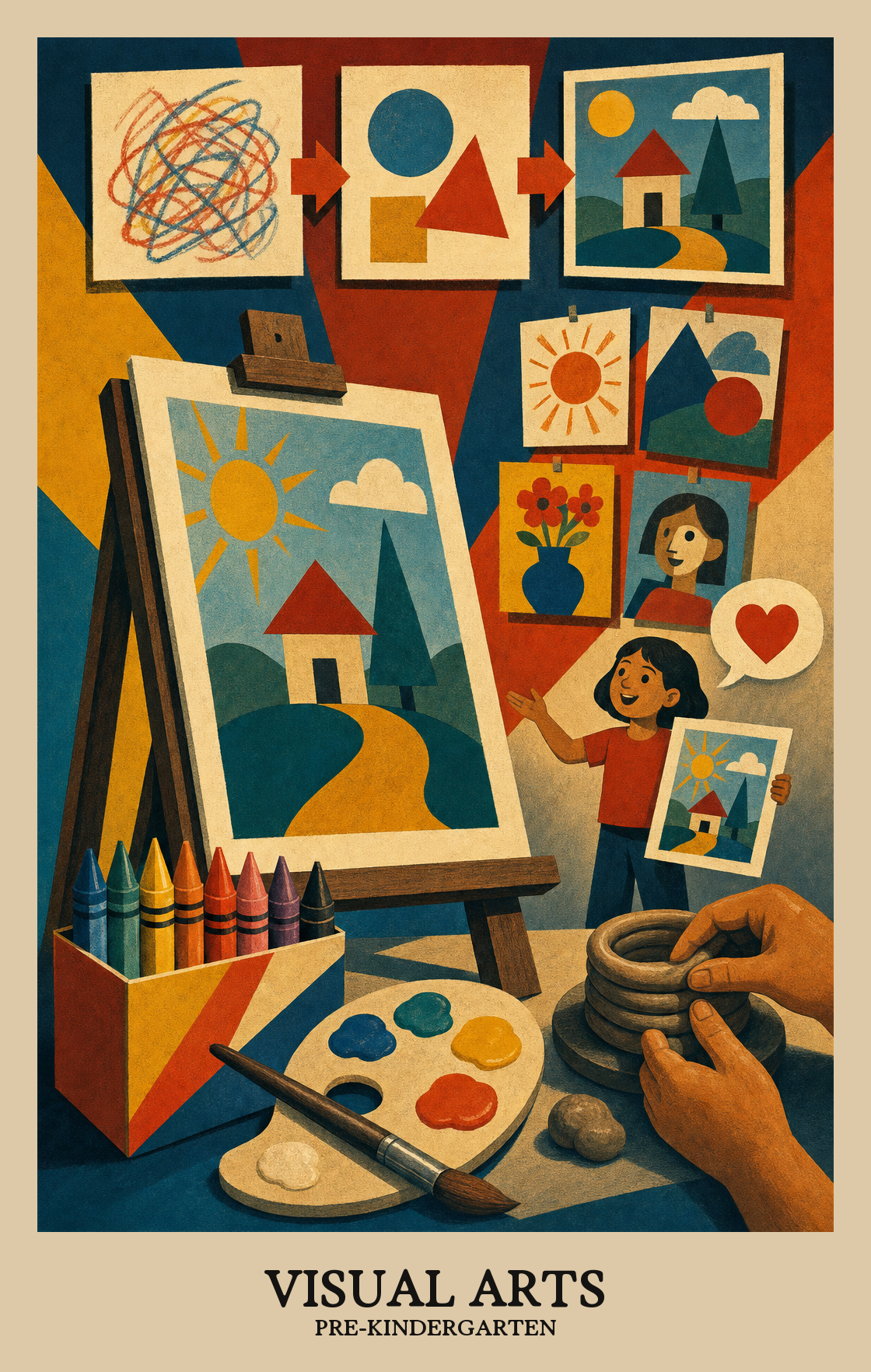
Students try out crayons, paint, markers, and clay. They learn how each material feels and what marks it can make. Parents may see lots of scribbles and color experiments come home.
Students start drawing and building things from their own lives, like family, pets, or a favorite toy. They share simple ideas about what they made and why.
Students notice colors, shapes, and details in pictures and objects around them. They begin to guess what an artwork might be about and share what they see.
Students finish projects, choose pieces they like, and show them to others. They practice talking about what they made and listening when classmates share theirs.
Students draw on things they know and have lived through to make their own art. A picture of home, a favorite animal, or a memory can all be starting points.
Students look at artwork and talk about where it came from, who made it, and what was happening in that place and time.
| Standard | Definition | Code |
|---|---|---|
| Synthesize and relate knowledge and personal experiences to make art | Students draw on things they know and have lived through to make their own art. A picture of home, a favorite animal, or a memory can all be starting points. | VA:Cn10.pk |
| Relate artistic ideas and works with societal, cultural | Students look at artwork and talk about where it came from, who made it, and what was happening in that place and time. | VA:Cn11.pk |
Students come up with their own ideas before they start making art. This could mean deciding what to draw, what to build, or what a finished piece might look like.
Students pick up art tools and start making something, adjusting colors, shapes, or marks as they go. The focus is on the doing, not the finished product.
Students finish a drawing or craft by looking it over and making small changes before calling it done.
| Standard | Definition | Code |
|---|---|---|
| Generate and conceptualize artistic ideas and work | Students come up with their own ideas before they start making art. This could mean deciding what to draw, what to build, or what a finished piece might look like. | VA:Cr1.pk |
| Organize and develop artistic ideas and work | Students pick up art tools and start making something, adjusting colors, shapes, or marks as they go. The focus is on the doing, not the finished product. | VA:Cr2.pk |
| Refine and complete artistic work | Students finish a drawing or craft by looking it over and making small changes before calling it done. | VA:Cr3.pk |
Students choose which of their drawings or artwork to share with others, practicing the idea that some pieces are ready to show and some are still works in progress.
Students practice and improve a piece of artwork to get it ready to share with others.
Students share a drawing or artwork and explain what they made and why. The piece itself tells something about what they were thinking or feeling.
| Standard | Definition | Code |
|---|---|---|
| Analyze, interpret, and select artistic work for presentation | Students choose which of their drawings or artwork to share with others, practicing the idea that some pieces are ready to show and some are still works in progress. | VA:Pr4.pk |
| Develop and refine artistic techniques and work for presentation | Students practice and improve a piece of artwork to get it ready to share with others. | VA:Pr5.pk |
| Convey meaning through the presentation of artistic work | Students share a drawing or artwork and explain what they made and why. The piece itself tells something about what they were thinking or feeling. | VA:Pr6.pk |
Students look closely at artwork and talk about what they notice, like colors, shapes, and how the picture makes them feel.
Students look at a drawing or painting and talk about what they think the artist was trying to show. They explain what they see and what it makes them feel.
Students look at a drawing or painting and say what they like about it and why. They start to notice what makes a piece of art feel finished or interesting.
| Standard | Definition | Code |
|---|---|---|
| Perceive and analyze artistic work | Students look closely at artwork and talk about what they notice, like colors, shapes, and how the picture makes them feel. | VA:Re7.pk |
| Interpret intent and meaning in artistic work | Students look at a drawing or painting and talk about what they think the artist was trying to show. They explain what they see and what it makes them feel. | VA:Re8.pk |
| Apply criteria to evaluate artistic work | Students look at a drawing or painting and say what they like about it and why. They start to notice what makes a piece of art feel finished or interesting. | VA:Re9.pk |
Students paint, draw, cut, glue, and build with clay or blocks. They make art about what they know, like family, pets, and what they did over the weekend. The point is exploring materials and sharing ideas, not making something that looks realistic.
Keep crayons, paper, scissors, and tape where students can reach them. Ask about the picture instead of guessing what it is. Try questions like what is happening here or what part did you make first.
Scribbles are exactly right at this age. Lines and shapes come before recognizable pictures, and the scribbling builds the hand strength students need for writing later. Save a few pieces each month and the growth will be easy to see.
Start with one or two materials and let students use them many times before adding more. A good arc moves from free exploration in fall, to making art about a topic in winter, to choosing and talking about finished work in spring. Repeat materials so skills can build.
Students should hold a crayon or brush with some control, name what they made, and talk about a classmate's art without saying it is good or bad. They should also be able to look at a picture and notice colors, shapes, and what is happening in it.
Ask what they see before asking what it means. Point to a shape or a color and ask what it reminds them of. Accept short answers and follow up with one more question rather than pushing for a full sentence.
Drawing a story helps students plan what to say and write later. Sorting colors and shapes builds early math thinking. Looking at art from different places and times gives students new words and ideas to talk about.
No. Paper, crayons, markers, child-safe scissors, glue sticks, and a few old magazines cover most of what students do at school. Cardboard boxes, paper bags, and junk mail are great for building and collage.