Moving safely together
Students learn how to use their bodies in a shared space. They walk, stop, and follow simple directions without bumping into classmates or the wall.
This is the year bodies learn to move with a little more control. Students practice running, jumping, hopping, and balancing without bumping into each other. They start to take turns, follow simple directions, and notice that moving around feels good. By spring, students can run, stop, and change direction on cue and play a simple group game without losing track of the rules.
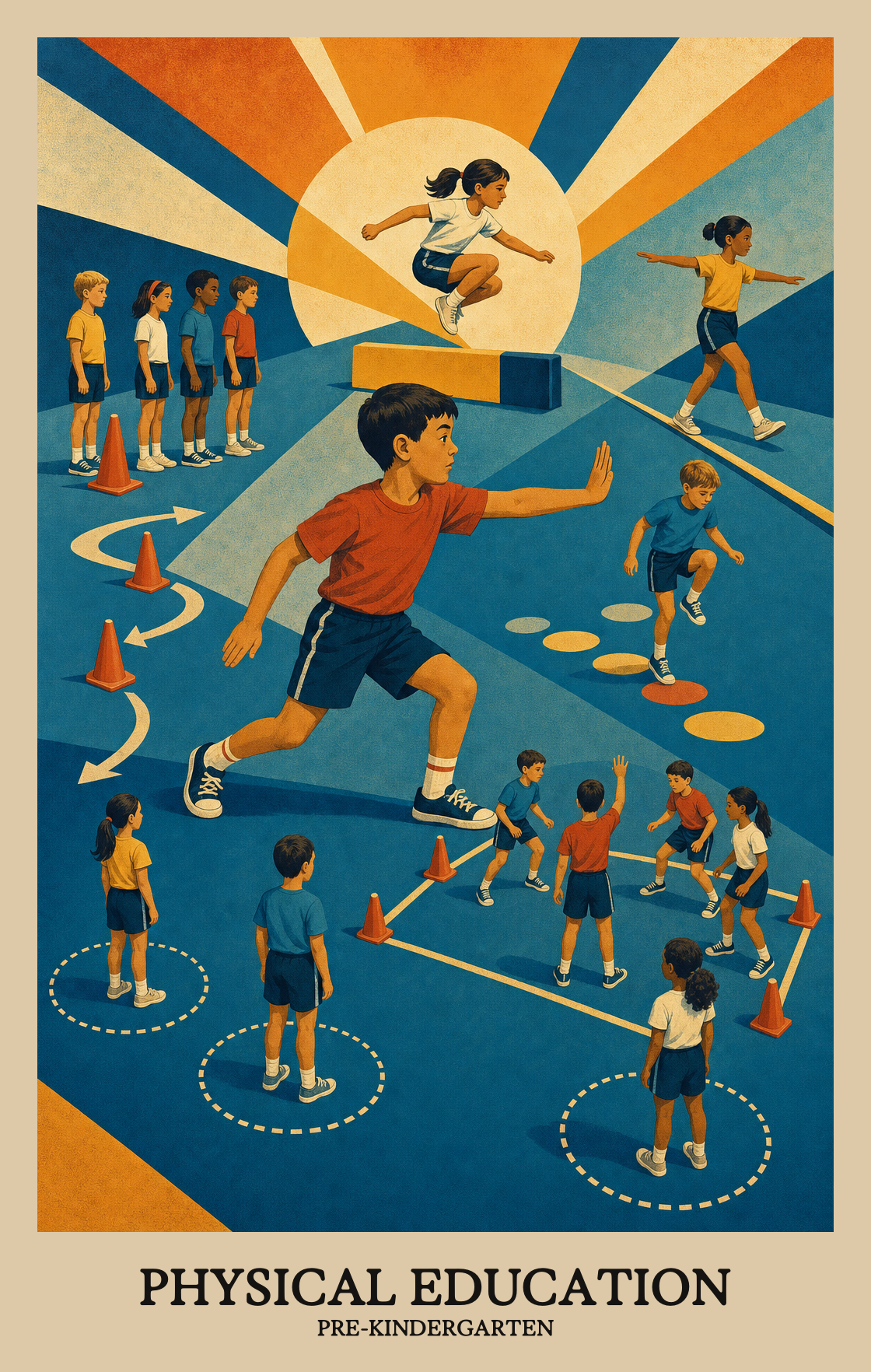
Students learn how to use their bodies in a shared space. They walk, stop, and follow simple directions without bumping into classmates or the wall.
Students practice the big movements that build strong bodies. They run, hop, gallop, and balance on one foot, getting steadier each week.
Students start working with balls and beanbags. They roll, toss, catch, and kick toward a target, learning what their hands and feet can do.
Students join simple games with classmates. They take turns, follow the rules, and notice that moving their bodies feels good and is part of staying healthy.
Students practice basic ways of moving their body: walking, jumping, throwing, and balancing. The goal is to get comfortable with many different movements, not just one or two.
Students learn basic words for how their body moves, like fast or slow, high or low, and use those ideas to move with more control during games and activities.
Moving the body through play, running, and active games builds the habits that keep kids healthy. Students learn what their bodies can do and practice staying active throughout the day.
Students practice taking turns, following directions, and treating classmates with kindness during physical activities. The focus is on being safe, respectful, and ready to participate.
Moving your body feels good and helps you stay healthy. Students learn to notice how running, dancing, and playing make them feel strong, happy, and connected to others.
Students begin to notice that some people, like coaches and gym teachers, have jobs that help others stay active and healthy.
| Standard | Definition | Code |
|---|---|---|
| Moving and controlling your body | Students practice basic ways of moving their body: walking, jumping, throwing, and balancing. The goal is to get comfortable with many different movements, not just one or two. | NY-PE.1.pk |
| How your body moves and why | Students learn basic words for how their body moves, like fast or slow, high or low, and use those ideas to move with more control during games and activities. | NY-PE.2.pk |
| Staying active and healthy | Moving the body through play, running, and active games builds the habits that keep kids healthy. Students learn what their bodies can do and practice staying active throughout the day. | NY-PE.3.pk |
| Respecting yourself and others in gym class | Students practice taking turns, following directions, and treating classmates with kindness during physical activities. The focus is on being safe, respectful, and ready to participate. | NY-PE.4.pk |
| Why moving feels good | Moving your body feels good and helps you stay healthy. Students learn to notice how running, dancing, and playing make them feel strong, happy, and connected to others. | NY-PE.5.pk |
| Staying active and healthy in our community | Students begin to notice that some people, like coaches and gym teachers, have jobs that help others stay active and healthy. | NY-PE.6.pk |
Students practice the building blocks of movement: running, jumping, hopping, skipping, throwing, catching, and balancing. They also learn to take turns, share space, and follow simple directions during games. Most of the learning happens through play, not drills.
Aim for short bursts of active play every day. Toss a soft ball back and forth, set up a pillow obstacle course, dance to music, or walk to the park. Ten to fifteen minutes of movement, a few times a day, adds up.
At this age, big differences in coordination are normal. Skills like catching and balancing develop on their own timeline. Keep offering chances to practice without pressure, and check in with the pediatrician if balance or walking concerns persist.
Start with locomotor basics like walking, running, and jumping in open space. Add object control later, such as rolling, tossing, and catching a large ball. Save more complex skills like skipping and one-handed throws for the back half of the year.
Catching a ball, skipping, and galloping take the longest to develop. Sharing equipment and waiting for a turn also need steady practice. Plan to revisit these throughout the year rather than teaching them once and moving on.
No. The goal is steady, enjoyable activity, not fitness benchmarks. Students should be able to play actively for stretches of time, recognize when their heart is beating fast, and understand that moving their body feels good.
By spring, students should run and stop with control, jump with two feet, toss and catch a large ball at close range, and follow two-step movement directions. They should also play alongside classmates without constant adult prompting.
A big part of this year is learning to share space safely, keep hands to self, and listen for stop and go signals. Students also practice trying something hard without giving up. These habits matter as much as the physical skills.