Reading and listening with depth
Students read articles, watch videos, and listen to conversations in the language. They pick out the main idea, follow the details, and figure out what the speaker or writer is really getting at.
This is the year language study moves from short exchanges to real conversations about ideas. Students follow longer talks, articles, and videos in the language, then discuss them, share opinions, and back up what they think. They give presentations that inform or persuade, adjusting their words for different audiences. By spring, students can hold a real conversation in the language and compare how people in that culture live with their own daily life.
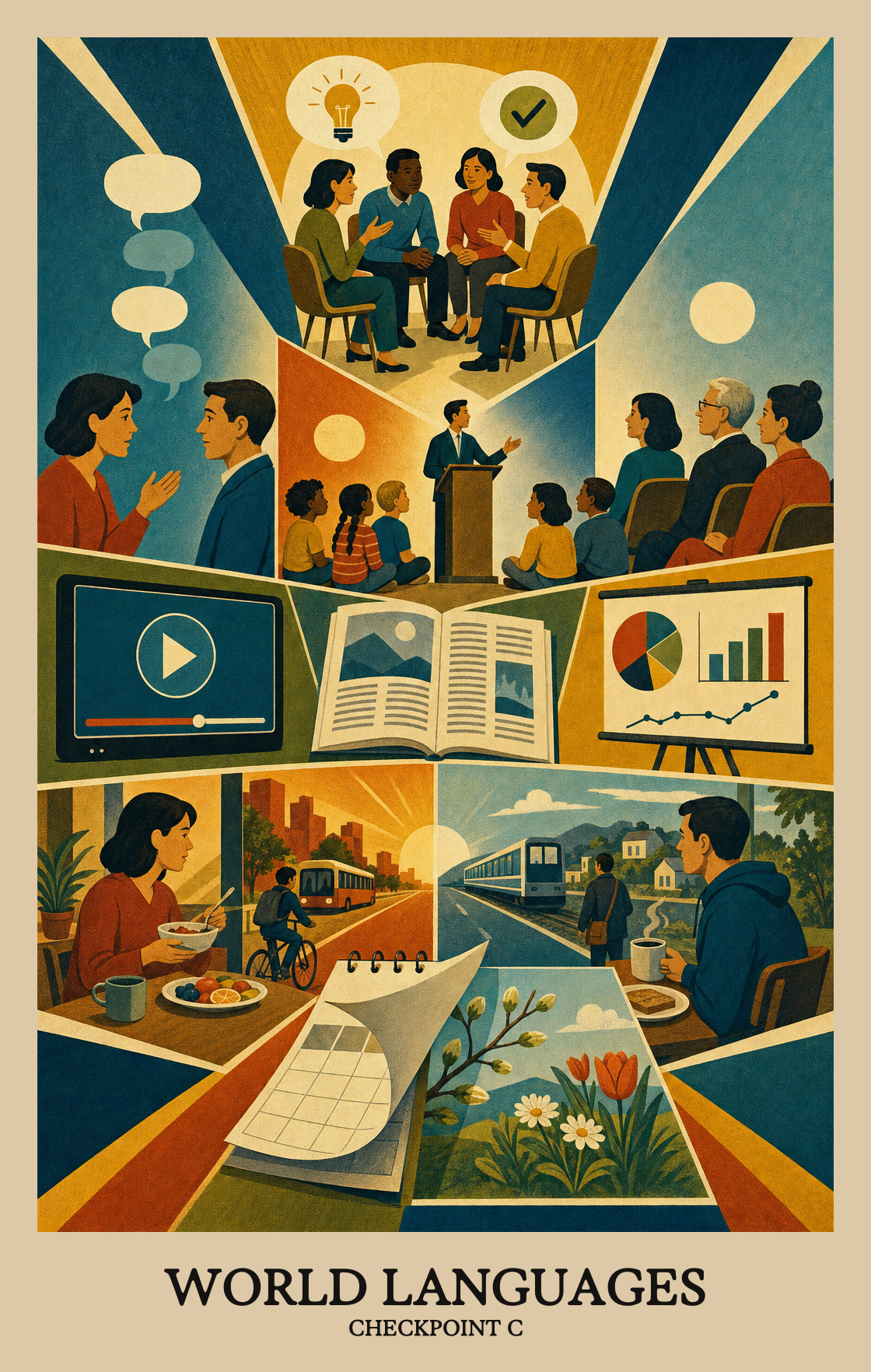
Students read articles, watch videos, and listen to conversations in the language. They pick out the main idea, follow the details, and figure out what the speaker or writer is really getting at.
Students hold longer back-and-forth conversations in the language. They share opinions, react to what someone else said, and work through misunderstandings instead of stalling.
Students give talks, write essays, and make videos in the language to explain, persuade, or tell a story. They adjust their tone and word choice depending on who will read or watch.
Students look at traditions, art, food, and daily habits from places where the language is spoken, then ask why people do things that way. The goal is to understand the thinking behind the customs, not just name them.
Students put the cultures they are studying next to their own and notice what is similar, what is different, and what surprises them. They use the language itself to talk about those comparisons.
Students read, listen to, and work through texts in a classical language on a range of topics, then show they understood the meaning and can explain what the author is doing.
Students hold back-and-forth conversations in a classical language, spoken or written, to share ideas, reactions, and opinions. They work through misunderstandings with a partner rather than just reciting practiced lines.
Students write or speak in a classical language to inform, explain, or persuade a real audience, choosing the right words and format for who is listening or reading.
| Standard | Definition | Code |
|---|---|---|
| Reading and listening in a classical language Checkpoint C | Students read, listen to, and work through texts in a classical language on a range of topics, then show they understood the meaning and can explain what the author is doing. | NY-WL.CL.C.1 |
| Conversations in a classical language Checkpoint C | Students hold back-and-forth conversations in a classical language, spoken or written, to share ideas, reactions, and opinions. They work through misunderstandings with a partner rather than just reciting practiced lines. | NY-WL.CL.C.2 |
| Presenting ideas in a classical language Checkpoint C | Students write or speak in a classical language to inform, explain, or persuade a real audience, choosing the right words and format for who is listening or reading. | NY-WL.CL.C.3 |
Students read, discuss, and write in the classical language to explain why a culture did things the way it did, connecting real practices and objects to the beliefs and values behind them.
Students compare ancient Roman or Greek culture to their own, explaining in the target language what's different, what's familiar, and what those differences reveal about how people lived.
| Standard | Definition | Code |
|---|---|---|
| How culture shapes what people do and make Checkpoint C | Students read, discuss, and write in the classical language to explain why a culture did things the way it did, connecting real practices and objects to the beliefs and values behind them. | NY-WL.CL.C.4 |
| Comparing ancient cultures to your own Checkpoint C | Students compare ancient Roman or Greek culture to their own, explaining in the target language what's different, what's familiar, and what those differences reveal about how people lived. | NY-WL.CL.C.5 |
Students read, listen to, or watch material in the target language on topics they have not practiced before, then show they understood the message and can explain what it meant.
Students hold back-and-forth conversations in the language they are learning, adjusting what they say based on how the other person responds. They share information, reactions, and opinions, not just rehearsed phrases.
Students prepare and deliver presentations in the target language, choosing the right words and format for different audiences, whether speaking to classmates, writing for readers, or creating something for viewers to watch.
| Standard | Definition | Code |
|---|---|---|
| Reading and listening in a new language Checkpoint C | Students read, listen to, or watch material in the target language on topics they have not practiced before, then show they understood the message and can explain what it meant. | NY-WL.ML.C.1 |
| Conversations where students share opinions and ideas Checkpoint C | Students hold back-and-forth conversations in the language they are learning, adjusting what they say based on how the other person responds. They share information, reactions, and opinions, not just rehearsed phrases. | NY-WL.ML.C.2 |
| Presenting ideas in a new language Checkpoint C | Students prepare and deliver presentations in the target language, choosing the right words and format for different audiences, whether speaking to classmates, writing for readers, or creating something for viewers to watch. | NY-WL.ML.C.3 |
Students explain, in the language they are studying, why a culture's traditions, objects, and daily habits exist the way they do, connecting what people do and make to the values and beliefs behind those choices.
Students use the language they are learning to compare their own cultural practices and beliefs with those of the cultures where that language is spoken, then explain what those differences and similarities reveal.
| Standard | Definition | Code |
|---|---|---|
| How cultures shape what people do and make Checkpoint C | Students explain, in the language they are studying, why a culture's traditions, objects, and daily habits exist the way they do, connecting what people do and make to the values and beliefs behind those choices. | NY-WL.ML.C.4 |
| Comparing cultures in your own words Checkpoint C | Students use the language they are learning to compare their own cultural practices and beliefs with those of the cultures where that language is spoken, then explain what those differences and similarities reveal. | NY-WL.ML.C.5 |
Students are working toward holding real conversations in the language, not just reciting vocabulary. They read short articles, stories, or texts, listen to native speakers, and share opinions on familiar topics like school, family, food, and current events. Writing gets longer and more connected, with full paragraphs instead of single sentences.
Ask students to teach a few new words or read a short passage aloud at dinner. Watch a show or listen to music in the language together and ask what they caught. Five to ten minutes of regular exposure beats long study sessions, and the teaching-back habit helps the material stick.
Memorizing helps, but only as a starting point. Students need to use words in sentences, conversations, and writing for the vocabulary to stay. Flashcards are fine for a quick warm-up, then push for a sentence or short response using the word.
Start with familiar, concrete topics like daily routines and personal interests, then move into broader themes like community, travel, and culture. Build the three communication modes side by side instead of teaching them in isolation. Save more abstract topics and longer presentations for the second half of the year, once students have the language to handle them.
Students should be able to hold a short conversation on a familiar topic, read a short passage and explain the main idea, and write a connected paragraph with some detail. They should also be able to compare a cultural practice from the studied culture with their own and explain why it matters.
Language and culture are hard to separate. Knowing why people greet a certain way, what holidays mean, or how meals work helps students use the language correctly in real situations. Culture also gives students something real to talk and write about, which is where the language practice happens.
Verb forms in the past and future tend to slip, and so does word order in longer sentences. Spontaneous speaking is often weaker than scripted speaking, since students fall back on memorized lines. Plan short, frequent speaking tasks rather than one big oral exam.
Look at which mode is weak: listening, speaking, reading, or writing. A student who can write but freezes when speaking needs low-pressure speaking practice, like recording short voice memos at home. Catching up on vocabulary is faster than catching up on grammar, so start there.
Assessment covers all three modes: listening or reading and answering questions, having a conversation, and producing a short presentation or piece of writing. A single test rarely captures progress well, so look across several tasks. Cultural understanding usually shows up inside these tasks rather than as a separate quiz.
They can speak in full sentences without long pauses, read a short text and pick out details, and write a paragraph that holds together. They can also describe a cultural difference and reflect on it instead of just naming it. If those feel shaky, more practice at this level will pay off later.