Healthy habits at home and school
Students learn the daily basics that keep bodies healthy, like washing hands, brushing teeth, eating a mix of foods, sleeping enough, and moving around each day.
This is the year health lessons start asking students to make their own choices, not just follow rules. Students learn how food, sleep, and exercise keep the body strong, and how to spot which messages around them are worth trusting. They practice asking for help, talking through small problems with a friend, and setting a simple goal like washing hands before lunch. By spring, students can explain one healthy habit they chose and why it matters.
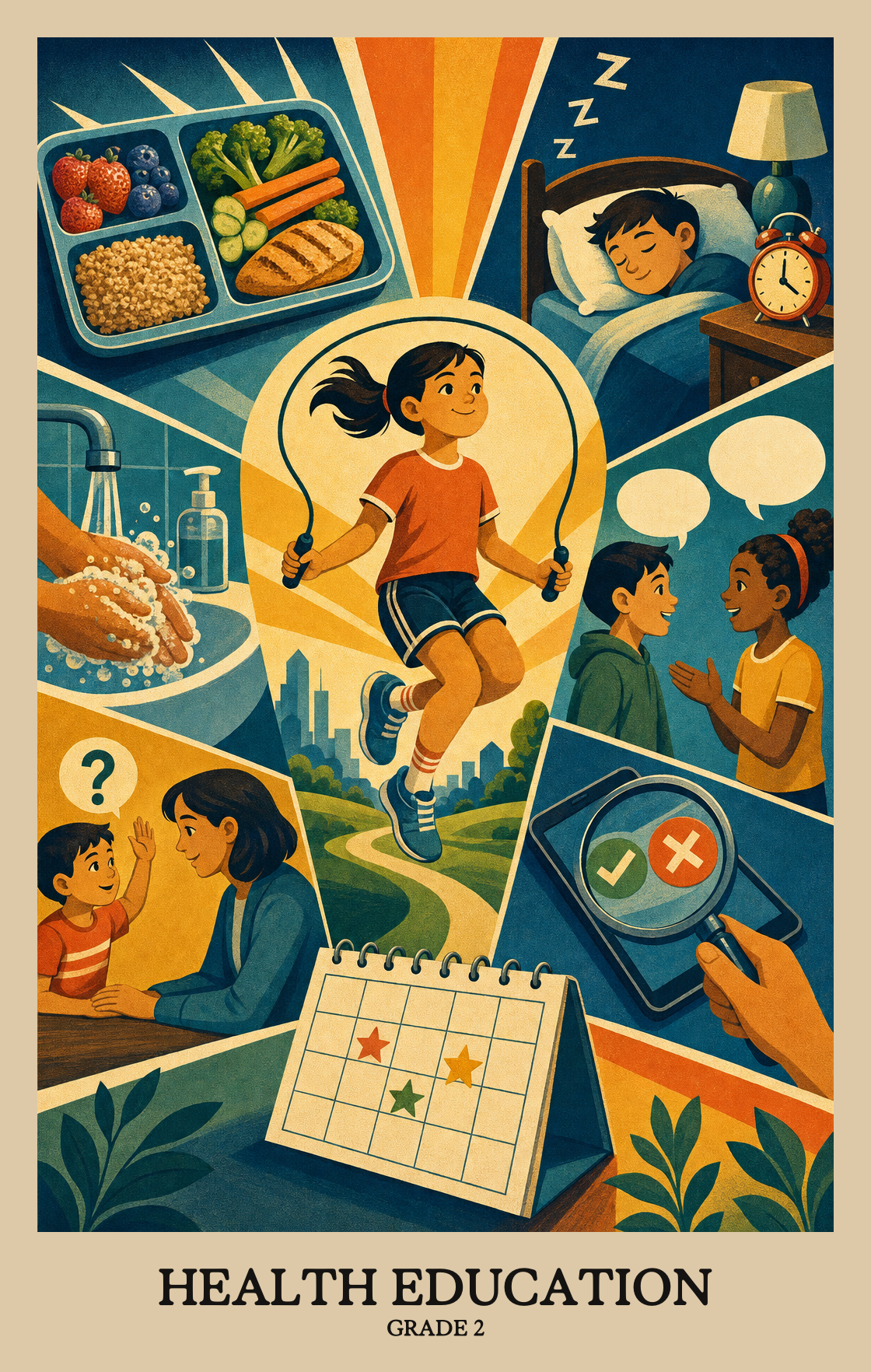
Students learn the daily basics that keep bodies healthy, like washing hands, brushing teeth, eating a mix of foods, sleeping enough, and moving around each day.
Students practice staying safe at home, in the car, on the playground, and near streets. They learn what to do in an emergency and who counts as a trusted adult.
Students put words to feelings like worry, anger, and sadness. They practice calming down, speaking up kindly, and working out small problems with classmates and family.
Students learn to stop and think before they act. They practice picking healthy options, setting a small goal like drinking more water, and noticing what messages from ads or shows are trying to sell them.
Students learn basic health facts, like why sleep matters, how germs spread, and what keeps their bodies working well. The focus is on understanding the "why" behind healthy habits, not just following rules.
Students learn to spot what shapes their health choices, from how they feel inside to what friends, family, and ads tell them. They practice noticing which influences help them stay healthy and which ones don't.
Students practice finding trustworthy health information, like reading a food label or knowing which adult to ask when something hurts. They learn to spot the difference between helpful information and information that is not reliable.
Students practice saying no, asking for help, and talking through disagreements in ways that keep relationships safe and healthy. These are the words and habits that help them handle real situations with friends, classmates, and family.
Students practice making healthy choices by thinking through what might happen before they act. They learn to weigh options and pick the one that keeps them safe and feeling well.
Students pick a small health goal, like drinking more water or getting outside to play, and make a simple plan to reach it. They practice the habit of setting a target and checking whether they hit it.
Students learn simple habits that keep them healthy and safe, like washing hands, getting enough sleep, or wearing a helmet. The focus is on choices they can make every day, not just knowing what's healthy but actually doing it.
Students practice simple habits that keep themselves and the people around them healthy, then share what they know with family or classmates.
| Standard | Definition | Code |
|---|---|---|
| Health habits that help you feel good | Students learn basic health facts, like why sleep matters, how germs spread, and what keeps their bodies working well. The focus is on understanding the "why" behind healthy habits, not just following rules. | CA-HE.1.2 |
| What shapes your health choices | Students learn to spot what shapes their health choices, from how they feel inside to what friends, family, and ads tell them. They practice noticing which influences help them stay healthy and which ones don't. | CA-HE.2.2 |
| Finding trustworthy health information | Students practice finding trustworthy health information, like reading a food label or knowing which adult to ask when something hurts. They learn to spot the difference between helpful information and information that is not reliable. | CA-HE.3.2 |
| Talking with others about health | Students practice saying no, asking for help, and talking through disagreements in ways that keep relationships safe and healthy. These are the words and habits that help them handle real situations with friends, classmates, and family. | CA-HE.4.2 |
| Choosing what's good for your health | Students practice making healthy choices by thinking through what might happen before they act. They learn to weigh options and pick the one that keeps them safe and feeling well. | CA-HE.5.2 |
| Setting health goals | Students pick a small health goal, like drinking more water or getting outside to play, and make a simple plan to reach it. They practice the habit of setting a target and checking whether they hit it. | CA-HE.6.2 |
| Habits that keep you healthy and safe | Students learn simple habits that keep them healthy and safe, like washing hands, getting enough sleep, or wearing a helmet. The focus is on choices they can make every day, not just knowing what's healthy but actually doing it. | CA-HE.7.2 |
| Supporting health at home and in your community | Students practice simple habits that keep themselves and the people around them healthy, then share what they know with family or classmates. | CA-HE.8.2 |
Students learn habits that keep them healthy and safe. That means handwashing, brushing teeth, eating a mix of foods, getting enough sleep, and knowing who to ask for help. They also start talking about feelings and how to be a good friend.
Pick one habit at a time and make it part of the daily routine. Brush teeth together in the morning, plate a fruit or vegetable at dinner, and set a steady bedtime. Talking through why the habit matters helps it stick.
Students should know their full name, a parent's phone number, and how to call 911. They should also know basic rules for crossing streets, riding in cars, and staying safe around strangers, medicine, and water.
A common arc is personal hygiene and nutrition in the fall, safety and injury prevention in the winter, and feelings, friendships, and community helpers in the spring. Revisit handwashing and food choices throughout the year so they become routine.
Use picture books and short scenarios as a buffer. Students name what a character feels and what the character could say or do, then connect it back to their own week. Shared vocabulary like calm, worried, frustrated, and proud gives them words to use later.
It is fine to say so and look it up together. Doctors, school nurses, and trusted library books are good places to start. Modeling how to find a careful answer teaches more than guessing on the spot.
Decision-making and goal-setting take the most practice. Students can name a healthy choice but struggle to pause and use it in the moment. Short weekly goals, like drinking water at lunch or asking before sharing food, give them low-stakes reps.
Students can describe a few habits that keep the body healthy, name a trusted adult to go to for help, and walk through a simple choice like what to do if a friend is hurt. They should also be able to set a small health goal and track it for a week.