First words and greetings
Students start with the basics they will use every day. They greet people, introduce themselves, and pick up familiar words for family, school, food, and feelings.
This is the year students start using a new language for real, not just memorizing word lists. Students learn to handle everyday situations like greetings, ordering food, or asking simple questions, and they begin to read short passages and write basic notes. They also start noticing how the new culture does things differently from their own. By spring, students can hold a short conversation about themselves and their daily lives.
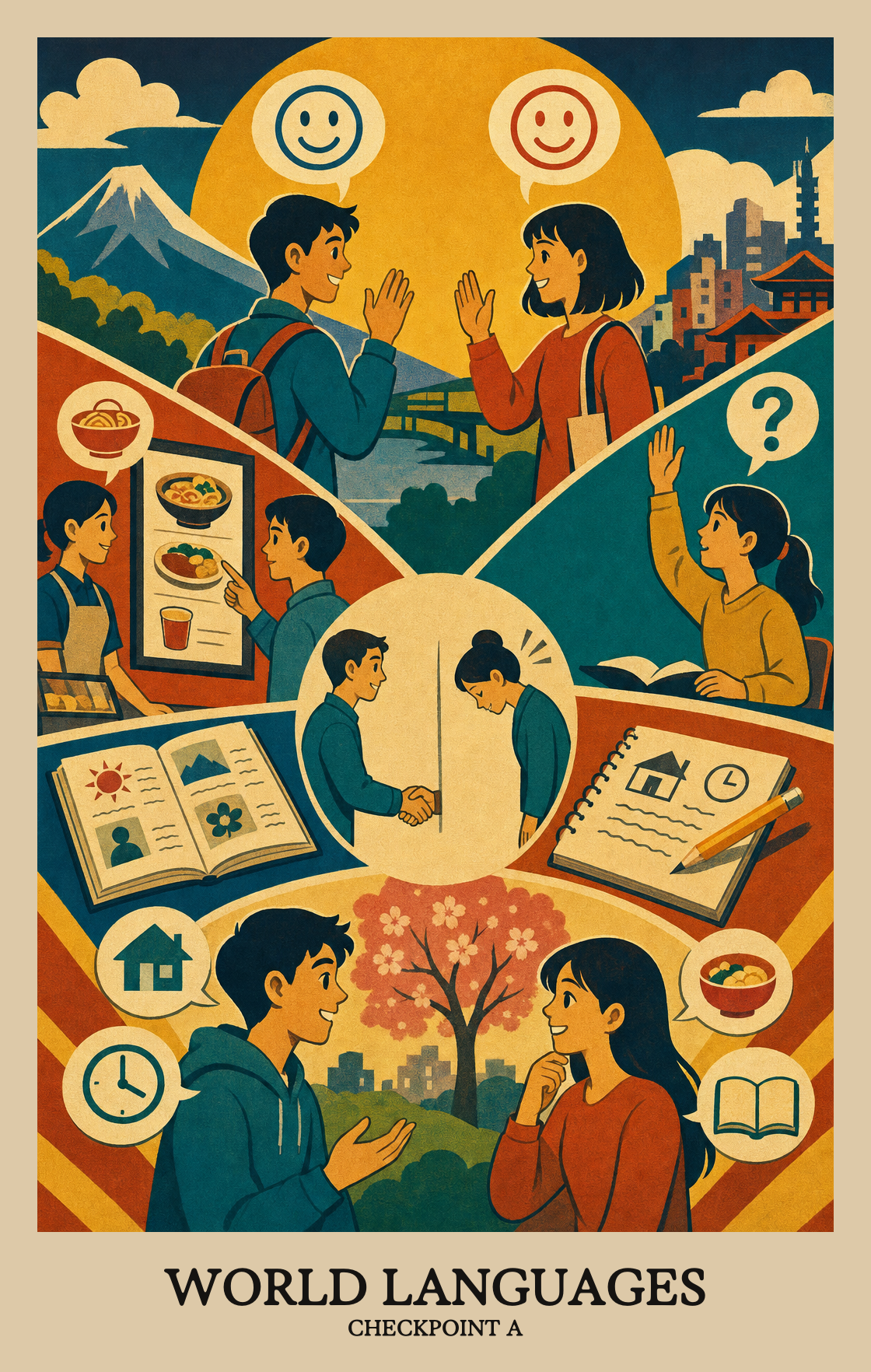
Students start with the basics they will use every day. They greet people, introduce themselves, and pick up familiar words for family, school, food, and feelings.
Students begin trading short questions and answers about themselves and their day. Expect memorized phrases at first, then short exchanges about what they like, want, or need.
Students work with short signs, menus, messages, and audio clips. They pick out names, numbers, and the main idea, even when they do not understand every word.
Students look at how people live, eat, and celebrate in places where the language is spoken. They notice what feels familiar and what is different from home, and talk about why.
Students put their words together to tell or show something simple. They might describe their family, a favorite meal, or a place, using a poster, video, or short talk.
Students try out their language in real settings, such as messages to a partner class, a community event, or a song or recipe at home. The goal is to use what they know outside the textbook.
Students read or listen to short passages in a classical language and pick out the main idea. The topics connect to the culture where the language was spoken.
Students hold short back-and-forth exchanges in a classical language, sharing opinions and reactions with a partner. They adjust what they say based on how the other person responds.
Students share information or tell a story in a classical language by speaking, writing, or using visuals. They adjust what they say based on who is listening or reading.
Students recognize and use simple phrases suited to everyday situations, like greeting someone, asking for help, or following classroom instructions. They're learning that language shifts depending on where you are and who you're talking to.
| Standard | Definition | Code |
|---|---|---|
| Reading and listening in a classical language Checkpoint A | Students read or listen to short passages in a classical language and pick out the main idea. The topics connect to the culture where the language was spoken. | CA-WL.CL.NOV.1 |
| Talking and listening in a classical language Checkpoint A | Students hold short back-and-forth exchanges in a classical language, sharing opinions and reactions with a partner. They adjust what they say based on how the other person responds. | CA-WL.CL.NOV.2 |
| Sharing ideas in a classical language Checkpoint A | Students share information or tell a story in a classical language by speaking, writing, or using visuals. They adjust what they say based on who is listening or reading. | CA-WL.CL.NOV.3 |
| Where and how beginners use a classical language Checkpoint A | Students recognize and use simple phrases suited to everyday situations, like greeting someone, asking for help, or following classroom instructions. They're learning that language shifts depending on where you are and who you're talking to. | CA-WL.CL.NOV.4 |
Students use greetings, phrases, and customs that fit the culture they are studying, not just the words of the language.
Students look at objects, traditions, and beliefs from an ancient culture and explain how they connect. A Roman coin, a Greek temple, or a daily ritual can reveal what people valued and why they lived the way they did.
| Standard | Definition | Code |
|---|---|---|
| How to interact respectfully in another culture Checkpoint A | Students use greetings, phrases, and customs that fit the culture they are studying, not just the words of the language. | CA-WL.CL.NOV.5 |
| How culture shapes what people make and do Checkpoint A | Students look at objects, traditions, and beliefs from an ancient culture and explain how they connect. A Roman coin, a Greek temple, or a daily ritual can reveal what people valued and why they lived the way they did. | CA-WL.CL.NOV.6 |
Students use Latin or Ancient Greek to make connections to other subjects like history, science, and math. Working in a classical language pushes students to think carefully and solve problems in new ways.
Students read or listen to simple texts in a classical language to find information and compare how people from that culture saw the world differently than we do today.
| Standard | Definition | Code |
|---|---|---|
| Using Latin to think through real problems Checkpoint A | Students use Latin or Ancient Greek to make connections to other subjects like history, science, and math. Working in a classical language pushes students to think carefully and solve problems in new ways. | CA-WL.CL.NOV.7 |
| Reading the world through classical languages Checkpoint A | Students read or listen to simple texts in a classical language to find information and compare how people from that culture saw the world differently than we do today. | CA-WL.CL.NOV.8 |
Students notice patterns in a classical language (such as Latin or Ancient Greek) and compare them to patterns in English. This builds a sharper sense of how languages are put together.
Students compare everyday life in ancient cultures (food, clothing, festivals, family roles) with their own to better understand both. They use the language they are studying to talk through what they notice.
| Standard | Definition | Code |
|---|---|---|
| How languages are similar and different Checkpoint A | Students notice patterns in a classical language (such as Latin or Ancient Greek) and compare them to patterns in English. This builds a sharper sense of how languages are put together. | CA-WL.CL.NOV.9 |
| How cultures compare to your own Checkpoint A | Students compare everyday life in ancient cultures (food, clothing, festivals, family roles) with their own to better understand both. They use the language they are studying to talk through what they notice. | CA-WL.CL.NOV.10 |
Students use their classical language skills outside of class, reading, writing, or sharing what they know with people in their school or wider community.
| Standard | Definition | Code |
|---|---|---|
| Using Latin outside the classroom Checkpoint A | Students use their classical language skills outside of class, reading, writing, or sharing what they know with people in their school or wider community. | CA-WL.CL.NOV.11 |
Students listen to, read, or watch simple content in another language and pick out the main idea or key details. Topics stay familiar, like greetings, food, or school.
Students hold short back-and-forth conversations in the language they are learning, sharing opinions, reactions, and basic information with a partner.
Students share information on a topic in the language they are learning by speaking, writing, or using visuals. They adjust what they say based on who is listening or reading.
Students practice the language in everyday situations: buying something at a store, chatting with a friend, or speaking more carefully in a formal moment like a presentation. The settings are familiar and predictable.
| Standard | Definition | Code |
|---|---|---|
| Understanding words in another language Checkpoint A | Students listen to, read, or watch simple content in another language and pick out the main idea or key details. Topics stay familiar, like greetings, food, or school. | CA-WL.WL.NOV.1 |
| Conversations where students share ideas and feelings Checkpoint A | Students hold short back-and-forth conversations in the language they are learning, sharing opinions, reactions, and basic information with a partner. | CA-WL.WL.NOV.2 |
| Sharing ideas in a new language Checkpoint A | Students share information on a topic in the language they are learning by speaking, writing, or using visuals. They adjust what they say based on who is listening or reading. | CA-WL.WL.NOV.3 |
| Talking in everyday and formal settings Checkpoint A | Students practice the language in everyday situations: buying something at a store, chatting with a friend, or speaking more carefully in a formal moment like a presentation. The settings are familiar and predictable. | CA-WL.WL.NOV.4 |
Students use greetings, polite phrases, and basic customs from the language they are learning to communicate the way a native speaker would expect. They know that saying hello or thank you can look very different in another culture.
Students look at everyday objects, habits, and traditions from another culture and explain what those details reveal about what people in that culture believe and value.
| Standard | Definition | Code |
|---|---|---|
| Polite greetings and responses in the target language Checkpoint A | Students use greetings, polite phrases, and basic customs from the language they are learning to communicate the way a native speaker would expect. They know that saying hello or thank you can look very different in another culture. | CA-WL.WL.NOV.5 |
| How cultures shape what people make and do Checkpoint A | Students look at everyday objects, habits, and traditions from another culture and explain what those details reveal about what people in that culture believe and value. | CA-WL.WL.NOV.6 |
Students use the new language they are learning to explore ideas from other subjects like science, history, or math. Working across subjects helps students think through problems in a different way.
Students use the language they are learning to find and compare real information from other cultures, noticing how people in those cultures see the world differently.
| Standard | Definition | Code |
|---|---|---|
| Using a new language to learn other subjects Checkpoint A | Students use the new language they are learning to explore ideas from other subjects like science, history, or math. Working across subjects helps students think through problems in a different way. | CA-WL.WL.NOV.7 |
| Finding new perspectives through another language Checkpoint A | Students use the language they are learning to find and compare real information from other cultures, noticing how people in those cultures see the world differently. | CA-WL.WL.NOV.8 |
Students notice how the language they're learning works differently from English, such as how words are ordered or how greetings are formed, and use those differences to understand both languages better.
Students compare everyday life in another culture to their own, using the language they are learning to notice and explain what's similar and what's different.
| Standard | Definition | Code |
|---|---|---|
| How languages work differently from yours Checkpoint A | Students notice how the language they're learning works differently from English, such as how words are ordered or how greetings are formed, and use those differences to understand both languages better. | CA-WL.WL.NOV.9 |
| How cultures are alike and different Checkpoint A | Students compare everyday life in another culture to their own, using the language they are learning to notice and explain what's similar and what's different. | CA-WL.WL.NOV.10 |
Students use their new language outside of class, talking or working with others in the school, neighborhood, or wider world.
| Standard | Definition | Code |
|---|---|---|
| Using a new language outside class Checkpoint A | Students use their new language outside of class, talking or working with others in the school, neighborhood, or wider world. | CA-WL.WL.NOV.11 |
An optional reading and listening test of Spanish proficiency in the CAASPP suite. Districts use it to award the Seal of Biliteracy or to validate dual-language program placements.
Students are at the novice stage. They can understand and use short, familiar phrases in everyday situations like greetings, ordering food, or talking about family and school. They are not expected to hold long conversations or read full articles yet.
Ask students to teach a few words or phrases each week, then quiz back later. Watch a short video or song in the language together and ask what they recognized. Five minutes of regular practice beats one long session on the weekend.
Students should handle short, predictable exchanges like introducing themselves, asking for prices, or describing a weekend. Expect memorized phrases and frequent pauses, not flowing speech. Errors are normal and expected at this stage.
No. The goal is being understood, not sounding like a native speaker. Praise effort and willingness to try out loud, since fear of mistakes is the biggest thing that slows students down.
Start with high-frequency topics like self, family, school, food, and daily routines, then recycle that vocabulary through new contexts. Build in culture from day one rather than saving it for a unit. Plan for lots of repetition across reading, listening, speaking, and writing.
Listening tends to lag behind reading because students rely on visual cues. Question formation and basic verb conjugation also need constant cycling back. Short daily warm-ups work better than dedicated grammar units.
Culture is part of every unit, not a side topic. Students compare things like greetings, meals, school days, or holidays in the target culture and their own. The goal is noticing differences without judging them.
Look for music, short videos, cooking, or community events in the target language. Apps and flashcards help with vocabulary but do not replace using the language with another person. A pen pal or video exchange goes a long way.
Students should handle familiar topics in short conversations, write a short paragraph about themselves, and read simple texts with picture or context support. They should also be able to compare a cultural practice in the target culture with their own.