Knowing yourself as an adult
Students look honestly at their own emotions, values, and habits and notice how those show up at school, at work, and at home. The focus is self-awareness that lasts past high school.
This is the year students take what they know about themselves into the adult world. Students learn to name what they're feeling, manage stress under real pressure, and see situations from someone else's point of view. They practice building honest relationships and making thoughtful choices when no one is watching. By spring, students can talk through a hard decision and explain why they made it.
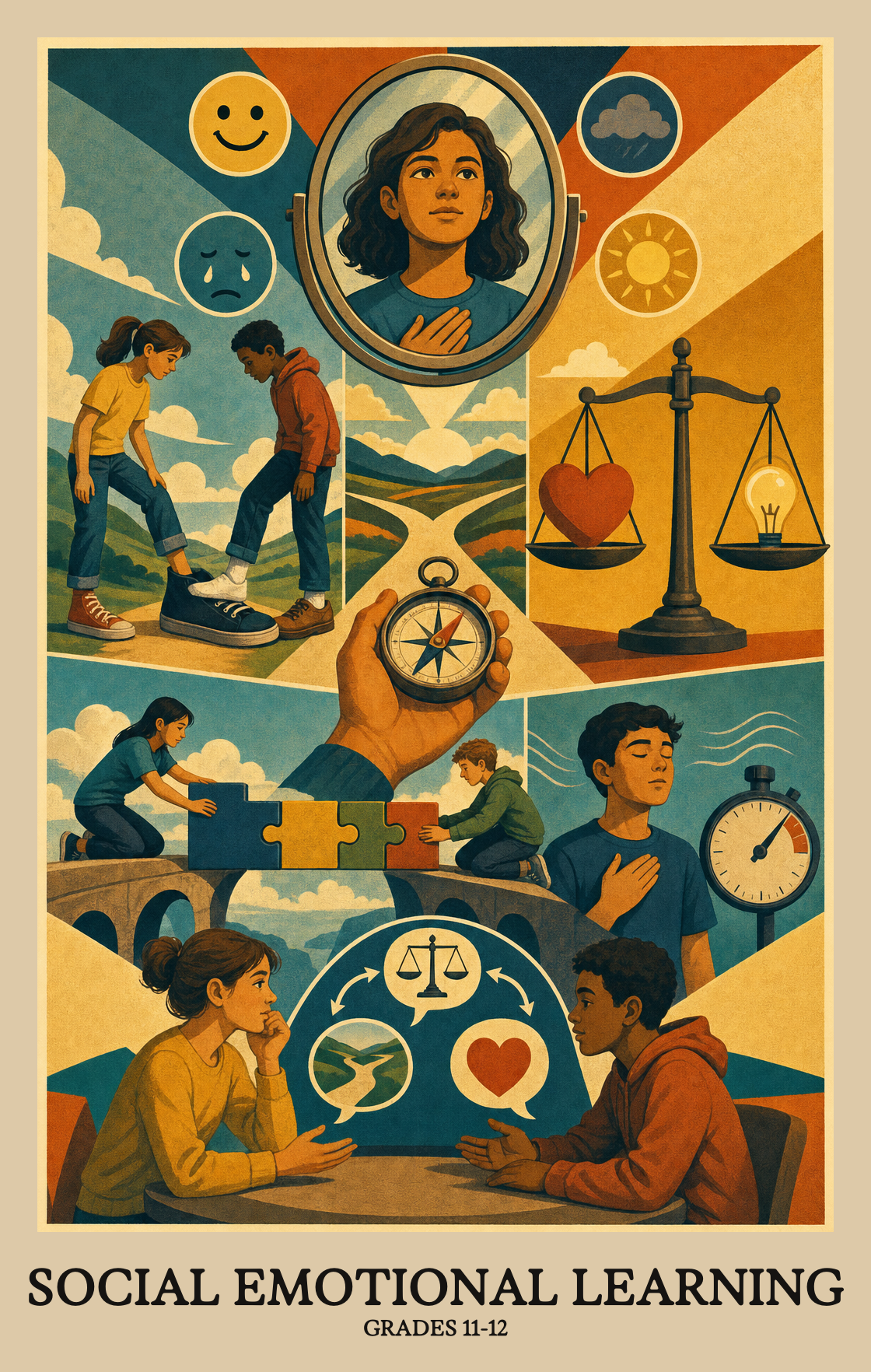
Students look honestly at their own emotions, values, and habits and notice how those show up at school, at work, and at home. The focus is self-awareness that lasts past high school.
Students practice handling pressure from classes, jobs, college plans, and family. They set goals that matter to them and build routines to keep going when things get hard.
Students work on seeing situations from other points of view, including people whose backgrounds and beliefs are different from their own. They learn to listen before reacting.
Students practice the skills that keep friendships, family ties, and work relationships steady. That includes setting limits, working through conflict, and asking for help when they need it.
Students think through real decisions about safety, money, relationships, and their future. They weigh consequences for themselves and for the people around them before acting.
Students examine how their own emotions, thoughts, and values shape the decisions they make in different situations, from the classroom to relationships to future work.
Students practice recognizing when stress, strong feelings, or old habits are getting in the way, then choosing how to respond. The goal is to act in ways that match what they actually want for themselves.
Students practice seeing situations through other people's eyes, especially people whose backgrounds and experiences differ from their own. This helps them build real empathy, not just tolerance.
Students practice building relationships that hold up over time, including across real differences in background or belief. They learn how to read a room, handle conflict, and stay connected with people who see the world differently.
Students practice weighing the effect their choices have on other people before acting, especially in situations where the right call isn't obvious.
| Standard | Definition | Code |
|---|---|---|
| Knowing yourself and why you act the way you do Grades 11-12 | Students examine how their own emotions, thoughts, and values shape the decisions they make in different situations, from the classroom to relationships to future work. | CA-SEL.1.11-12 |
| Managing emotions and behaviors to reach goals Grades 11-12 | Students practice recognizing when stress, strong feelings, or old habits are getting in the way, then choosing how to respond. The goal is to act in ways that match what they actually want for themselves. | CA-SEL.2.11-12 |
| Seeing the world through someone else's eyes Grades 11-12 | Students practice seeing situations through other people's eyes, especially people whose backgrounds and experiences differ from their own. This helps them build real empathy, not just tolerance. | CA-SEL.3.11-12 |
| Building healthy relationships with different people Grades 11-12 | Students practice building relationships that hold up over time, including across real differences in background or belief. They learn how to read a room, handle conflict, and stay connected with people who see the world differently. | CA-SEL.4.11-12 |
| Choices that are kind and constructive Grades 11-12 | Students practice weighing the effect their choices have on other people before acting, especially in situations where the right call isn't obvious. | CA-SEL.5.11-12 |
Students work on knowing themselves, managing stress, understanding people who are different from them, building healthy relationships, and making decisions they can stand behind. The focus shifts toward adult situations: jobs, college, friendships, and family roles. Skills get tested in real life, not just discussed in class.
Ask open questions at low-pressure moments, like during a drive or while making dinner. Listen more than you advise. When something hard comes up, ask what they want to do about it before jumping in with a fix.
Drop the direct emotion questions and talk about situations instead. Ask what happened, who was there, and what they thought about it. Feelings often come out sideways once the pressure is off.
Pick one skill per unit and tie it to something already happening. A group project is a chance to practice managing conflict. A tough reading is a chance to take another person's perspective. Name the skill out loud so students notice they are using it.
Stress management, decision-making under social pressure, and handling conflict in close relationships. Students often have the vocabulary but struggle to use the skills when emotions run high. Short practice with real scenarios beats long lessons on theory.
Look for small signs: calming down faster after a hard moment, naming what they need, repairing a fight with a friend, or thinking through a choice before making it. Perfect behavior is not the goal. Steady growth in self-awareness and follow-through is.
Move away from teacher-led lessons toward student-led discussion, choice, and reflection. Build in time for students to apply skills to decisions they actually face: college, work, relationships, money. Treat them as near-adults figuring out their own values.
Students should be able to recognize their own patterns, manage stress without falling apart, see a situation from another person's point of view, and make choices that match their values. These are the skills they will lean on in college, work, and adult relationships.