Brainstorming and finding ideas
Students start the year gathering ideas for their own art. They pull from memories, family stories, and things they care about, then sketch out a few directions before picking one to build on.
This is the year art moves from making projects to thinking like an artist. Students plan their work on purpose, draw on their own lives for ideas, and revise pieces before calling them finished. They also start talking about art with real reasons, explaining what a piece means and why it works. By spring, students can prepare a finished piece for display and explain the choices behind it.
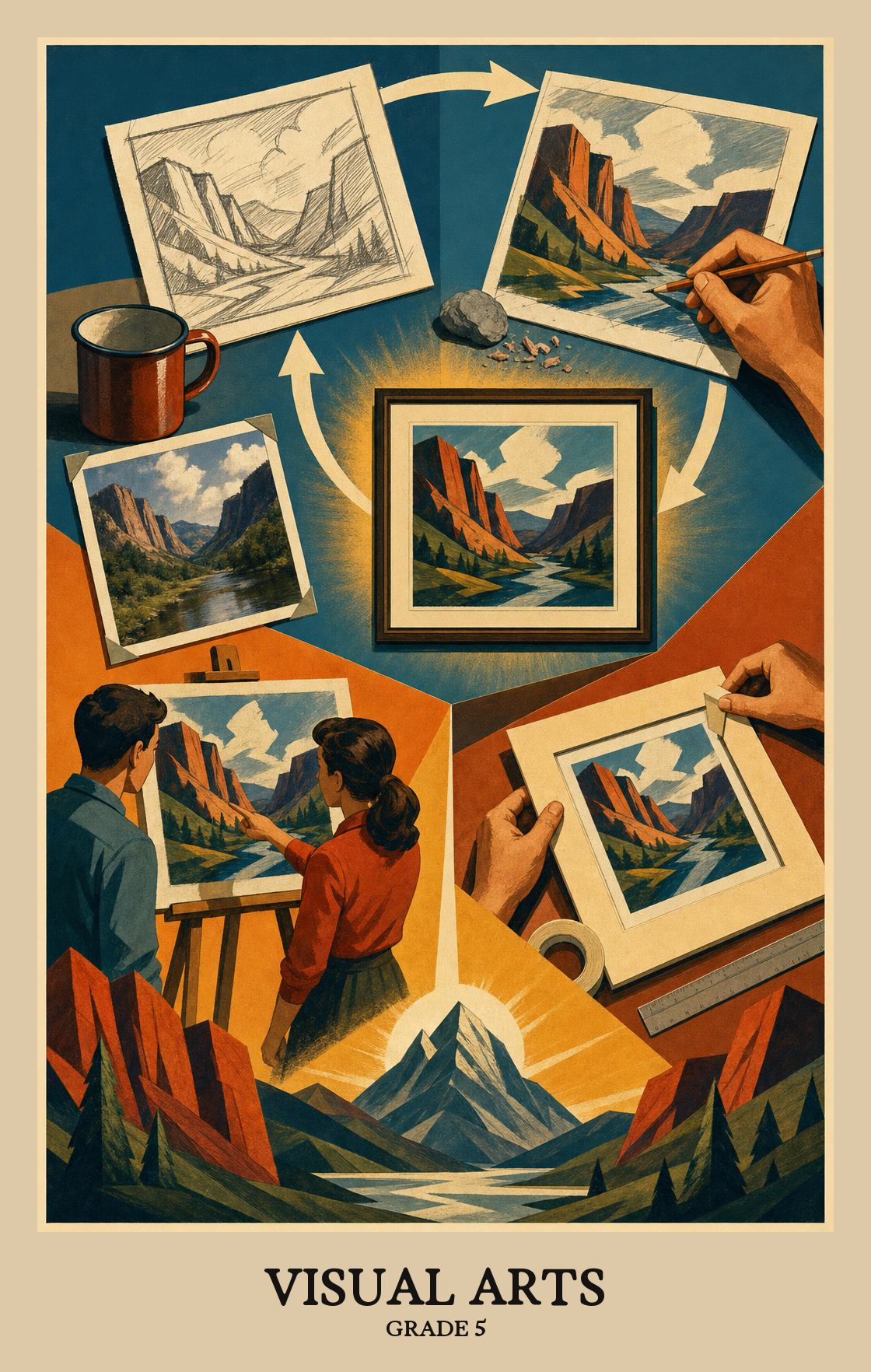
Students start the year gathering ideas for their own art. They pull from memories, family stories, and things they care about, then sketch out a few directions before picking one to build on.
Students practice with materials like paint, clay, and digital tools. They plan a project on purpose, thinking about what they want a viewer to notice and how to organize the parts of the picture.
Students study artwork from different times and places. They talk about what they see, guess what the artist meant, and notice how art changes depending on the culture or moment it came from.
Students go back into their own work to fix and improve it. They use a checklist or class criteria to judge what is working, then make changes before calling a piece done.
At the end of the year, students choose pieces for a show or portfolio. They decide how to display the work and can talk about what it means and why they made the choices they did.
Students pull from what they know and what they've lived through to make original artwork. Personal experiences, memories, and ideas from other subjects all show up in what students create.
Students look at a painting or sculpture and ask where it came from: what was happening in the world, what culture made it, and why. That context changes what the work means.
| Standard | Definition | Code |
|---|---|---|
| Synthesize and relate knowledge and personal experiences to make art | Students pull from what they know and what they've lived through to make original artwork. Personal experiences, memories, and ideas from other subjects all show up in what students create. | VA:Cn10.5 |
| Relate artistic ideas and works with societal, cultural | Students look at a painting or sculpture and ask where it came from: what was happening in the world, what culture made it, and why. That context changes what the work means. | VA:Cn11.5 |
Students brainstorm original ideas for an artwork before picking up a brush or pencil. They sketch plans, ask "what if," and make deliberate choices about what they want to create.
Students plan and refine a piece of visual art by making choices about composition, materials, and technique before and during the work itself.
Students revisit a piece of artwork, make deliberate changes based on feedback or reflection, and decide when the work is finished.
| Standard | Definition | Code |
|---|---|---|
| Generate and conceptualize artistic ideas and work | Students brainstorm original ideas for an artwork before picking up a brush or pencil. They sketch plans, ask "what if," and make deliberate choices about what they want to create. | VA:Cr1.5 |
| Organize and develop artistic ideas and work | Students plan and refine a piece of visual art by making choices about composition, materials, and technique before and during the work itself. | VA:Cr2.5 |
| Refine and complete artistic work | Students revisit a piece of artwork, make deliberate changes based on feedback or reflection, and decide when the work is finished. | VA:Cr3.5 |
Students look at a set of their own artwork, decide which pieces are strongest, and explain why those pieces are worth showing to an audience.
Students practice and improve a piece of artwork until it is ready to share with an audience. That means revisiting choices about color, detail, and composition before the work is displayed.
Students choose how to display or share their artwork so the viewer understands what the piece is about. The way a work is shown is part of what it says.
| Standard | Definition | Code |
|---|---|---|
| Analyze, interpret, and select artistic work for presentation | Students look at a set of their own artwork, decide which pieces are strongest, and explain why those pieces are worth showing to an audience. | VA:Pr4.5 |
| Develop and refine artistic techniques and work for presentation | Students practice and improve a piece of artwork until it is ready to share with an audience. That means revisiting choices about color, detail, and composition before the work is displayed. | VA:Pr5.5 |
| Convey meaning through the presentation of artistic work | Students choose how to display or share their artwork so the viewer understands what the piece is about. The way a work is shown is part of what it says. | VA:Pr6.5 |
Students look closely at a piece of artwork and explain what they notice, describing how the artist used color, shape, or composition to create a specific effect.
Students look closely at a piece of art and explain what the artist was trying to say. They use details in the work, like color, shape, or subject matter, to support their thinking.
Students look at a piece of artwork and judge it using specific criteria, like how well the artist used color, composition, or technique. They explain their reasoning, not just whether they liked it.
| Standard | Definition | Code |
|---|---|---|
| Perceive and analyze artistic work | Students look closely at a piece of artwork and explain what they notice, describing how the artist used color, shape, or composition to create a specific effect. | VA:Re7.5 |
| Interpret intent and meaning in artistic work | Students look closely at a piece of art and explain what the artist was trying to say. They use details in the work, like color, shape, or subject matter, to support their thinking. | VA:Re8.5 |
| Apply criteria to evaluate artistic work | Students look at a piece of artwork and judge it using specific criteria, like how well the artist used color, composition, or technique. They explain their reasoning, not just whether they liked it. | VA:Re9.5 |
Students make art, look closely at art made by others, and talk about what it means. They work in materials like drawing, painting, collage, sculpture, and sometimes digital tools. By the end of the year, they can plan a piece, revise it, and explain the choices they made.
Keep a basic supply box with paper, pencils, markers, scissors, and glue, and let students use it without a finished product in mind. Ask them to tell the story behind a piece instead of saying it looks nice. Visiting a local museum or library art display, even once, gives a lot to talk about.
Not really. Fifth grade focuses on planning, revising, and explaining ideas, not on whether a drawing looks like a photograph. Students who struggle with realistic drawing can still do strong work through collage, sculpture, pattern, and design.
Many teachers start with observation and basic technique, move into longer projects that ask for planning and revision, and end with a presentation piece students choose and refine. Weaving in artists from different cultures and time periods across the year supports the connecting and responding standards without adding separate units.
A fifth grader who is ready for middle school art can come up with an idea, sketch a plan, make changes partway through, and talk about why. They can also look at someone else's art and say what it might mean and what choices the artist made. Finished products vary, and that is fine.
Focus on finishing rather than on talent. Sit down and draw or build something alongside them for ten minutes, and let your own work be messy. Praise specific choices, such as a color or a shape, instead of the whole piece.
Revision is the hardest part. Most fifth graders want to call a piece done the moment paint hits paper, and asking them to plan, critique, and rework takes practice. Building short, structured critiques into every project, with one or two specific things to look for, tends to help more than longer feedback sessions.
Bigger projects usually span three to six class periods so students have time to plan, make, and revise. Short single-period activities still have a place for warming up a skill or trying a new material. A balance of both keeps students engaged and protects time for the longer work that builds the year's standards.