Exploring sound and voice
Students start the year discovering how their voices, bodies, and simple instruments make sound. They sing along to short songs, copy rhythms by clapping, and learn what loud, soft, fast, and slow feel like.
This is the year music starts to feel like something students make, not just hear. Students sing simple songs, tap out beats, and try out instruments to see what sounds they can create. They start noticing what a song reminds them of and whether it feels happy or slow. By spring, students can perform a short song or rhythm for the class and say what they liked about a piece of music.
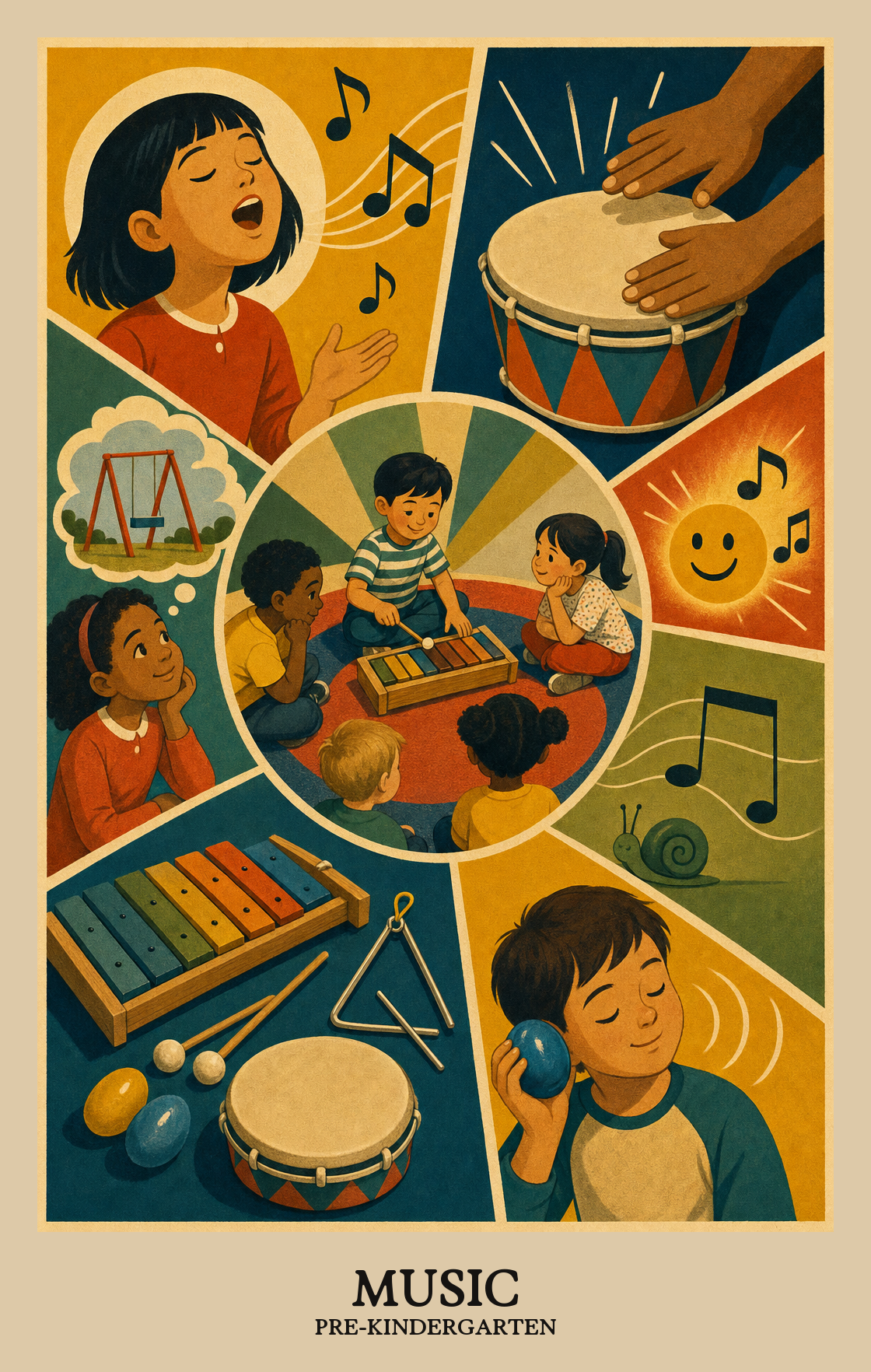
Students start the year discovering how their voices, bodies, and simple instruments make sound. They sing along to short songs, copy rhythms by clapping, and learn what loud, soft, fast, and slow feel like.
Students invent their own sounds and short songs. They might tap out a pattern, hum a tune for a stuffed animal, or pick instruments to match a story the class is telling together.
Students practice songs and movements to share with the class or family. They learn to start together, listen to each other, and show feelings like happy or sleepy through how they sing or play.
Students listen to songs from different places and times and talk about what they hear. They say what they like, notice if music sounds calm or bouncy, and connect songs to their own lives at home.
Students connect what they already know and feel to the music they make and hear. A favorite song, a memory, or a feeling can become part of how they sing, move, or play.
Songs, stories, and art come from somewhere. Students begin to notice that music can tell us about people, places, and ways of life different from their own.
| Standard | Definition | Code |
|---|---|---|
| Synthesize and relate knowledge and personal experiences to make art | Students connect what they already know and feel to the music they make and hear. A favorite song, a memory, or a feeling can become part of how they sing, move, or play. | MU:Cn10.pk |
| Relate artistic ideas and works with societal, cultural | Songs, stories, and art come from somewhere. Students begin to notice that music can tell us about people, places, and ways of life different from their own. | MU:Cn11.pk |
Students come up with their own musical ideas, like making up a simple rhythm or humming a tune, rather than just copying what they hear.
Students pick a simple song, rhythm, or sound and start putting it together, deciding what comes first and what comes next.
Students pick a song or rhythm they have been practicing and decide when it sounds the way they want it to. They learn that making music involves trying, adjusting, and finishing a piece.
| Standard | Definition | Code |
|---|---|---|
| Generate and conceptualize artistic ideas and work | Students come up with their own musical ideas, like making up a simple rhythm or humming a tune, rather than just copying what they hear. | MU:Cr1.pk |
| Organize and develop artistic ideas and work | Students pick a simple song, rhythm, or sound and start putting it together, deciding what comes first and what comes next. | MU:Cr2.pk |
| Refine and complete artistic work | Students pick a song or rhythm they have been practicing and decide when it sounds the way they want it to. They learn that making music involves trying, adjusting, and finishing a piece. | MU:Cr3.pk |
Students choose a song or sound to share with others, thinking about what they like and why it feels right to perform.
Students practice a song or rhythm until it sounds the way they want it to. Getting it right takes a few tries, and that effort is part of making music.
Singing a song or tapping a beat for others is how students share what music means to them. Students learn that performing is a way to express an idea or feeling, not just make sound.
| Standard | Definition | Code |
|---|---|---|
| Analyze, interpret, and select artistic work for presentation | Students choose a song or sound to share with others, thinking about what they like and why it feels right to perform. | MU:Pr4.pk |
| Develop and refine artistic techniques and work for presentation | Students practice a song or rhythm until it sounds the way they want it to. Getting it right takes a few tries, and that effort is part of making music. | MU:Pr5.pk |
| Convey meaning through the presentation of artistic work | Singing a song or tapping a beat for others is how students share what music means to them. Students learn that performing is a way to express an idea or feeling, not just make sound. | MU:Pr6.pk |
Students listen to a short piece of music and share what they notice, like whether it feels fast or slow, loud or quiet.
Students listen to a short song or piece of music and share what it makes them think or feel, using words or movement to explain their idea.
Students listen to a song or watch a performance and say what they liked or what they noticed. It's an early step in learning to talk about music with a reason, not just "I liked it."
| Standard | Definition | Code |
|---|---|---|
| Perceive and analyze artistic work | Students listen to a short piece of music and share what they notice, like whether it feels fast or slow, loud or quiet. | MU:Re7.pk |
| Interpret intent and meaning in artistic work | Students listen to a short song or piece of music and share what it makes them think or feel, using words or movement to explain their idea. | MU:Re8.pk |
| Apply criteria to evaluate artistic work | Students listen to a song or watch a performance and say what they liked or what they noticed. It's an early step in learning to talk about music with a reason, not just "I liked it." | MU:Re9.pk |
Students sing simple songs, clap rhythms, move to a beat, and try out shakers, drums, and bells. A lot of the work is playful exploration. The point is to notice that music has fast and slow, loud and soft, and to enjoy making sound with others.
Sing in the car, clap along to songs, and let students bang on pots or shake a jar of beans. Five minutes of dancing to a favorite song counts. Ask what the song made them think about or how it made them feel.
No. Reading music comes much later. Right now students are building their ear and their voice by listening, copying, and making up their own sounds.
Start with steady beat and call-and-response singing, then add simple rhythm patterns and contrasts like loud and soft or high and low. Bring in instruments once routines are steady. Save short performances and reflection prompts for the back half of the year.
Keeping a steady beat while singing trips up most students, and so does waiting for a turn on an instrument. Short, repeated practice with a drum or clapping game helps more than long lessons. Expect to revisit these all year.
Students can sing a familiar song with the group, keep a steady beat with their hands or a shaker, and tell something they noticed about a piece of music. They can also make up a short sound pattern and share it.
Not at all. Many students hum or mouth the words for months before they sing out. Singing together at home in low-pressure moments, like bath time or bedtime, often helps more than asking for a solo.
Pick songs that connect to current themes, like weather, family, or animals, and bring in music from the cultures of students in the room. Ask students what a song reminds them of. These small links build the habit of connecting music to life.