Moving safely together
Students learn to move around a shared space without bumping into friends. They practice starting, stopping, and listening for the next direction.
This is the year movement becomes a daily habit. Students practice big skills like running, jumping, hopping, and skipping, and they learn to throw, catch, and kick simple objects. They also start sharing space with classmates, taking turns, and following directions during games. By spring, they can move safely around a room, copy basic movements, and play a short group game without losing track of the rules.
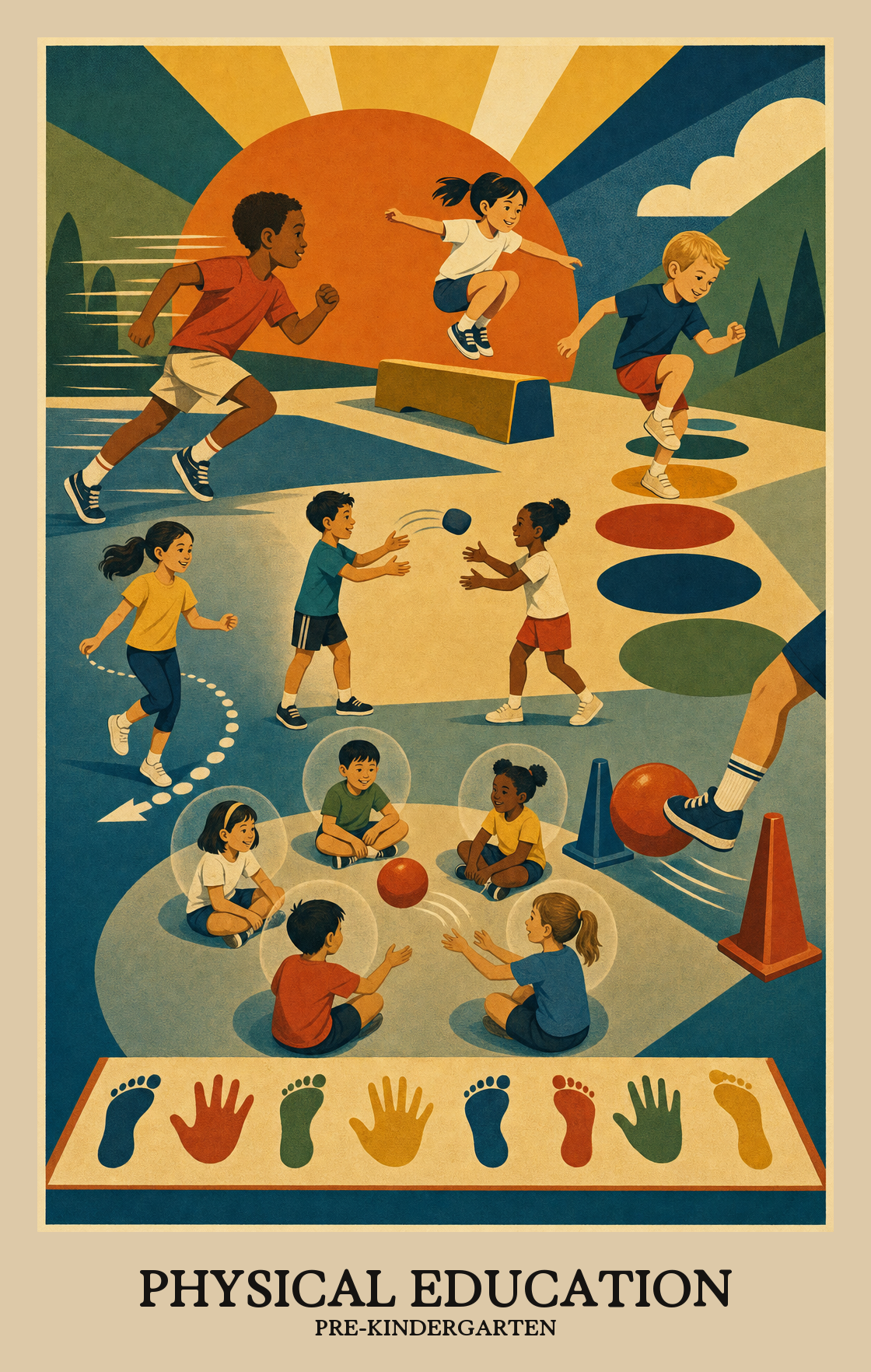
Students learn to move around a shared space without bumping into friends. They practice starting, stopping, and listening for the next direction.
Students try out the big ways their body can travel. Expect lots of running, hopping on one foot, skipping, and galloping across the gym or playground.
Students stay in one spot and explore what their body can do. They balance on one foot, stretch tall, curl small, and twist side to side.
Students start handling balls and beanbags. They roll, toss, catch with two hands, and kick a ball forward to a partner or target.
Students take turns, share equipment, and follow simple game rules. They learn to cheer on classmates and ask for help when they need it.
Students notice what active play does for their body. They feel their heart beat faster, talk about activities they enjoy, and pick ways to keep moving at home.
Students practice basic ways to move their bodies, like running, jumping, balancing, and throwing. These early movement skills set the foundation for staying active as they grow.
Students learn basic ideas about how their bodies move and stay healthy, then put those ideas to work during physical activities like running, jumping, or stretching.
Students practice getting along while they move: taking turns, listening to classmates, and following group rules during games and activities.
Students learn that moving their bodies feels good and is good for them. They start building the habit of choosing to be active, whether that means running, dancing, or playing outside.
| Standard | Definition | Code |
|---|---|---|
| Develop a variety of motor skills, including locomotor, non-locomotor | Students practice basic ways to move their bodies, like running, jumping, balancing, and throwing. These early movement skills set the foundation for staying active as they grow. | CT-PE.1.pk |
| Apply knowledge related to movement, performance | Students learn basic ideas about how their bodies move and stay healthy, then put those ideas to work during physical activities like running, jumping, or stretching. | CT-PE.2.pk |
| Develop social skills through movement, including respect for self and others… | Students practice getting along while they move: taking turns, listening to classmates, and following group rules during games and activities. | CT-PE.3.pk |
| Develop personal skills, identify personal benefits of movement | Students learn that moving their bodies feels good and is good for them. They start building the habit of choosing to be active, whether that means running, dancing, or playing outside. | CT-PE.4.pk |
Students spend most of their time running, hopping, jumping, climbing, throwing, catching, and balancing. The goal is comfort with their own body, not skill in any one sport. Play is the main way they learn.
Give students time outside every day to run, climb, and chase a ball. Roll, toss, and bounce a ball back and forth. Short, playful bursts work better than long sessions.
Most students can run without falling, jump with both feet, hop on one foot for a few steps, and throw and catch a large ball at close range. They can also follow simple directions in a group game.
Build the year around locomotor skills first (walk, run, jump, hop, gallop), then add catching, throwing, and kicking once balance is steady. Revisit the same skills in new games so students get many reps without getting bored.
Big differences are normal at this age. Focus on giving more chances to practice rather than correcting form. Climbing, dancing, and obstacle play at home help balance and coordination catch up quickly.
Catching, skipping, and any skill that needs two hands or two feet working together tend to lag. Plan short, repeated practice across the year with soft balls, scarves, and beanbags before moving to harder equipment.
Aim for at least an hour of active play each day, split into shorter chunks. Walks to the park, dancing in the kitchen, and backyard games all count.
Use partner games with one ball or one hoop so students must share to play. Name the behavior out loud when it happens, such as waiting in line or passing to a friend. Keep groups small at first.
They can move safely in a shared space, follow two-step directions like stop and freeze, and try a new skill without giving up. Confidence with their body matters more than polished technique.