Healthy habits at home and school
Students learn the basics that keep them feeling good each day. They practice washing hands, brushing teeth, eating a mix of foods, sleeping enough, and moving their bodies.
These are the years students start naming healthy habits and seeing themselves as the person in charge of them. Students learn the basics of taking care of their body, asking a trusted adult for help, and noticing how feelings and friendships affect them. They practice talking through small choices, like what to eat for snack or how to handle a disagreement on the playground. By spring, students can explain one healthy habit they do every day and who they go to when something feels wrong.
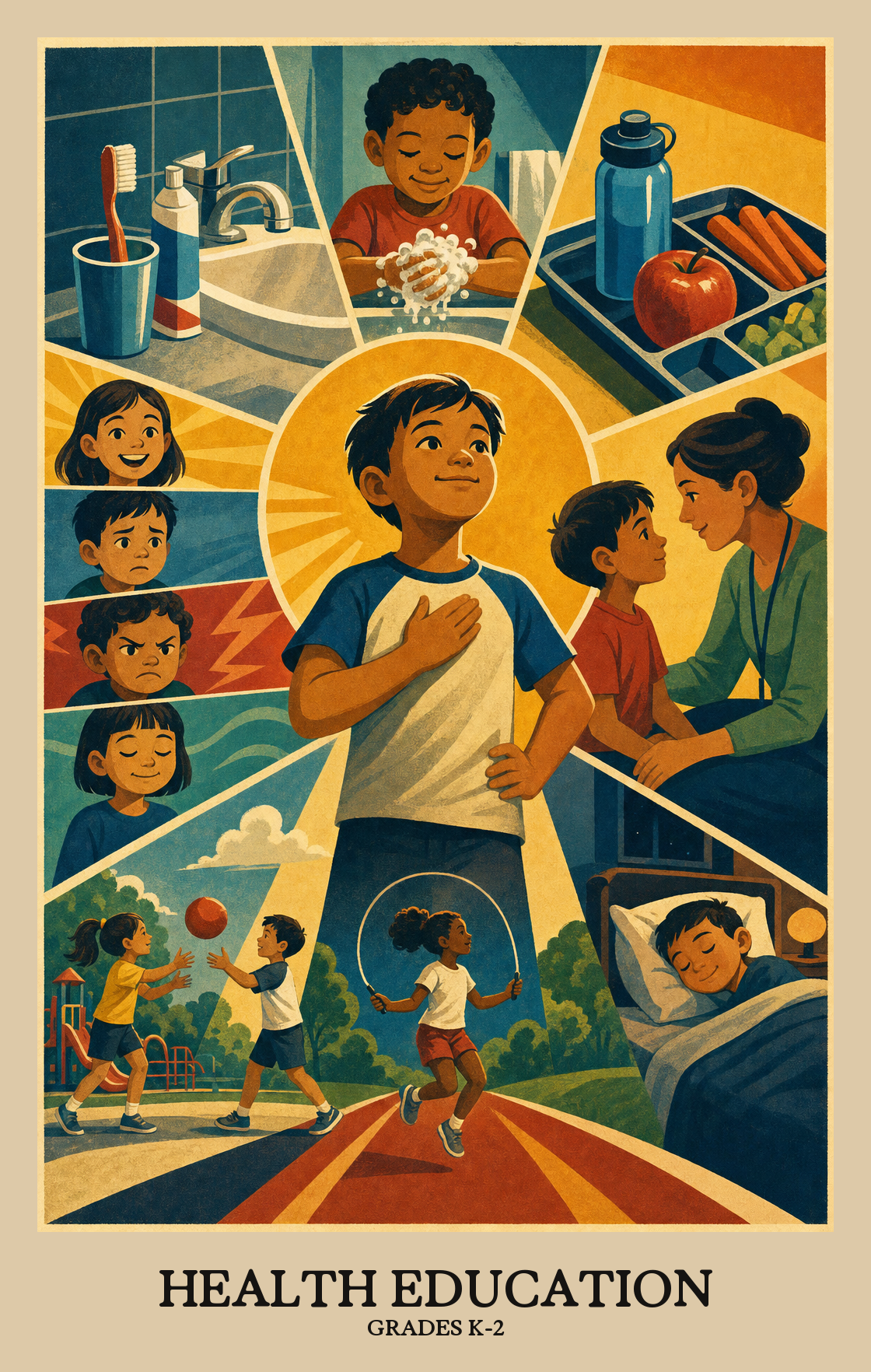
Students learn the basics that keep them feeling good each day. They practice washing hands, brushing teeth, eating a mix of foods, sleeping enough, and moving their bodies.
Students name what they are feeling and notice feelings in others. They practice asking for help, taking turns, and using words to work through a problem with a friend.
Students learn how to stay safe at home, on the playground, in the car, and near streets. They practice saying no, telling a trusted adult, and knowing which grown-ups can help.
Students start to notice how family, friends, ads, and screens shape what they want to eat, watch, and do. They talk about why some choices help their bodies and some do not.
Students pick one small goal, like drinking more water or going to bed on time, and track how it goes. They share what worked and speak up for healthy habits at school and home.
Students learn basic health facts, like why sleep matters or how germs spread, and practice using that knowledge to take care of themselves and the people around them.
Students look at what shapes healthy choices, like friends, family, TV, or store ads, and start to notice whether those things push them toward good habits or away from them.
Students learn to find trustworthy sources of health information, like a school nurse, a doctor, or a trusted adult, and know when to go to them for help.
Students practice asking for help, saying no, and listening to friends to stay safe and healthy. These everyday conversation skills help students look out for themselves and the people around them.
Students practice a simple step-by-step way to make choices, like deciding what to do when a friend is hurt or when they feel sick. The goal is picking what helps them and the people around them stay healthy.
Students pick a health goal, like drinking more water or getting more sleep, and make a simple plan to reach it. They also think about how their goal can help someone around them.
Students practice simple habits like washing hands, getting enough sleep, and being kind. These everyday choices help keep themselves and the people around them healthy.
Students speak up for healthy choices, for themselves and the people around them. That means telling a friend to wash their hands, asking a grown-up for help, or explaining why rest and good food matter.
| Standard | Definition | Code |
|---|---|---|
| Use functional knowledge of health concepts to support health and well-being of… Grades K-2 | Students learn basic health facts, like why sleep matters or how germs spread, and practice using that knowledge to take care of themselves and the people around them. | CT-HE.1.k-2 |
| Analyze influences that affect health and well-being of self and others Grades K-2 | Students look at what shapes healthy choices, like friends, family, TV, or store ads, and start to notice whether those things push them toward good habits or away from them. | CT-HE.2.k-2 |
| Access valid and reliable resources to support health and well-being of self… Grades K-2 | Students learn to find trustworthy sources of health information, like a school nurse, a doctor, or a trusted adult, and know when to go to them for help. | CT-HE.3.k-2 |
| Use interpersonal communication skills to support health and well-being of self… Grades K-2 | Students practice asking for help, saying no, and listening to friends to stay safe and healthy. These everyday conversation skills help students look out for themselves and the people around them. | CT-HE.4.k-2 |
| Use a decision-making process to support health and well-being of self and… Grades K-2 | Students practice a simple step-by-step way to make choices, like deciding what to do when a friend is hurt or when they feel sick. The goal is picking what helps them and the people around them stay healthy. | CT-HE.5.k-2 |
| Use a goal-setting process to support health and well-being of self and others Grades K-2 | Students pick a health goal, like drinking more water or getting more sleep, and make a simple plan to reach it. They also think about how their goal can help someone around them. | CT-HE.6.k-2 |
| Demonstrate practices and behaviors to support health and well-being of self… Grades K-2 | Students practice simple habits like washing hands, getting enough sleep, and being kind. These everyday choices help keep themselves and the people around them healthy. | CT-HE.7.k-2 |
| Advocate to promote health and well-being of self and others Grades K-2 | Students speak up for healthy choices, for themselves and the people around them. That means telling a friend to wash their hands, asking a grown-up for help, or explaining why rest and good food matter. | CT-HE.8.k-2 |
Students learn the basics of taking care of themselves and being kind to others. That includes washing hands, eating a mix of foods, getting enough sleep, naming feelings, and knowing which adults to ask for help. It is less about facts and more about daily habits.
Talk through small choices as they happen. At breakfast, ask why fruit is a good idea. At bedtime, point out how sleep helps the body. Letting students pick between two healthy options also builds the decision-making muscle the class is working on.
Start with personal habits like handwashing, sleep, and food, since those come up daily. Move into feelings and friendships in the middle of the year when classroom routines are settled. Save safety, asking for help, and speaking up for others for later units once trust is built.
Students should be able to name a few trusted adults and know how to ask for help when something feels wrong or unsafe. Practice this at home by asking who they would go to in different situations, like getting lost at the store or feeling sick at school.
Naming feelings and using words instead of actions takes the longest to stick. Decision-making also needs steady practice, since students tend to pick the first idea that comes to mind. Plan to revisit both throughout the year rather than treating them as one-and-done lessons.
Most of the work is shown through conversation, role-play, drawings, and daily routines rather than tests. Teachers watch for whether students can name a healthy habit, ask for help, and treat classmates with care. Progress shows up in behavior over weeks, not on a worksheet.
By the end of second grade, students can name simple habits that keep the body healthy, identify trusted adults, use words to handle disagreements, and set a small goal like drinking more water. They should also be able to speak up when something is unfair or unsafe.
Answer honestly using plain words, and keep the answer short. If a question goes past what feels right for the age, it is fine to say that is something to talk about when older. Students mostly want to know they can ask without getting in trouble.
Tie habits to routines already in place. Handwashing fits before snack, feelings check-ins fit during morning meeting, and goal-setting fits with reading logs or math practice. Folding health into existing routines keeps it from feeling like a separate subject that gets squeezed out.