Moving safely together
Students practice running, skipping, and stopping in a shared space without bumping into classmates. They learn the routines that keep gym time safe and fun for everyone.
This is the year movement gets more coordinated and intentional. Students sharpen running, skipping, jumping, throwing, catching, and kicking, and start linking those skills together in simple games. They learn how the body warms up, why a strong heart matters, and how to take turns, share space, and play fair with classmates. By spring, students can play a group game safely, follow the rules, and explain one reason staying active is good for them.
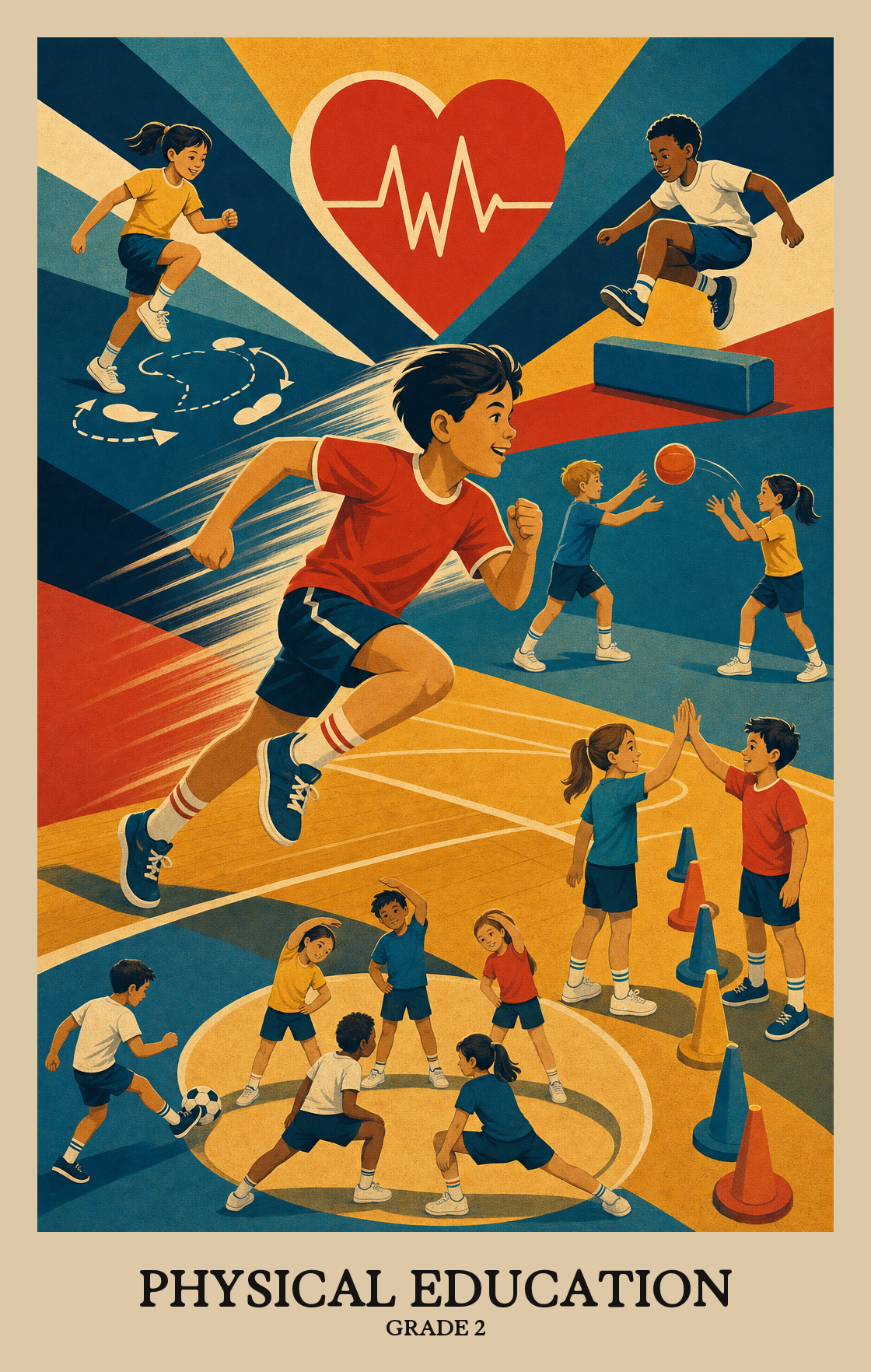
Students practice running, skipping, and stopping in a shared space without bumping into classmates. They learn the routines that keep gym time safe and fun for everyone.
Students work on sending and receiving balls and beanbags with hands and feet. Tossing underhand, catching with two hands, and aiming at a target start to feel more natural.
Students try balancing on one foot, hopping, jumping rope, and moving to a beat. They start to notice how warming up and steady breathing help their bodies feel ready to move.
Students play simple group games that use the skills they have built. They practice taking turns, cheering on classmates, following rules, and handling winning and losing with kindness.
Students learn why active play matters and notice how their hearts beat faster when they run. They talk about choosing movement at recess and at home as part of staying healthy.
Students practice moving in different ways, like jumping, balancing, and throwing a ball. Building these skills gives students the foundation to stay active and join in games and sports as they grow.
Students learn basic ideas about how the body moves and stays fit, then put those ideas to work during activities. Knowing why to bend their knees when landing or why to keep moving helps them play and exercise more safely and effectively.
Students practice getting along during movement activities: taking turns, listening to teammates, and keeping everyone included. These are the habits that make group games and gym class actually work.
Students practice moving their bodies regularly and start to notice what feels good about being active. They begin choosing activities they enjoy, building habits that can stick well beyond second grade.
| Standard | Definition | Code |
|---|---|---|
| Develop a variety of motor skills, including locomotor, non-locomotor | Students practice moving in different ways, like jumping, balancing, and throwing a ball. Building these skills gives students the foundation to stay active and join in games and sports as they grow. | CT-PE.1.2 |
| Apply knowledge related to movement, performance | Students learn basic ideas about how the body moves and stays fit, then put those ideas to work during activities. Knowing why to bend their knees when landing or why to keep moving helps them play and exercise more safely and effectively. | CT-PE.2.2 |
| Develop social skills through movement, including respect for self and others… | Students practice getting along during movement activities: taking turns, listening to teammates, and keeping everyone included. These are the habits that make group games and gym class actually work. | CT-PE.3.2 |
| Develop personal skills, identify personal benefits of movement | Students practice moving their bodies regularly and start to notice what feels good about being active. They begin choosing activities they enjoy, building habits that can stick well beyond second grade. | CT-PE.4.2 |
Students should skip, gallop, hop, and jump with control. They should be able to throw and catch a ball, kick a moving ball, and bounce a ball with one hand. They should also play simple games with a partner without falling apart when something goes wrong.
Aim for 60 minutes of active play most days. Toss a ball back and forth, play tag in the yard, ride bikes, or put on music and dance. The goal is moving and laughing, not drills.
At this age, coordination is still developing and varies a lot from student to student. Practice one skill at a time in short bursts, like catching a soft ball ten times after dinner. Repetition over weeks matters more than any single session.
Start with locomotor skills like running, skipping, and galloping in the fall, then move into manipulative skills like throwing, catching, and kicking. Save partner games and small-group cooperation games for later in the year, once students can manage their own bodies in shared space.
Catching with hands instead of trapping against the chest, and skipping with a smooth step-hop pattern. Both take many short practice sessions across the year. Build them into warm-ups rather than treating them as one-and-done lessons.
Through partner tasks, small-sided games, and short discussions about taking turns and including others. Teaching a simple routine for disagreements, such as a quick rock-paper-scissors, keeps games moving and gives students a tool they can use on their own.
Students can perform basic locomotor and manipulative skills with control, follow rules in a simple game, and work with a partner without constant adult help. They should also be able to name one reason exercise is good for the body.