Exploring tools and ideas
Students get their hands on cameras, tablets, microphones, and drawing apps. They notice how a picture, sound, or short video can tell a small story about something they care about.
This is the year students discover that pictures, videos, and sounds can tell their own stories. Students play with cameras, drawing apps, and recordings to share what they see and feel. They notice how a favorite show or song was made by someone with an idea. By spring, students can make a short picture or sound piece, share it with the class, and say what they like about a classmate's work.
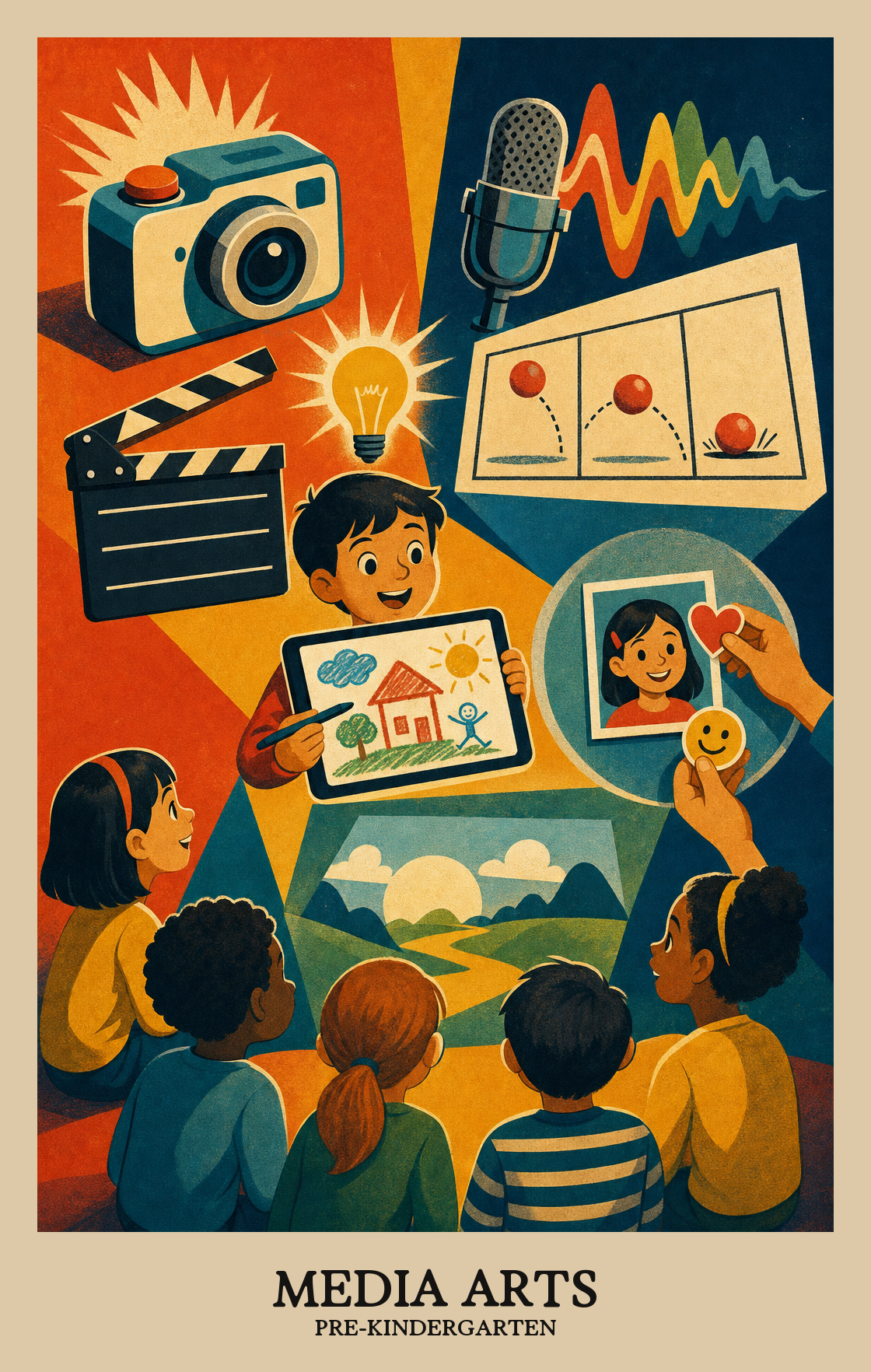
Students get their hands on cameras, tablets, microphones, and drawing apps. They notice how a picture, sound, or short video can tell a small story about something they care about.
Students pick an idea and make something with it, like a photo of a pet or a recording of a favorite song. They start to plan a little before they press record or snap a picture.
Students go back to a piece they started and make it better. They might retake a blurry photo, add a sound, or choose which drawing to keep.
Students show their finished work to classmates and family. They talk about what they made, look at what friends made, and say what they liked or would change.
Students draw on things they know and moments they remember to make something new. A visit to the park, a favorite animal, or a feeling can become the starting point for a piece of media art.
Young students connect art they make or see to their own lives and the world around them, noticing how people use art to share stories and ideas.
| Standard | Definition | Code |
|---|---|---|
| Synthesize and relate knowledge and personal experiences to make art | Students draw on things they know and moments they remember to make something new. A visit to the park, a favorite animal, or a feeling can become the starting point for a piece of media art. | MA:Cn10.pk |
| Relate artistic ideas and works with societal, cultural | Young students connect art they make or see to their own lives and the world around them, noticing how people use art to share stories and ideas. | MA:Cn11.pk |
Students come up with their own ideas for pictures, sounds, or simple videos before they start making something.
Students pick a simple idea, like an animal or a color they like, and choose how to show it using pictures, sounds, or movement.
Students pick a piece of artwork they started and make it better before calling it done.
| Standard | Definition | Code |
|---|---|---|
| Generate and conceptualize artistic ideas and work | Students come up with their own ideas for pictures, sounds, or simple videos before they start making something. | MA:Cr1.pk |
| Organize and develop artistic ideas and work | Students pick a simple idea, like an animal or a color they like, and choose how to show it using pictures, sounds, or movement. | MA:Cr2.pk |
| Refine and complete artistic work | Students pick a piece of artwork they started and make it better before calling it done. | MA:Cr3.pk |
Students pick which drawing, story, or project they want to share with the class. Choosing what to present is the first step in learning to think about an audience.
Students practice a media project (like a drawing or simple animation) more than once, making small improvements before showing it to others.
Students share their artwork or creative work with others and explain what it means to them.
| Standard | Definition | Code |
|---|---|---|
| Analyze, interpret, and select artistic work for presentation | Students pick which drawing, story, or project they want to share with the class. Choosing what to present is the first step in learning to think about an audience. | MA:Pr4.pk |
| Develop and refine artistic techniques and work for presentation | Students practice a media project (like a drawing or simple animation) more than once, making small improvements before showing it to others. | MA:Pr5.pk |
| Convey meaning through the presentation of artistic work | Students share their artwork or creative work with others and explain what it means to them. | MA:Pr6.pk |
Students look at pictures, videos, or sounds made by others and share what they notice. This is the beginning of learning to pay attention to art and explain what they see or hear.
Students look at a drawing, song, or short video and share what they think it means or how it makes them feel.
Students look at their own drawings or projects and say what they like and what they would change. It's an early habit of thinking about their own work.
| Standard | Definition | Code |
|---|---|---|
| Perceive and analyze artistic work | Students look at pictures, videos, or sounds made by others and share what they notice. This is the beginning of learning to pay attention to art and explain what they see or hear. | MA:Re7.pk |
| Interpret intent and meaning in artistic work | Students look at a drawing, song, or short video and share what they think it means or how it makes them feel. | MA:Re8.pk |
| Apply criteria to evaluate artistic work | Students look at their own drawings or projects and say what they like and what they would change. It's an early habit of thinking about their own work. | MA:Re9.pk |
Media arts means making and sharing things with tools like cameras, tablets, microphones, and simple video or photo apps. At this age, students try out these tools, tell short stories with pictures or sounds, and talk about what they made.
Students should be able to take a photo or record a short sound or video with help, share an idea about what it shows, and talk a little about what they like in someone else's work. The focus is on trying tools and sharing ideas, not on polished projects.
Let students take photos of things they care about with a phone or tablet, then ask them to tell the story behind the picture. Five minutes of looking back at the photos together and talking about favorites does a lot.
No. A basic phone camera, a voice memo app, or even a flashlight and some paper shapes for shadow play all count. The point is making something and sharing it, not the tool.
That is normal and useful at this age. Repetition is how students learn what the tool does. Ask a gentle question like what is different this time, and let them keep going.
Start with exploring one tool at a time, such as a camera or a recording app, before combining them. Move from making single images or sounds, to short sequences, to small shared projects with a clear audience by spring.
Holding a device steady, waiting for a recording to finish, and talking about a classmate's work without just saying it is good. Short, repeated practice with the same prompt helps more than new activities.
Look for students who can pick a tool for a simple purpose, finish a short piece with adult support, and say one thing about their own work and one thing about a classmate's. Confidence with the tools matters more than the final product.
Media arts pulls in stories from home, favorite songs, family photos, and places students visit. Pointing out these connections helps students see that their own life is good material for making something.