Moving safely together
Students learn how to move around the space without bumping into classmates. They practice listening for start and stop signals and taking turns with equipment.
This is the year movement becomes a daily habit and a way to play with others. Students practice running, jumping, hopping, balancing, and tossing or catching a ball. They learn to share space safely, take turns, and follow simple directions during games. By spring, they can move through an obstacle course, throw a ball toward a target, and play a group game without bumping into classmates.
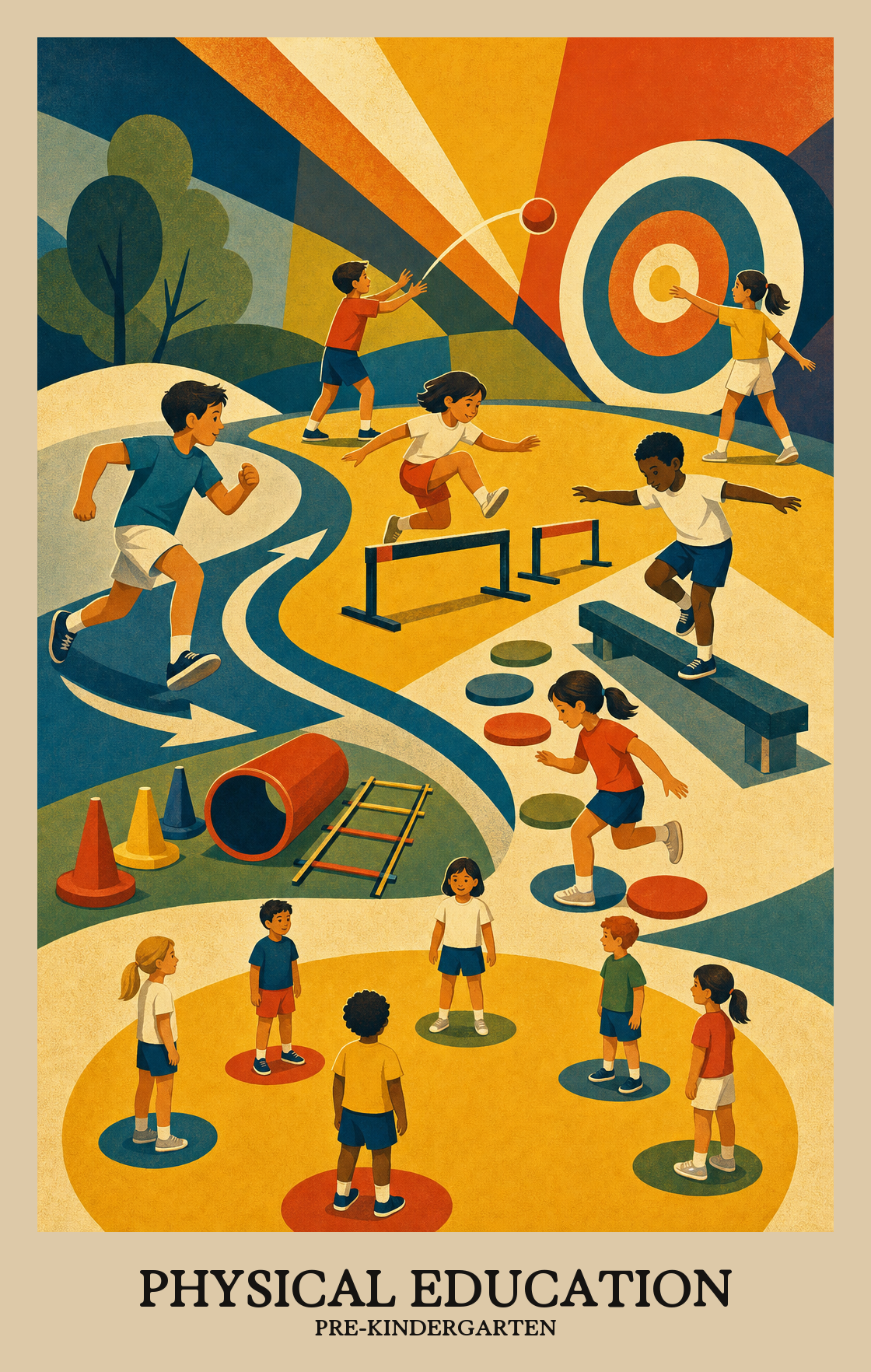
Students learn how to move around the space without bumping into classmates. They practice listening for start and stop signals and taking turns with equipment.
Students practice the big ways the body moves. They run, skip, gallop, and hop, getting steadier on their feet as the weeks go on.
Students start working with balls and beanbags. They roll, toss, catch, and kick, learning to aim at a target and track an object with their eyes.
Students join simple games and movement activities with a partner or small group. They practice sharing equipment, taking turns, and cheering on classmates.
Students notice how their bodies feel after active play. They talk about a faster heartbeat, getting tired, and why moving every day helps them feel good.
Students practice moving their bodies in different ways: running, jumping, throwing, and balancing. These early movement skills help build the foundation for sports, play, and staying active as they grow.
Students learn basic ideas about how their bodies move and stay healthy, then put those ideas to use during active play. Knowing why movement matters helps them join in and keep going.
Students practice taking turns, following rules, and working with others during games and movement activities. These moments build habits like sharing space, listening, and treating classmates with care.
Students practice basic movement skills like jumping, stretching, and balancing, and begin to notice how moving their body feels good. The goal is to help students enjoy being active.
| Standard | Definition | Code |
|---|---|---|
| Develop a variety of motor skills, including locomotor, non-locomotor | Students practice moving their bodies in different ways: running, jumping, throwing, and balancing. These early movement skills help build the foundation for sports, play, and staying active as they grow. | DC-PE.1.pk |
| Apply knowledge related to movement, performance | Students learn basic ideas about how their bodies move and stay healthy, then put those ideas to use during active play. Knowing why movement matters helps them join in and keep going. | DC-PE.2.pk |
| Develop social skills through movement, including respect for self and others… | Students practice taking turns, following rules, and working with others during games and movement activities. These moments build habits like sharing space, listening, and treating classmates with care. | DC-PE.3.pk |
| Develop personal skills, identify personal benefits of movement | Students practice basic movement skills like jumping, stretching, and balancing, and begin to notice how moving their body feels good. The goal is to help students enjoy being active. | DC-PE.4.pk |
Students spend most of their time moving and playing. They practice running, jumping, hopping, skipping, rolling, kicking, throwing, and catching. The goal is to build comfort with their bodies and have fun being active with other children.
Play together for 10 minutes a day. Roll a ball back and forth, toss a soft ball into a laundry basket, hop like a frog across the rug, or have a little dance party. Short bursts of play matter more than fancy equipment.
Aim for at least an hour of active play across the day, broken into small chunks. A walk to the park, time on the playground, and a few minutes of chase in the living room all count. Sitting for long stretches should be the exception.
Start with locomotor basics like walking, running, and jumping in open space. Move into non-locomotor work such as balancing, twisting, and stretching. Save manipulative skills like throwing, catching, kicking, and striking for later in the year once body control is steadier.
Skipping, galloping, and catching are the slowest to develop at this age. Many students also struggle with stopping safely and keeping personal space. Plan to revisit these in short bursts across the year rather than expecting mastery the first time.
Students are not training for fitness goals. They are learning that moving makes the heart beat faster, the body warm up, and the breath go quicker. Naming those feelings builds the language they will use for health later on.
Cooperation, listening for signals, and respecting other students' space are core goals at this age. Without these, the games fall apart and no one gets to practice their skills. Social habits and movement skills grow together.
By spring, students should run and stop with control, jump with two feet, throw and catch a large ball at short distances, and follow simple game rules. They should also be able to share equipment and play near other students without constant reminders.
Skip the word sports and focus on play. Praise effort and small wins, like a longer hop or a catch with two hands. Comparison to older siblings or classmates is the fastest way to make a young child quit moving.