Skills and teamwork warm-up
Students review the basic moves used in sports and games, like throwing, catching, kicking, and dodging. They also set ground rules for working with classmates and being a fair teammate.
This is the year P.E. shifts from learning skills to using them in real games and workouts. Students sharpen their running, throwing, and catching while picking up the strategy behind team sports. They start tracking their own fitness, setting small goals, and seeing how exercise affects their bodies. By spring, students can lead a warm-up, play fairly with a group, and explain why they chose a certain activity to stay healthy.
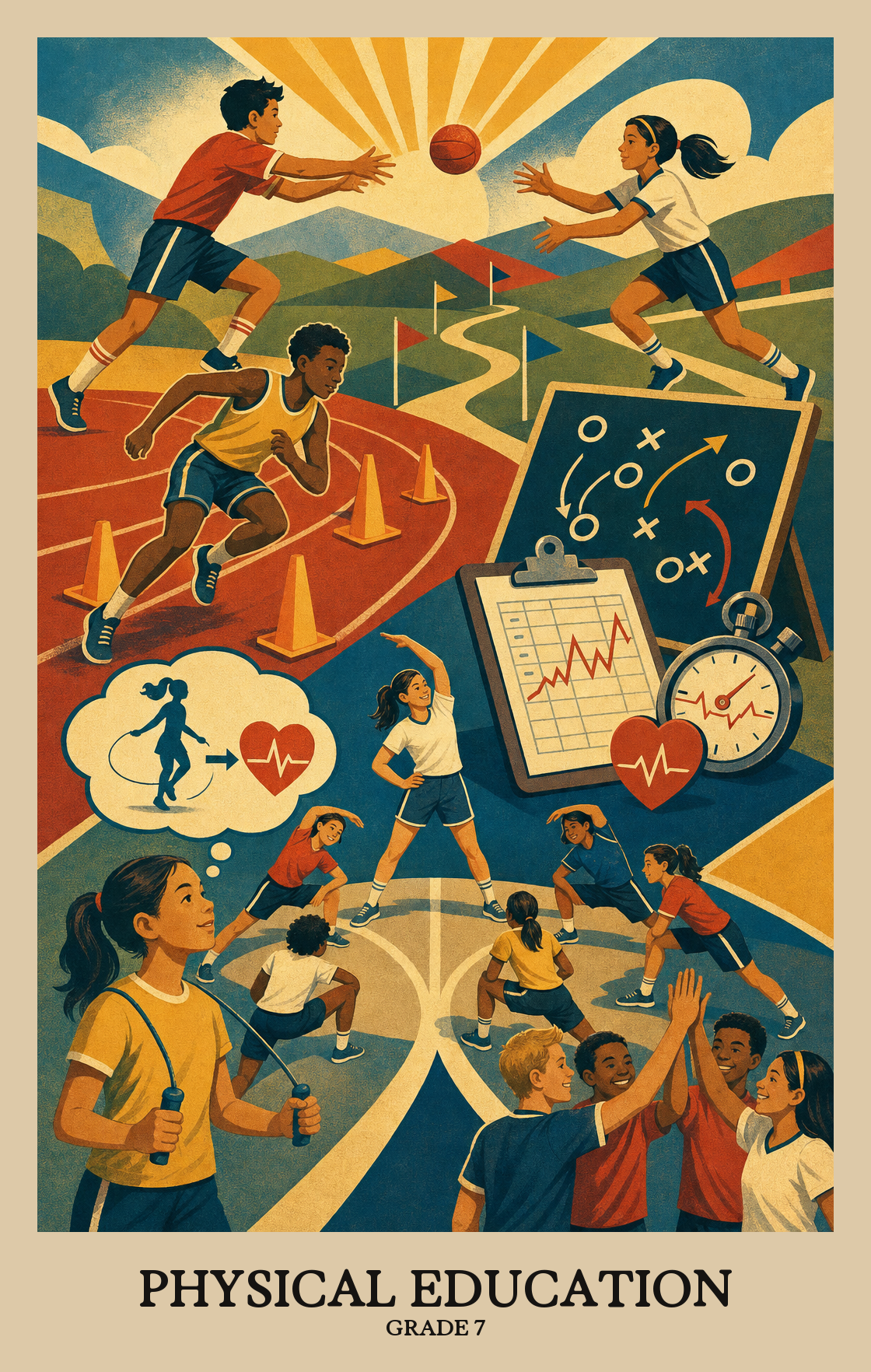
Students review the basic moves used in sports and games, like throwing, catching, kicking, and dodging. They also set ground rules for working with classmates and being a fair teammate.
Students put their skills to work in team sports and small games. They learn how to read what is happening on the field, pick smart moves, and talk with teammates during play.
Students learn what heart rate, endurance, strength, and flexibility mean and how to build them. They start tracking their own progress and try out short workouts they can do on their own.
Students think about which activities they actually enjoy and could keep doing outside of school. They set personal goals and practice making active choices a regular part of their week.
Students practice moving the body in different ways, from running and jumping to throwing, catching, and balancing. Building these skills gives students more ways to stay active for life.
Students connect what they know about how the body moves and stays fit to make smarter choices during physical activity. This might mean adjusting their effort, pacing, or form to perform better and stay healthier.
Students practice working with others during physical activities: taking turns, listening, and handling wins or losses without drama. The goal is building the habits that make group work go smoothly, on the court and off.
Students practice setting fitness goals, recognize how regular movement improves their energy and mood, and make choices about staying active. The focus is building habits that hold up past gym class.
| Standard | Definition | Code |
|---|---|---|
| Develop a variety of motor skills, including locomotor, non-locomotor | Students practice moving the body in different ways, from running and jumping to throwing, catching, and balancing. Building these skills gives students more ways to stay active for life. | FL-PE.1.7 |
| Apply knowledge related to movement, performance | Students connect what they know about how the body moves and stays fit to make smarter choices during physical activity. This might mean adjusting their effort, pacing, or form to perform better and stay healthier. | FL-PE.2.7 |
| Develop social skills through movement, including respect for self and others… | Students practice working with others during physical activities: taking turns, listening, and handling wins or losses without drama. The goal is building the habits that make group work go smoothly, on the court and off. | FL-PE.3.7 |
| Develop personal skills, identify personal benefits of movement | Students practice setting fitness goals, recognize how regular movement improves their energy and mood, and make choices about staying active. The focus is building habits that hold up past gym class. | FL-PE.4.7 |
Seventh graders build on skills from elementary years and start applying them in real games and fitness routines. Expect a mix of team sports, individual activities, and fitness work. Students also learn how exercise affects the body and how to set goals for staying active.
Aim for about 60 minutes of movement most days. That can be a walk after dinner, shooting hoops in the driveway, biking, or helping with yard work. The activity matters more than the sport, so let students pick things they actually enjoy.
Seventh grade PE covers more than competitive sports. Students try fitness activities, dance, and individual challenges like jump rope or jogging. Encouraging students to find one activity they like, even walking with music, builds the habit that matters most.
Many teachers open with fitness testing and goal setting, then rotate through team sports, individual activities, and a return fitness check in spring. Building cooperation and game-play habits early pays off when units get more competitive later in the year.
Strategy and teamwork tend to lag behind motor skills. Students often know how to throw or dribble but freeze during game play. Small-sided games with clear roles help more than full-court scrimmages, and short debriefs after play build the thinking piece.
Most teachers grade on participation, effort, skill growth, and behavior rather than athletic ability. A student who shows up, tries hard, and works well with classmates will do well. Ask the teacher for the rubric if the grading approach is unclear.
By spring, students should move with control in several activities, apply basic strategy in games, and explain how fitness components connect to health. They should also work with different partners and groups without constant prompting about behavior.
Seventh graders often struggle with losing, sharing the ball, or being picked last. Talk about handling frustration, encouraging teammates, and being a good sport. Five minutes in the car after a tough day can do more than any lecture about respect.