Personal health and daily habits
Students start the year looking at sleep, nutrition, exercise, and stress. They learn how everyday choices add up over time and how to set realistic goals for their own health.
This is the year health class shifts from following rules to making real decisions students will carry into adulthood. Students study how daily choices around food, sleep, exercise, stress, and relationships shape long-term health. They also learn how to spot risks, find trusted help, and use community resources like clinics or hotlines. By spring, students can talk through a tough situation and explain a healthy plan with specific steps.
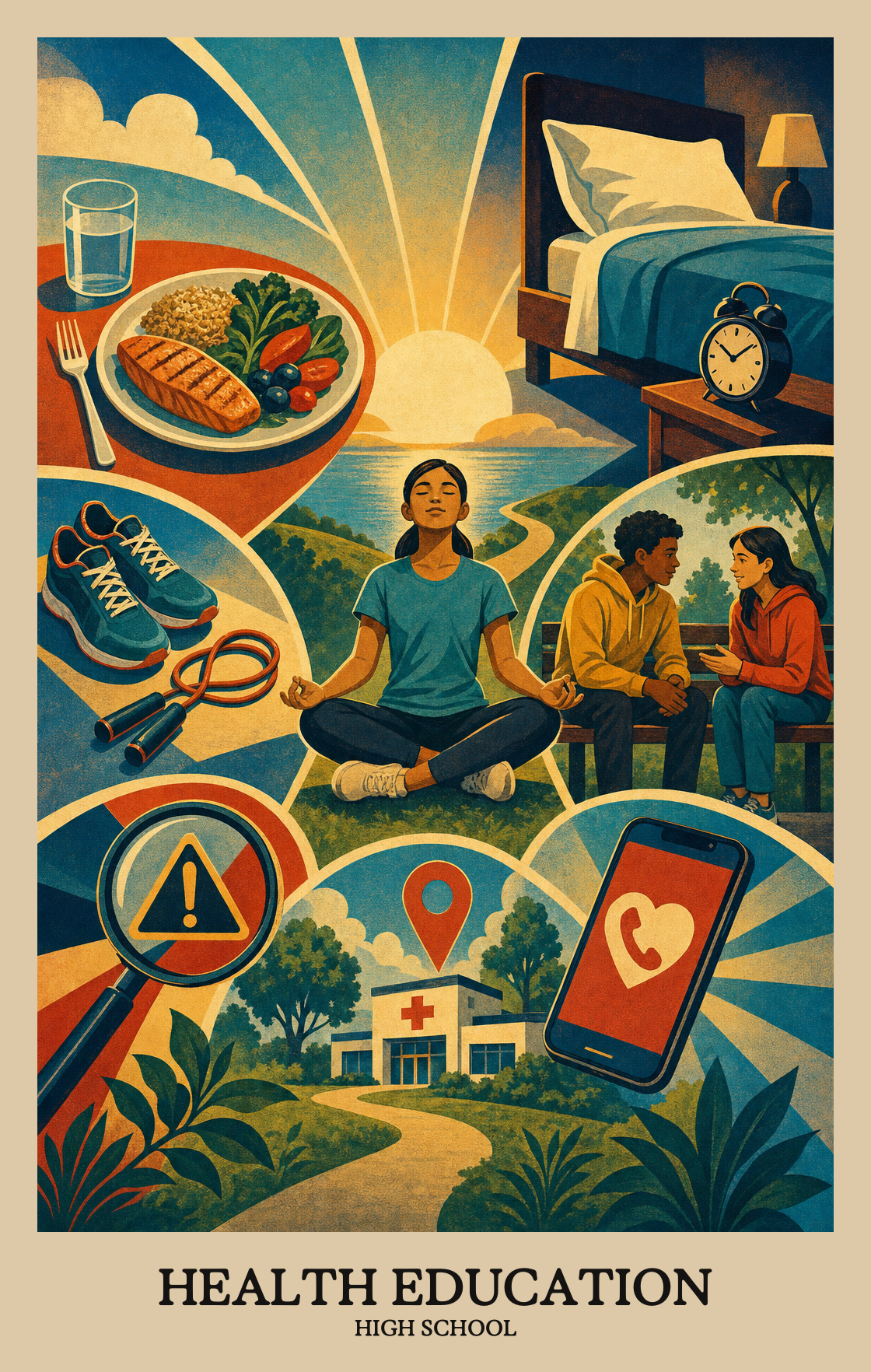
Students start the year looking at sleep, nutrition, exercise, and stress. They learn how everyday choices add up over time and how to set realistic goals for their own health.
Students learn how to recognize stress, anxiety, and other strong feelings in themselves and friends. They practice healthy ways to cope and know when to ask a trusted adult or professional for help.
Students think through what makes a relationship healthy or unhealthy, including friendships, dating, and online interactions. They practice setting boundaries, refusing pressure, and staying safe at home, at school, and online.
Students study how alcohol, tobacco, vaping, and other drugs affect the body and brain. They look at the real risks of addiction and practice making decisions that protect their long-term health.
Students wrap up the year by learning how to find reliable health information and use real services like doctors, clinics, hotlines, and insurance. They leave knowing where to turn when a health question comes up.
Students build habits around staying active, eating well, and taking care of their bodies. This standard covers the practical knowledge and skills students need to keep themselves healthy now and into adulthood.
Students learn to spot health and safety risks in places they live, work, and spend time, then take steps to reduce those risks. The focus is on real decisions: keeping a space physically safe, reducing hazards, and knowing what to do when something goes wrong.
Students learn to track personal resources like time, money, and energy, and think about how those same ideas apply to their community. The goal is making smart choices with what's available.
| Standard | Definition | Code |
|---|---|---|
| Staying fit and healthy in high school High School | Students build habits around staying active, eating well, and taking care of their bodies. This standard covers the practical knowledge and skills students need to keep themselves healthy now and into adulthood. | NY-HE.1.9-12 |
| Safe and healthy environments High School | Students learn to spot health and safety risks in places they live, work, and spend time, then take steps to reduce those risks. The focus is on real decisions: keeping a space physically safe, reducing hazards, and knowing what to do when something goes wrong. | NY-HE.2.9-12 |
| Managing personal and community health resources High School | Students learn to track personal resources like time, money, and energy, and think about how those same ideas apply to their community. The goal is making smart choices with what's available. | NY-HE.3.9-12 |
Students learn how to take care of their body and mind as young adults. That means healthy eating, fitness, sleep, mental health, relationships, and avoiding risky habits like vaping or drinking. They also learn how to handle emergencies and stay safe at home, online, and on the road.
Talk about real choices as they come up: what's for dinner, how much sleep they got, how they're feeling after a hard week. Short, honest conversations in the car or at the table do more than a lecture. Modeling the habits matters more than naming them.
Students should be able to make their own decisions about food, exercise, sleep, stress, and safety, and know where to go for help when something is wrong. They should also be able to read a label, question a claim they see online, and speak up for themselves at a doctor's visit.
Ask how they're doing without trying to fix it right away. Help them protect sleep, time outside, and time with friends, since those three do the most for mood at this age. If stress lasts for weeks or starts affecting school or eating, call the pediatrician or a school counselor.
Start with mental health and decision-making, since those skills run through every other unit. Build into nutrition, fitness, and sleep next, then move to substance use, relationships, and sexual health once trust is established. Save community resources and advocacy for the end so students can apply what they know.
Stress management and refusal skills tend to need repeat practice, because students can name them on a test but freeze in the moment. Plan short role-plays and quick check-ins throughout the year, not just during the unit. Nutrition label reading also slips quickly without revisiting.
Build in short performance tasks where students plan a meal, map a week of sleep and screen time, or rehearse a hard conversation. Keep the artifacts simple so feedback stays focused on the skill. Pair this with reflection so students notice what changed in their own habits.
Some units, like sexual health and substance use, are often shared with families ahead of time. Watch for a letter or email from the school and ask the teacher what's coming up. Reading the materials first makes it easier to talk about them at home.
Most of the grade comes from short projects, written reflections, and class participation rather than big tests. A strong grade usually means students showed up, joined the discussion, and applied what they learned to their own life. Ask the teacher how absences affect the grade, since participation matters here.
Students should leave the year knowing the school counselor, the school nurse, a trusted adult at home, and at least one outside resource like a hotline or clinic. Practice this directly by having students save numbers in their phone during class. Knowing who to call is the skill, not memorizing a list.