Moving and exploring
Students start the year by exploring how their bodies move through space. They try out fast and slow, high and low, and learn to follow simple movement cues from a teacher or song.
This is the year students learn that their bodies can tell a story. They explore how to move in different ways, like fast or slow, high or low, and try out simple dances they make up themselves. Students also watch others dance and talk about what they notice. By spring, they can perform a short movement they created and share what it means to them.
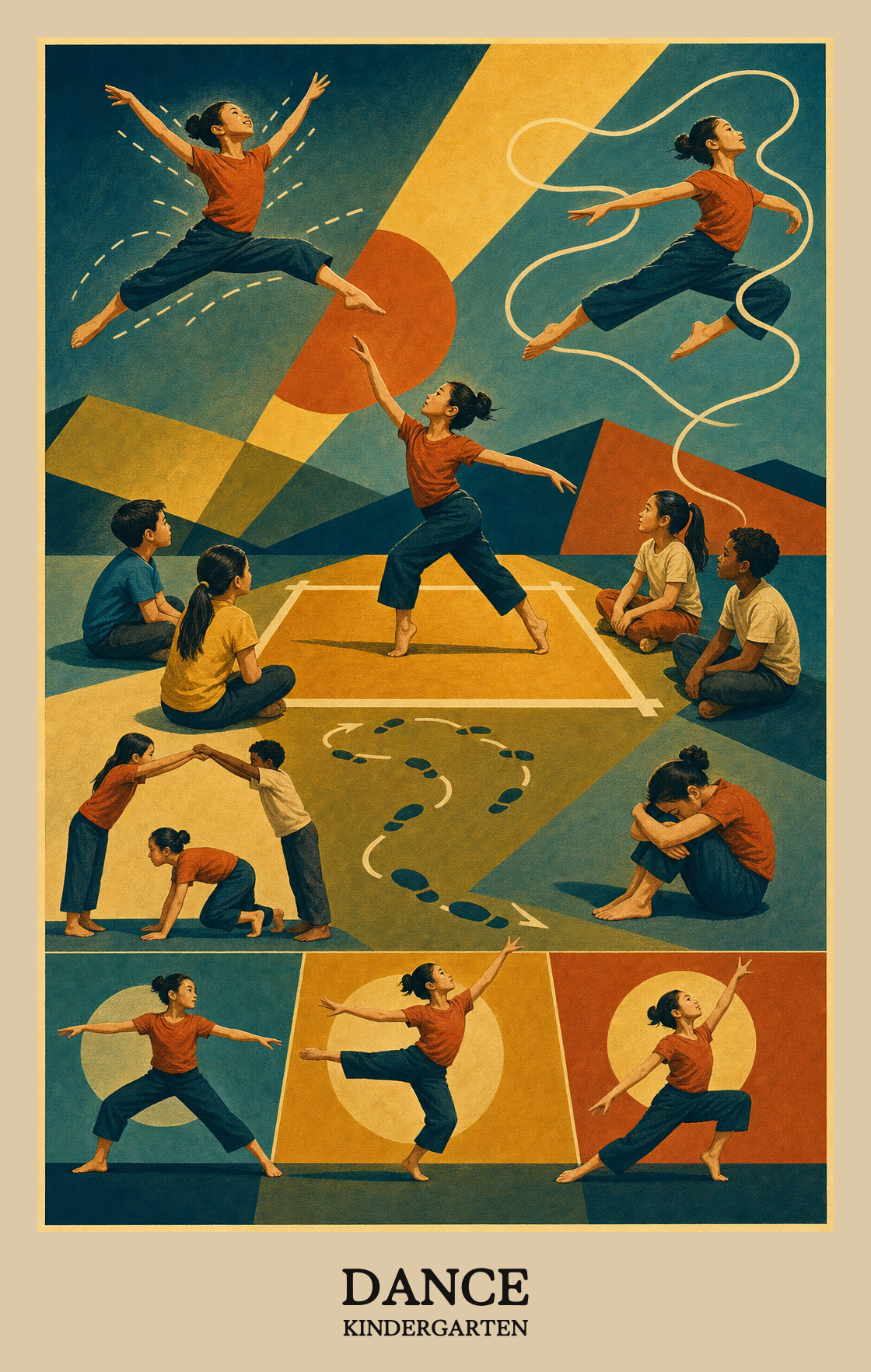
Students start the year by exploring how their bodies move through space. They try out fast and slow, high and low, and learn to follow simple movement cues from a teacher or song.
Students begin inventing their own movements and stringing them together into short dances. They use ideas from stories, pictures, or feelings to spark what their body does next.
Students practice a dance and show it to classmates. They learn how to start, hold a shape, and finish, and they think about what they want the audience to notice.
Students watch each other and short dance clips, then talk about what they saw. They notice the shapes, speeds, and feelings in a dance and connect it to their own lives.
Students connect what they already know and feel to their dancing, using real moments from their own lives to shape how they move.
Students connect a dance or song to where it comes from, such as a celebration, a culture, or a tradition. Knowing the story behind a dance helps it make more sense.
| Standard | Definition | Code |
|---|---|---|
| Using what you know to make dances | Students connect what they already know and feel to their dancing, using real moments from their own lives to shape how they move. | DA:Cn10.k |
| Dance from different times and places | Students connect a dance or song to where it comes from, such as a celebration, a culture, or a tradition. Knowing the story behind a dance helps it make more sense. | DA:Cn11.k |
Students come up with their own ideas for moving and dancing, turning imagination into a simple piece they can show others.
Students choose movements and put them in order to make a short dance. They decide what comes first, what comes next, and how the whole thing fits together.
Students pick their favorite movements from what they practiced and put them together into a short dance they can share with the class.
| Standard | Definition | Code |
|---|---|---|
| Imagine new ways to move | Students come up with their own ideas for moving and dancing, turning imagination into a simple piece they can show others. | DA:Cr1.k |
| Making a dance from your ideas | Students choose movements and put them in order to make a short dance. They decide what comes first, what comes next, and how the whole thing fits together. | DA:Cr2.k |
| Finishing a dance you made | Students pick their favorite movements from what they practiced and put them together into a short dance they can share with the class. | DA:Cr3.k |
Students choose which movements or dances to show others, and explain why they picked them.
Students practice moving their body with care and try again to make their dancing look its best before sharing it with others.
Students perform a dance for others and use movement to share a feeling or idea with the audience.
| Standard | Definition | Code |
|---|---|---|
| Picking dances to share with others | Students choose which movements or dances to show others, and explain why they picked them. | DA:Pr4.k |
| Moving and practicing for a dance show | Students practice moving their body with care and try again to make their dancing look its best before sharing it with others. | DA:Pr5.k |
| Show what a dance means | Students perform a dance for others and use movement to share a feeling or idea with the audience. | DA:Pr6.k |
Students look at a dance someone else performs and talk about what they notice, like how the dancer moves fast or slow, high or low.
Students look at a dance and say what they think the dancer is trying to show or feel. They put their thoughts into words.
Students pick a dance they like and explain why, using simple words like "fast," "smooth," or "high." They start learning that opinions about dance can have reasons behind them.
| Standard | Definition | Code |
|---|---|---|
| Noticing what makes a dance interesting | Students look at a dance someone else performs and talk about what they notice, like how the dancer moves fast or slow, high or low. | DA:Re7.k |
| What dances are trying to say | Students look at a dance and say what they think the dancer is trying to show or feel. They put their thoughts into words. | DA:Re8.k |
| What makes a dance good | Students pick a dance they like and explain why, using simple words like "fast," "smooth," or "high." They start learning that opinions about dance can have reasons behind them. | DA:Re9.k |
Students move in lots of ways: walking, jumping, freezing, spinning, and copying shapes. They make up short movements based on stories, animals, or feelings, then share them with classmates. A lot of the work is about following directions and using the whole body on purpose.
Put on a song and ask students to move in three different ways: high, low, and somewhere in between. Try mirroring games where one person leads and the other copies. Five minutes of moving to music after dinner is plenty.
A big part of the year is using movement to show ideas, like a storm, a happy day, or a favorite book. Students also watch each other dance and say what they noticed. Connecting movement to meaning is one of the main goals.
Start with body awareness and basic movements like bend, stretch, twist, and shake. Move into space and tempo, then add simple choreography drawn from stories or pictures. Save sharing and giving feedback for later in the year once students are comfortable performing for each other.
Personal space and stopping on a signal are the two skills that come up again and again. Students also need practice describing what they saw a classmate do without saying it was good or bad. Build in short routines for both from day one.
By spring, students should be able to copy a short sequence, make up a few movements of their own, and perform without freezing up. They should also be able to watch a classmate and describe one thing they noticed about the movement.
Dance at home first, even just swaying to music or acting out a story together. Let students lead and pick the song. Confidence usually grows once moving feels normal at home, not just at school.
Not at this stage. The focus is on basic movement, using space, keeping a beat, and making up short dances. Formal styles and named steps come later.