Exploring media and ideas
Students get their first taste of making art with tools like cameras, tablets, drawings, and sounds. They share ideas from their own lives and try simple ways to turn those ideas into something to see or hear.
This is the year students discover that pictures, sounds, and videos are things people make on purpose. Students come up with their own ideas, try simple tools like a camera or recorder, and share what they made with the class. They also start noticing choices in cartoons and songs, like why a scene feels happy or scary. By spring, they can make a short media piece, explain what it is about, and say what they like about a classmate's work.
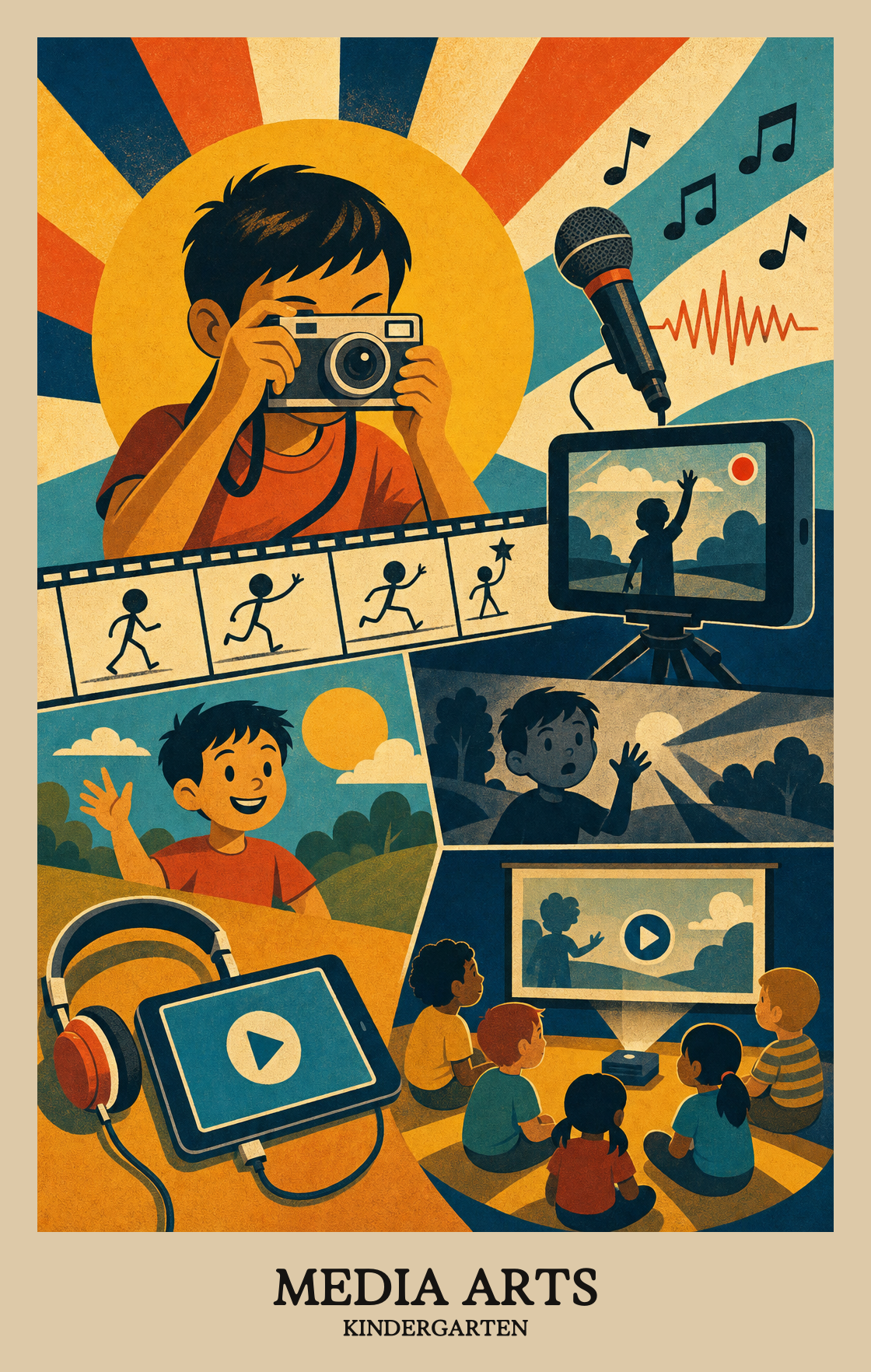
Students get their first taste of making art with tools like cameras, tablets, drawings, and sounds. They share ideas from their own lives and try simple ways to turn those ideas into something to see or hear.
Students start small projects like a short video, a picture story, or a sound recording. They learn to plan a little before they make, then go back and change parts they want to improve.
Students pick a piece they want to show and practice presenting it to the class or family. They learn that the way a project is shown, like the order of pictures or the sound, helps tell the story.
Students watch, listen to, and notice media made by others, including classmates. They talk about what they see and hear, what it might mean, and what they like or would change.
Students link their projects to family, school, and the world around them. They notice that media art shows up in books, shows, and games, and that people in different places make it for different reasons.
Students connect something from their own life to a media art project. A memory, a feeling, or something they have seen at home can become the starting point for what they make.
Students look at a piece of art and talk about where it came from: who made it, when, and why. That context helps the artwork make more sense.
| Standard | Definition | Code |
|---|---|---|
| Making art from what you know | Students connect something from their own life to a media art project. A memory, a feeling, or something they have seen at home can become the starting point for what they make. | MA:Cn10.k |
| Stories and art from different times and places | Students look at a piece of art and talk about where it came from: who made it, when, and why. That context helps the artwork make more sense. | MA:Cn11.k |
Students come up with ideas for a media arts project, like drawing a picture on a screen or deciding what a short video or animation could be about.
Students arrange images, sounds, or simple digital tools to build a short media project, then make choices about what to keep or change before calling it done.
Students look at a piece of media work they made, decide what to fix or finish, and then make those changes before calling it done.
| Standard | Definition | Code |
|---|---|---|
| Coming up with ideas for media art | Students come up with ideas for a media arts project, like drawing a picture on a screen or deciding what a short video or animation could be about. | MA:Cr1.k |
| Putting an art idea together | Students arrange images, sounds, or simple digital tools to build a short media project, then make choices about what to keep or change before calling it done. | MA:Cr2.k |
| Finish and improve your artwork | Students look at a piece of media work they made, decide what to fix or finish, and then make those changes before calling it done. | MA:Cr3.k |
Students choose which of their media art projects to share with others and explain why they picked it.
Students practice and improve a media arts project, like a drawing, photo, or short video, before sharing it with others.
Students share a drawing, photo, or simple digital creation and explain what it means or how it makes them feel.
| Standard | Definition | Code |
|---|---|---|
| Choose art to share with others | Students choose which of their media art projects to share with others and explain why they picked it. | MA:Pr4.k |
| Making and improving art to share | Students practice and improve a media arts project, like a drawing, photo, or short video, before sharing it with others. | MA:Pr5.k |
| Share artwork and explain what it means | Students share a drawing, photo, or simple digital creation and explain what it means or how it makes them feel. | MA:Pr6.k |
Students look at a photo, video, or digital image and share what they notice. They begin to describe what they see and how it makes them feel.
Students look at a photo, video, or drawing and say what they think it means or how it makes them feel.
Students look at a photo, video, or drawing and say what they like about it and why. They practice giving a reason for their opinion instead of just saying "good" or "bad."
| Standard | Definition | Code |
|---|---|---|
| Looking at and talking about art | Students look at a photo, video, or digital image and share what they notice. They begin to describe what they see and how it makes them feel. | MA:Re7.k |
| Finding meaning in art and media | Students look at a photo, video, or drawing and say what they think it means or how it makes them feel. | MA:Re8.k |
| Deciding what makes art good | Students look at a photo, video, or drawing and say what they like about it and why. They practice giving a reason for their opinion instead of just saying "good" or "bad." | MA:Re9.k |
Media arts is making things with cameras, tablets, simple recordings, drawings on a screen, and short videos. Students try out tools, share little projects, and talk about what they made and why.
Short, simple things. A photo of a pet, a drawing on a tablet, a voice recording of a story, or a tiny slideshow of pictures. The point is trying ideas, not polished work.
Hand over a phone or tablet for ten minutes and let students take photos, record a short story, or draw a picture in an app. Then ask what they made and why they picked it. That short conversation is the learning.
No. A basic phone camera, a free drawing app, and a voice recorder cover almost everything at this age. Paper crafts photographed with a phone count too.
Not much. Short bursts of ten to fifteen minutes work well. The goal is making and talking about it, not watching.
Start with looking and noticing, like sorting photos or pictures students like. Move into making simple pieces with one tool at a time. End the year with small presentations where students share a finished piece and say what it means.
Two areas: refining work instead of calling the first try done, and explaining the meaning behind a choice. Build in a quick second pass on most projects and a one-sentence share-out so both habits get practiced often.
Students can come up with a small idea, make it with a tool like a camera or drawing app, change one thing to make it better, and share it with a sentence about what it shows. Comfort with the process matters more than the finished product.
Recording a story supports retelling and sequencing. Sorting photos supports comparing and grouping. Drawing a scene from a book deepens comprehension. Media arts gives students another way to show what they know.