Exploring sound and voice
Students start the year noticing sounds around them and trying out their singing and speaking voices. They clap, tap, and move to music to feel a steady beat.
This is the year music becomes something students make on purpose, not just hear. Students sing simple songs, clap steady beats, and try out instruments to share an idea or feeling. They start to notice when music is loud or soft, fast or slow, and say what they like about a song. By spring, they can sing a short song with the class and pick an instrument that matches the mood of a story.
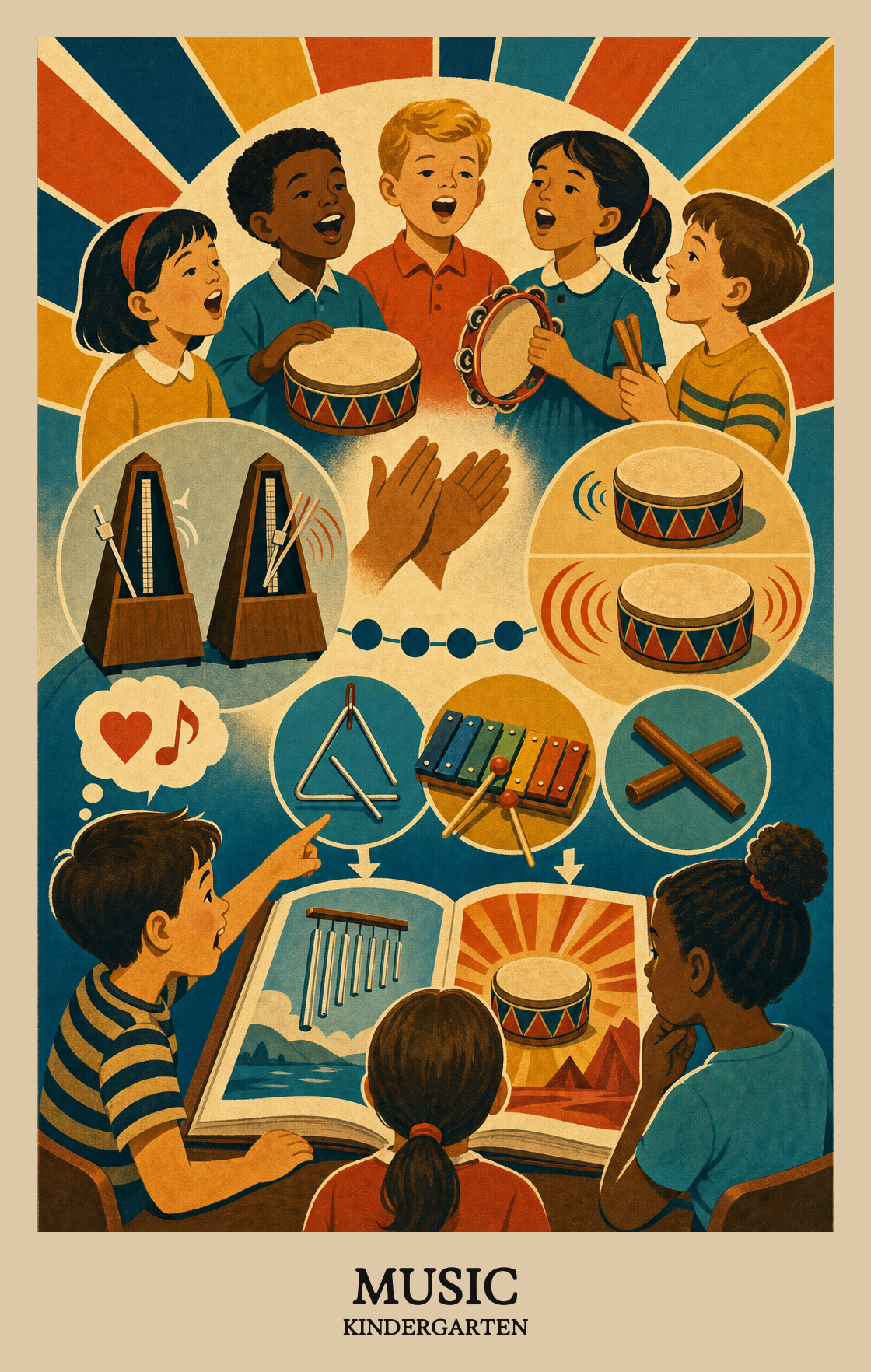
Students start the year noticing sounds around them and trying out their singing and speaking voices. They clap, tap, and move to music to feel a steady beat.
Students invent short patterns with their voices, bodies, and simple instruments. They try out ideas, pick the ones they like, and share them with the class.
Students learn songs and rhythms well enough to perform them for others. They work on singing together, staying with the beat, and showing what a song is about.
Students listen closely to different kinds of music and describe what they hear. They share why a song makes them feel happy, calm, or excited, and what it might be about.
Students connect songs to their own families, holidays, and stories. They notice that people everywhere make music for different reasons and times of year.
Students connect what they already know and have lived through to the music they make and respond to. A favorite sound, a memory, or a feeling can all become part of how they engage with a song.
Songs and musical traditions come from somewhere. Students begin to notice how the music they hear connects to people, places, and moments in time.
| Standard | Definition | Code |
|---|---|---|
| Making music from what you know | Students connect what they already know and have lived through to the music they make and respond to. A favorite sound, a memory, or a feeling can all become part of how they engage with a song. | MU:Cn10.k |
| Songs from around the world | Songs and musical traditions come from somewhere. Students begin to notice how the music they hear connects to people, places, and moments in time. | MU:Cn11.k |
Students come up with ideas for songs, sounds, or rhythms they want to make. This is the starting point for all creative music work in kindergarten.
Students pick the sounds or movements they like best and put them in order to make a short song or musical pattern their own.
Students finish a song or rhythm they started, making small changes until it sounds the way they want it to.
| Standard | Definition | Code |
|---|---|---|
| Coming up with musical ideas | Students come up with ideas for songs, sounds, or rhythms they want to make. This is the starting point for all creative music work in kindergarten. | MU:Cr1.k |
| Putting musical ideas together | Students pick the sounds or movements they like best and put them in order to make a short song or musical pattern their own. | MU:Cr2.k |
| Finish a song you made | Students finish a song or rhythm they started, making small changes until it sounds the way they want it to. | MU:Cr3.k |
Students choose a song or piece of music to perform and talk about why they picked it.
Students practice a song or rhythm until it sounds the way they want it to before sharing it with others.
Students perform a song or rhythm for others and try to share a feeling or idea through the music, not just play the right notes.
| Standard | Definition | Code |
|---|---|---|
| Choosing songs to sing or play | Students choose a song or piece of music to perform and talk about why they picked it. | MU:Pr4.k |
| Practicing a song before performing it | Students practice a song or rhythm until it sounds the way they want it to before sharing it with others. | MU:Pr5.k |
| Perform a song and mean it | Students perform a song or rhythm for others and try to share a feeling or idea through the music, not just play the right notes. | MU:Pr6.k |
Students listen to a short piece of music and share what they notice, like whether it feels fast or slow, loud or quiet, or happy or sad.
Students listen to a short piece of music and say what it makes them think or feel, explaining why in simple terms.
Students listen to a short piece of music and say what they liked or what felt interesting, giving a simple reason for their choice.
| Standard | Definition | Code |
|---|---|---|
| Listening closely to music | Students listen to a short piece of music and share what they notice, like whether it feels fast or slow, loud or quiet, or happy or sad. | MU:Re7.k |
| What music makes you feel | Students listen to a short piece of music and say what it makes them think or feel, explaining why in simple terms. | MU:Re8.k |
| Deciding what makes music good | Students listen to a short piece of music and say what they liked or what felt interesting, giving a simple reason for their choice. | MU:Re9.k |
Students sing simple songs, clap and move to a steady beat, play classroom instruments like shakers and drums, and listen to short pieces of music. Most of the work happens through play, games, and movement rather than written notes.
Sing together in the car, clap along to songs, and march or dance to the beat. Five minutes of steady-beat play counts. Letting students bang on pots, shake a jar of beans, or make up silly songs builds the same skills used in class.
No. Many students start the year humming or mouthing words before they sing out. Listening, clapping, and moving are real musical skills too. Confidence usually grows once songs become familiar, so repeat favorites at home and join in.
Not at this age. The focus is on hearing high and low sounds, fast and slow beats, and loud and soft music. Formal note-reading comes later. A toy keyboard or a few shakers at home are plenty.
Start with steady beat, voice exploration, and simple call-and-response songs. Add high and low pitch, fast and slow tempo, and loud and soft dynamics over the fall. Save short performance pieces and reflection activities for spring, once routines are solid.
Keeping a steady beat while singing is the hardest combination at this age. Matching pitch also takes time, especially for students who have not sung much before. Plan to revisit both all year through new songs rather than treating them as one-and-done lessons.
Give a quieter job first: keep the beat on knees, hold the instrument, or point to pictures in the song. Participation usually grows once a student feels safe. Track listening and movement as evidence of learning, not just singing.
Students can keep a steady beat, sing familiar short songs in a group, tell loud from soft and fast from slow, and say something simple about a piece of music they heard. They can also share an idea for a sound or song and try it out.
Look for students who can join in on classroom songs, clap along with the beat most of the time, and answer questions like which song was faster or louder. Willingness to share ideas and try new sounds matters as much as singing in tune.