Moving with control
Students start the year practicing the basics of moving safely in a shared space. They work on running, skipping, hopping, and stopping without bumping into classmates.
This is the year students start putting basic movements together into real games and routines. They practice running, jumping, throwing, catching, and kicking with more control, and they learn to follow rules, take turns, and play fairly with classmates. Students also notice how their heart beats faster during active play and why moving every day feels good. By spring, they can join a simple group game, follow the directions, and play safely with others.
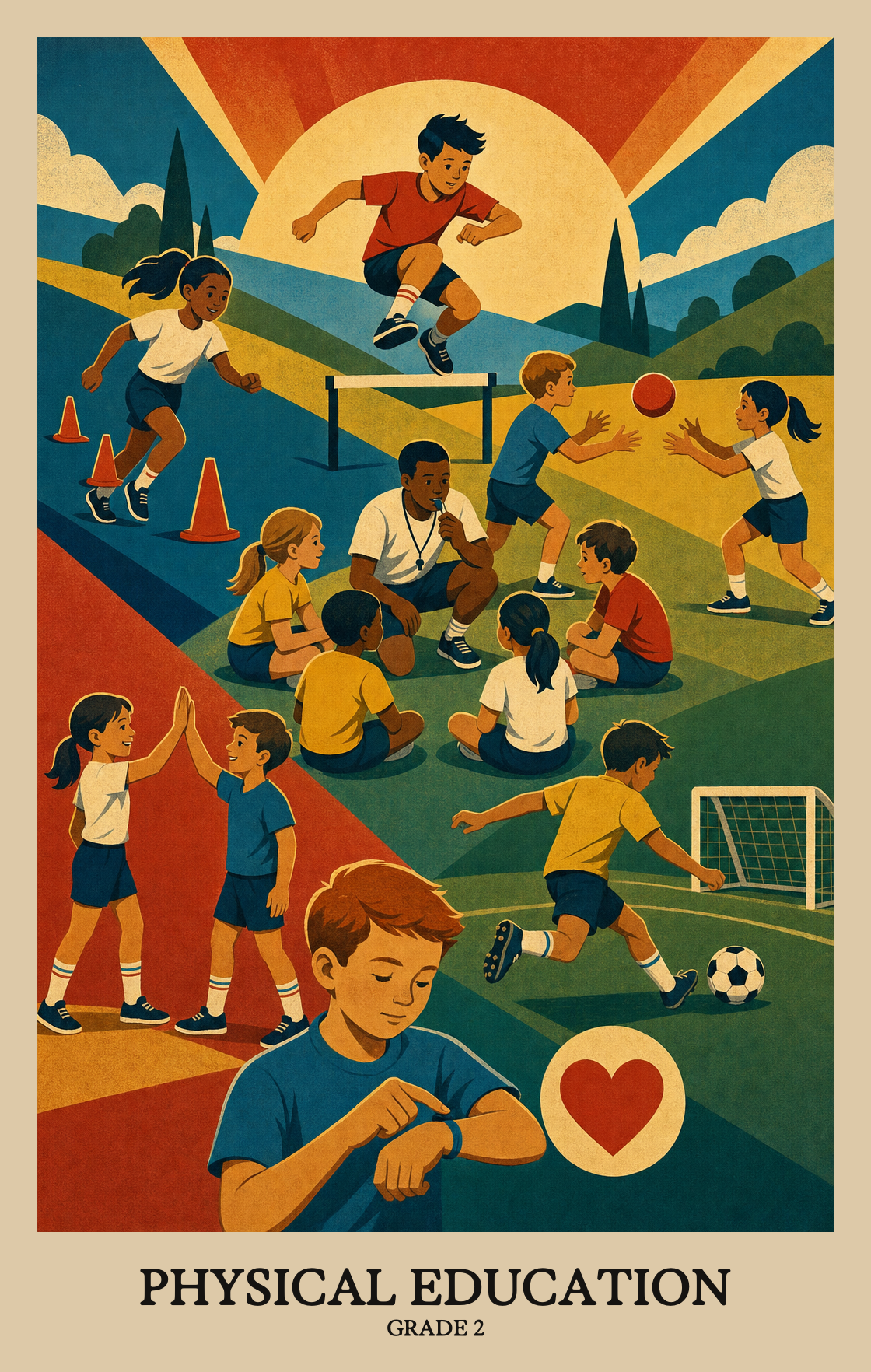
Students start the year practicing the basics of moving safely in a shared space. They work on running, skipping, hopping, and stopping without bumping into classmates.
Students build the hand and foot skills used in most playground games. They practice tossing a ball underhand, catching with two hands, and kicking a rolling ball.
Students learn how to take turns, follow rules, and include classmates during games. They start to notice how good sportsmanship makes activities more fun for everyone.
Students focus on what it feels like to get their heart pumping and their muscles working. They try short fitness activities and start to connect daily movement with feeling healthy.
Students put their skills together in small group games and start thinking about where to move and when. They learn that physical activity can be fun at school, at home, and in the neighborhood.
Students practice running, jumping, throwing, and balancing so the basic ways the body moves start to feel natural and controlled.
Students use ideas like fast or slow, near or far, and high or low to describe how their body moves. Knowing these concepts helps them make better choices during games and activities.
Students practice basic fitness habits like running, jumping, and stretching to build a body that feels strong and ready to move. They learn why staying active matters, not just in gym class but every day.
Students practice sharing space, taking turns, and following rules so everyone feels safe and included during activities.
Students learn why moving their bodies matters beyond gym class. They connect physical activity to feeling good, having fun, pushing through something hard, and spending time with others.
Students learn that some jobs involve helping people stay active, like gym teachers, coaches, and trainers. They also explore how to use what's available in their community, like parks and playgrounds, to stay healthy.
| Standard | Definition | Code |
|---|---|---|
| Moving and controlling your body | Students practice running, jumping, throwing, and balancing so the basic ways the body moves start to feel natural and controlled. | NY-PE.1.2 |
| How your body moves and why | Students use ideas like fast or slow, near or far, and high or low to describe how their body moves. Knowing these concepts helps them make better choices during games and activities. | NY-PE.2.2 |
| Staying active and fit | Students practice basic fitness habits like running, jumping, and stretching to build a body that feels strong and ready to move. They learn why staying active matters, not just in gym class but every day. | NY-PE.3.2 |
| Respect yourself and others in PE | Students practice sharing space, taking turns, and following rules so everyone feels safe and included during activities. | NY-PE.4.2 |
| Why moving your body feels good | Students learn why moving their bodies matters beyond gym class. They connect physical activity to feeling good, having fun, pushing through something hard, and spending time with others. | NY-PE.5.2 |
| Staying active for a healthy life | Students learn that some jobs involve helping people stay active, like gym teachers, coaches, and trainers. They also explore how to use what's available in their community, like parks and playgrounds, to stay healthy. | NY-PE.6.2 |
Students should be able to run, skip, hop, gallop, jump, and balance with control. They should also toss and catch a small ball, kick a stationary ball, and follow simple game rules while playing safely with classmates.
Aim for about an hour of active play each day. Walks, bike rides, playground time, dancing in the kitchen, or backyard catch all count. Active play with a parent or sibling matters more than any specific drill.
Students practice one skill at a time, like catching a soft ball or jumping with both feet. They repeat the skill in different setups, such as catching from a partner or off a bounce, so the movement starts to feel automatic.
Start with locomotor skills like running, skipping, and hopping, then move into tossing, catching, and kicking. Save small-sided games and simple strategy for later in the year, once students can perform the underlying skills without thinking hard about them.
Some students simply need more reps. Short daily practice at home, like bouncing a ball ten times or balancing on one foot while brushing teeth, helps a lot. Talk to the PE teacher if a student avoids movement or seems frustrated often.
Catching a moving ball and skipping are the two that trip students up most. Plan extra practice days for both, and use larger, softer balls and slower partners early on. Most students catch up by spring with steady reps.
Students learn to take turns, share equipment, follow rules, and encourage classmates. Short class discussions about what fair play looks like, paired with quick check-ins during games, work better than long lectures.
By spring, students should move confidently through basic skills, follow multi-step game rules, and play with a partner without constant reminders. They should also be able to name a few activities they enjoy and explain why exercise is good for the body.