Imagining characters and stories
Students start the year by inventing characters and pretend situations from their own lives and favorite stories. Expect kids to come home acting out what happened at school in new and surprising ways.
This is the year pretend play turns into early acting with a purpose. Students invent characters, settings, and short scenes, then practice them so an audience can follow along. They start watching other performances with a thoughtful eye, sharing what worked and what felt confusing. By spring, students can act out a short scene with classmates and explain the choices they made about voice, body, and feelings.
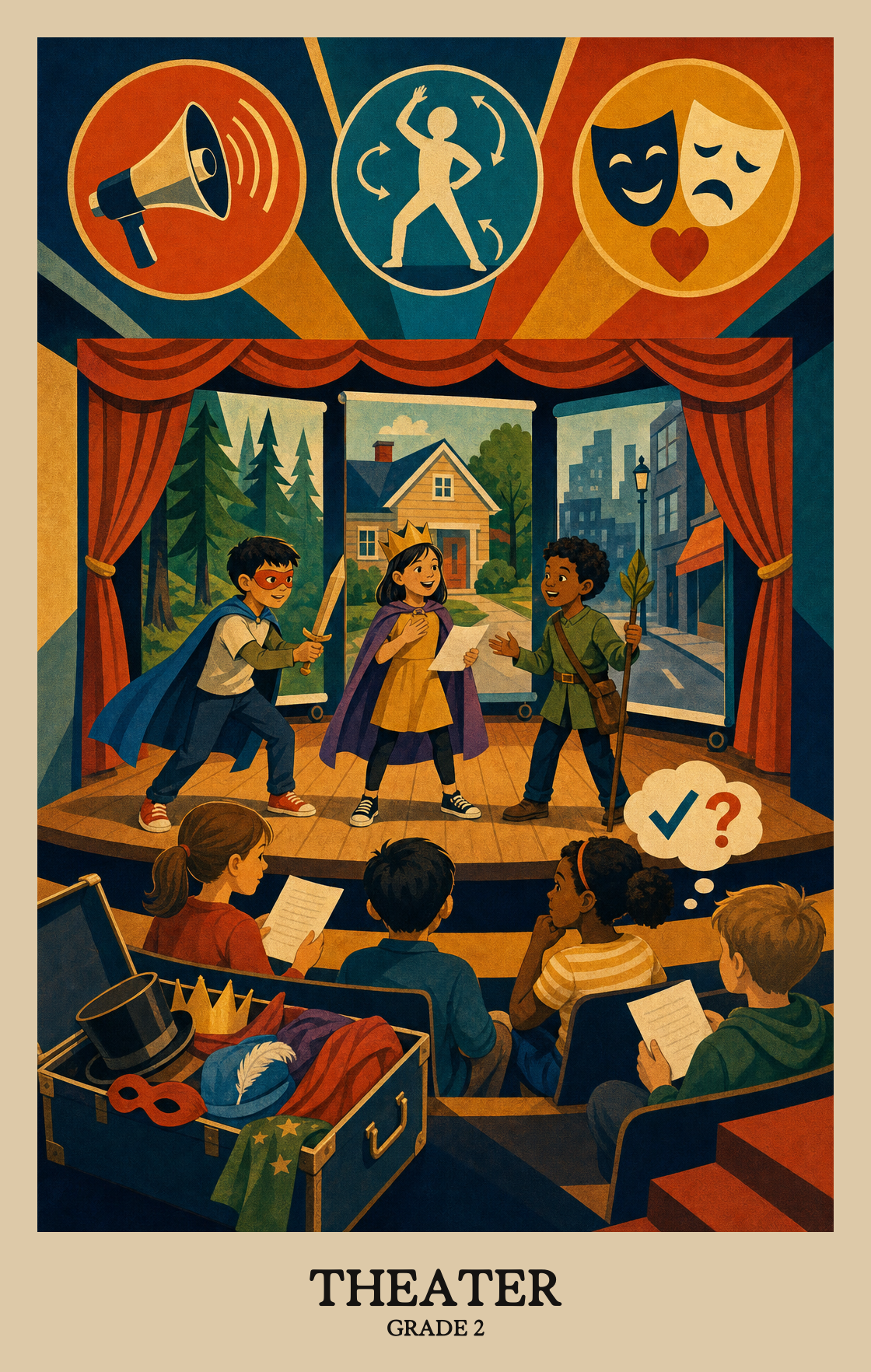
Students start the year by inventing characters and pretend situations from their own lives and favorite stories. Expect kids to come home acting out what happened at school in new and surprising ways.
Students work in small groups to shape a short scene. They decide who the characters are, what they want, and what happens, then practice taking turns instead of all talking at once.
Students practice their scenes more than once and try out changes. They use voice, face, and body to show how a character feels, and learn that a second try usually goes better than the first.
Students perform their scenes for classmates or family. They learn to speak so the back of the room can hear and to stay in character even when something unexpected happens.
Students watch each other perform and notice what worked and why. They also connect stories on stage to books they have read and places and people they know.
Students connect their own memories and experiences to the theater work they create and perform, finding personal meaning in the stories they tell onstage.
Students connect a play or story to the time and place it came from. Learning where and when a story was made helps them understand why characters act the way they do.
| Standard | Definition | Code |
|---|---|---|
| Using life experiences to make theater | Students connect their own memories and experiences to the theater work they create and perform, finding personal meaning in the stories they tell onstage. | TH:Cn10.2 |
| Art reflects the world around us | Students connect a play or story to the time and place it came from. Learning where and when a story was made helps them understand why characters act the way they do. | TH:Cn11.2 |
Students come up with ideas for a scene or character, then figure out how to bring that idea to life through acting, movement, or storytelling.
Students put ideas in order and work out details to turn a creative idea into a short scene or performance.
Students revisit a short scene or character choice and make it better before sharing it with an audience. They practice adjusting their voice, movement, or words until the work feels ready to perform.
| Standard | Definition | Code |
|---|---|---|
| Making up characters and story ideas | Students come up with ideas for a scene or character, then figure out how to bring that idea to life through acting, movement, or storytelling. | TH:Cr1.2 |
| Turning ideas into a scene | Students put ideas in order and work out details to turn a creative idea into a short scene or performance. | TH:Cr2.2 |
| Finishing and polishing a performance | Students revisit a short scene or character choice and make it better before sharing it with an audience. They practice adjusting their voice, movement, or words until the work feels ready to perform. | TH:Cr3.2 |
Students choose a character or scene to perform and explain why it fits the story they want to tell.
Students practice a scene or short play more than once, then make small improvements before performing it for others.
Students perform a short scene or character and make choices, like how to move or speak, that help the audience understand the story's feeling or idea.
| Standard | Definition | Code |
|---|---|---|
| Choosing a scene to perform | Students choose a character or scene to perform and explain why it fits the story they want to tell. | TH:Pr4.2 |
| Practicing a scene until it's ready to share | Students practice a scene or short play more than once, then make small improvements before performing it for others. | TH:Pr5.2 |
| Perform a scene that means something | Students perform a short scene or character and make choices, like how to move or speak, that help the audience understand the story's feeling or idea. | TH:Pr6.2 |
Students look at a short performance or scene and describe what they notice, such as how the characters move, speak, or react to each other.
Students look at a scene or performance and explain what they think the actor or character is trying to say. They use details like movement, voice, and expression to back up their thinking.
Students look at a scene or performance and explain what works well and what could be stronger, using specific reasons. They practice judging theater the way a reviewer would, not just saying they liked it or didn't.
| Standard | Definition | Code |
|---|---|---|
| Watching and thinking about a performance | Students look at a short performance or scene and describe what they notice, such as how the characters move, speak, or react to each other. | TH:Re7.2 |
| Reading what a play is trying to say | Students look at a scene or performance and explain what they think the actor or character is trying to say. They use details like movement, voice, and expression to back up their thinking. | TH:Re8.2 |
| Decide what makes a performance good | Students look at a scene or performance and explain what works well and what could be stronger, using specific reasons. They practice judging theater the way a reviewer would, not just saying they liked it or didn't. | TH:Re9.2 |
Students play pretend with purpose. They invent characters, act out short scenes, watch each other perform, and talk about what worked. Most of the work happens on their feet, not at a desk.
Act out a favorite picture book together. Take turns being different characters and trying different voices. Ask what their character wants and how they feel. Ten minutes of make-believe goes a long way at this age.
Shy students often do well here because the work starts small. Most activities happen in pairs or small groups, not on a big stage. Acting as a character can also feel safer than speaking as themselves.
Start with imagination and movement games to build trust. Move into character work and short partner scenes by midyear. Save longer scenes, simple staging, and audience feedback for spring once students are comfortable performing for each other.
Students can invent a character with a clear feeling and want, act out a short scene with a partner, and say one specific thing they liked or would change about a classmate's work. Polish is not the goal.
After a show, movie, or read-aloud, ask if the character reminds them of anyone they know. Ask if they have ever felt the same way. These small conversations are exactly what students practice in class.
Giving useful feedback is the hardest part. Students default to saying a scene was good or bad. Model specific language early and often, such as naming a moment that felt real or a line that was hard to hear.