Brainstorming ideas worth making
Students gather ideas for media projects like short videos, podcasts, or digital images. They pull from their own lives and from work they have seen, then sketch out plans before opening any software.
This is the year media projects start carrying a real point of view. Students plan video, audio, or digital pieces around an idea that matters to them, then pull from their own experiences and the world around them to shape it. They learn to revise their work, not just finish it, and to explain why another creator made the choices they did. By spring, they can produce a short media piece with a clear message and talk about what works and what to fix.
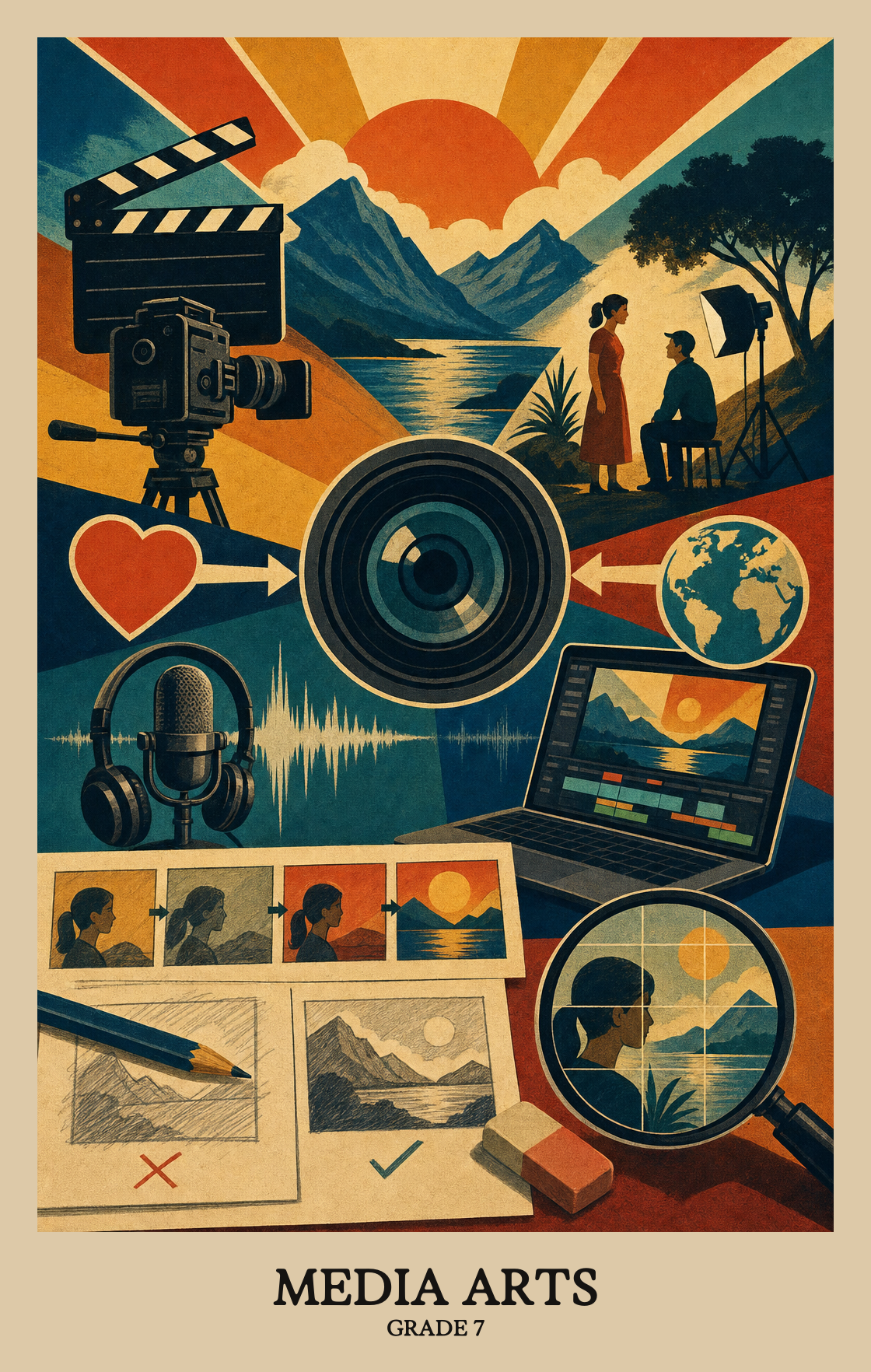
Students gather ideas for media projects like short videos, podcasts, or digital images. They pull from their own lives and from work they have seen, then sketch out plans before opening any software.
Students start producing real pieces. They learn to organize files, layer sound and images, and shape a rough version of a project that a viewer can actually follow.
Students slow down and look closely at videos, ads, and images made by others. They notice the choices behind each one and talk about what the maker was trying to say.
Students sharpen their projects with editing, better sound, cleaner visuals, and tighter pacing. They use feedback from classmates and apply a checklist of quality to decide what still needs fixing.
Students present completed work to an audience and explain the meaning behind their choices. They think about how the setting, screen, or platform changes the way a viewer experiences the piece.
Students draw on what they know and what they have lived through to shape their media art projects. Personal experience and outside knowledge show up in the choices they make.
Students look at a piece of media art and connect it to the time, place, or culture it came from. That context changes what the work means and why it matters.
| Standard | Definition | Code |
|---|---|---|
| Making art from your own life | Students draw on what they know and what they have lived through to shape their media art projects. Personal experience and outside knowledge show up in the choices they make. | MA:Cn10.7 |
| Media art and the world around it | Students look at a piece of media art and connect it to the time, place, or culture it came from. That context changes what the work means and why it matters. | MA:Cn11.7 |
Students brainstorm and develop original ideas for media art projects, deciding what message or story they want to create before they start building or producing anything.
Students plan and shape a media project by making deliberate choices about images, sound, or text. The goal is a finished piece that clearly expresses the original idea.
Students revisit a media arts project, make specific improvements based on feedback or their own review, and bring it to a finished state ready to share.
| Standard | Definition | Code |
|---|---|---|
| Coming up with original media art ideas | Students brainstorm and develop original ideas for media art projects, deciding what message or story they want to create before they start building or producing anything. | MA:Cr1.7 |
| Planning and building a media project | Students plan and shape a media project by making deliberate choices about images, sound, or text. The goal is a finished piece that clearly expresses the original idea. | MA:Cr2.7 |
| Finish and refine your media art | Students revisit a media arts project, make specific improvements based on feedback or their own review, and bring it to a finished state ready to share. | MA:Cr3.7 |
Students review a collection of media pieces and choose which ones to present, explaining why each piece works and what it communicates to an audience.
Students practice and improve their media art projects before sharing them, adjusting details like timing, sound, or visuals until the work is ready for an audience.
Students choose how to present a media piece so the audience feels or understands something specific. The editing, framing, or sequencing decisions all serve that intended meaning.
| Standard | Definition | Code |
|---|---|---|
| Choosing art worth sharing with an audience | Students review a collection of media pieces and choose which ones to present, explaining why each piece works and what it communicates to an audience. | MA:Pr4.7 |
| Refine your work before presenting it | Students practice and improve their media art projects before sharing them, adjusting details like timing, sound, or visuals until the work is ready for an audience. | MA:Pr5.7 |
| Share art that says something | Students choose how to present a media piece so the audience feels or understands something specific. The editing, framing, or sequencing decisions all serve that intended meaning. | MA:Pr6.7 |
Students look closely at a media artwork, like a photo, video, or website, and explain what choices the creator made and why those choices shape how the work feels or what it means.
Students explain what a media artist was trying to say and why specific choices, like color, sound, or framing, support that meaning.
Students use a set of criteria to judge media art, explaining why a piece works or falls short based on specific qualities rather than personal taste alone.
| Standard | Definition | Code |
|---|---|---|
| Reading and analyzing media art | Students look closely at a media artwork, like a photo, video, or website, and explain what choices the creator made and why those choices shape how the work feels or what it means. | MA:Re7.7 |
| Reading meaning in media art | Students explain what a media artist was trying to say and why specific choices, like color, sound, or framing, support that meaning. | MA:Re8.7 |
| Judging whether art works and why | Students use a set of criteria to judge media art, explaining why a piece works or falls short based on specific qualities rather than personal taste alone. | MA:Re9.7 |
Students make projects using digital tools like video, audio, photography, animation, and simple web or game design. They learn how to plan a project, build it, refine it, and share it with an audience. They also study how media shapes the way people think.
Ask students to show a project on a phone or laptop and talk through the choices they made. Watching short films, ads, or videos together and asking what message the creator wanted to send builds the same thinking they use in class.
No. A phone camera, free editing apps, and basic headphones are enough for most projects. Schools usually provide what students need during class time.
Start with short idea-generation projects so students get comfortable with the tools, then move into longer works that go through drafts and revisions. Save the most ambitious project for the second half of the year, once students can plan, edit, and respond to feedback.
Students pick a clear idea, plan it before recording, and revise based on feedback. The final piece has a point of view, fits the audience it was made for, and shows attention to sound, framing, or pacing.
Planning before producing is the hardest habit at this age. Students want to jump to filming or editing without storyboarding or scripting. Building short planning steps into every project pays off more than reteaching software features.
They use shared criteria such as message, craft, and audience to give specific feedback instead of saying a piece is good or bad. Practicing this on professional media first makes peer critique feel less personal.
Remind students that media arts rewards planning and revision more than raw talent. A student who can describe an idea clearly and stick with edits will produce strong work, even if the first draft feels rough.
Projects often start from personal experience, family stories, or topics students care about in their community. Ask what the project is really about underneath the visuals, and the connection to their own life usually comes out.