Finding ideas worth making
Students start the year by turning their own experiences and interests into art ideas. They keep a sketchbook, try out different starting points, and learn that good art usually begins with a question or a memory.
This is the year art class shifts from making things that look good to making things that mean something. Students plan a piece around an idea from their own life, then push through drafts to improve it. They look closely at other artists' work and explain how time period or culture shaped it. By spring, students can prepare a finished piece for display and talk about what it means and why they made the choices they did.
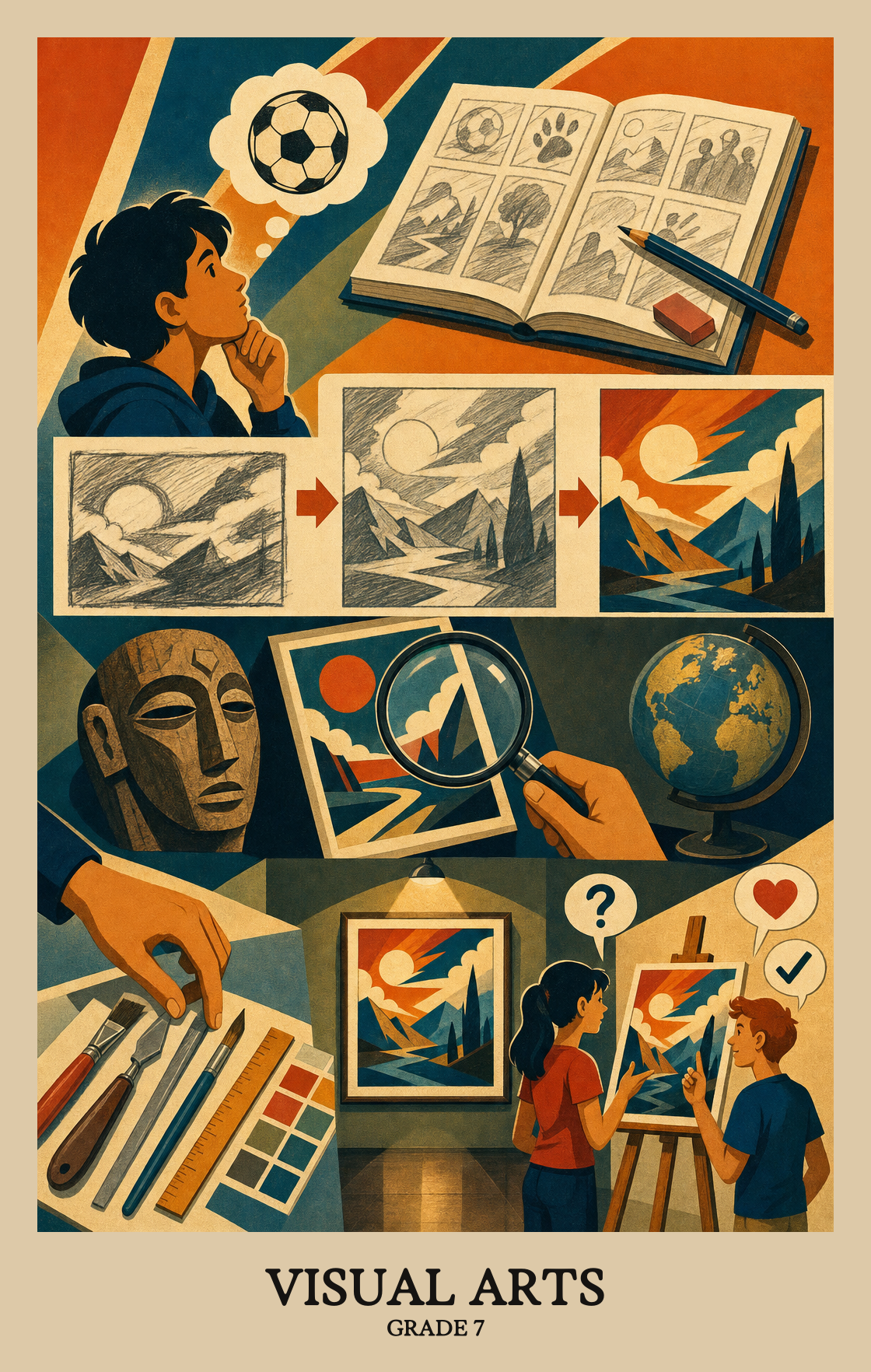
Students start the year by turning their own experiences and interests into art ideas. They keep a sketchbook, try out different starting points, and learn that good art usually begins with a question or a memory.
Students practice the craft side of art, working with materials like pencil, paint, clay, or digital tools. They learn how to handle each one well enough to make the picture in their head match the one on the page.
Students study artwork from different cultures and time periods and talk about why it was made. They start to see how an artist's life, place, and moment in history shape what ends up on the canvas.
Students take a project from rough sketch to finished work. They get feedback partway through, decide what to change, and learn that revising a piece is part of making it good, not a sign something went wrong.
Students prepare pieces for display and talk about what their art is meant to say. They also learn to give thoughtful opinions about other artists' work using clear reasons instead of just liking or disliking it.
Students pull from what they already know and what they have lived through to make artistic choices. Personal experience shapes the work, whether a student is picking a subject, a color, or a composition.
Students look at a piece of art and explain what was happening in the world when it was made. Understanding the time, place, and culture behind a work helps students see why it looks the way it does.
| Standard | Definition | Code |
|---|---|---|
| Art inspired by your own life | Students pull from what they already know and what they have lived through to make artistic choices. Personal experience shapes the work, whether a student is picking a subject, a color, or a composition. | VA:Cn10.7 |
| Art in its time and place | Students look at a piece of art and explain what was happening in the world when it was made. Understanding the time, place, and culture behind a work helps students see why it looks the way it does. | VA:Cn11.7 |
Students brainstorm and develop original ideas before they start making art. This standard is about the thinking that happens before the brush hits the paper.
Students take an early sketch or idea and refine it into a finished piece, making deliberate choices about composition, materials, and technique along the way.
Students revisit a piece of artwork, make deliberate changes based on feedback or their own judgment, and decide when the work is finished.
| Standard | Definition | Code |
|---|---|---|
| Coming up with original art ideas | Students brainstorm and develop original ideas before they start making art. This standard is about the thinking that happens before the brush hits the paper. | VA:Cr1.7 |
| Develop and refine your artistic ideas | Students take an early sketch or idea and refine it into a finished piece, making deliberate choices about composition, materials, and technique along the way. | VA:Cr2.7 |
| Finish and improve your artwork | Students revisit a piece of artwork, make deliberate changes based on feedback or their own judgment, and decide when the work is finished. | VA:Cr3.7 |
Students review a collection of their artwork, think about what each piece shows or says, and choose which works are strong enough to share with an audience.
Students review their artwork before presenting it, making deliberate changes to improve craft, composition, or detail. The goal is a finished piece they can stand behind.
Students choose how to display or share their artwork so the idea or feeling behind it comes through to the viewer.
| Standard | Definition | Code |
|---|---|---|
| Choosing artwork worth sharing with others | Students review a collection of their artwork, think about what each piece shows or says, and choose which works are strong enough to share with an audience. | VA:Pr4.7 |
| Refining artwork before sharing it | Students review their artwork before presenting it, making deliberate changes to improve craft, composition, or detail. The goal is a finished piece they can stand behind. | VA:Pr5.7 |
| Sharing art that says something | Students choose how to display or share their artwork so the idea or feeling behind it comes through to the viewer. | VA:Pr6.7 |
Students look closely at a piece of artwork and explain what they notice, from the colors and shapes on the surface to the choices the artist made and why they matter.
Students look at a piece of art and explain what they think the artist was trying to say, using details in the work to back up their reading.
Students judge a piece of artwork using a set of criteria, explaining why it works or falls short based on specific qualities like composition, technique, or meaning.
| Standard | Definition | Code |
|---|---|---|
| Reading and analyzing art | Students look closely at a piece of artwork and explain what they notice, from the colors and shapes on the surface to the choices the artist made and why they matter. | VA:Re7.7 |
| Reading meaning in artwork | Students look at a piece of art and explain what they think the artist was trying to say, using details in the work to back up their reading. | VA:Re8.7 |
| Judging whether art works and why | Students judge a piece of artwork using a set of criteria, explaining why it works or falls short based on specific qualities like composition, technique, or meaning. | VA:Re9.7 |
Students move past basic drawing and start making art with a point of view. They sketch ideas, pick the strongest one, and shape it into a finished piece. They also look at art from other cultures and time periods and talk about what it means.
Skill matters less than thinking this year. Ask what the piece is about, what they tried, and what they want to change next. Keep a cheap sketchbook around so they can practice low-stakes ideas without worrying about a grade.
Students should take an idea from a rough sketch to a finished piece, explain the choices they made, and accept feedback without scrapping the whole thing. They should also describe what an artwork means, not just what it shows.
Front-load idea generation and sketchbook habits in the fall. Spend the middle of the year on technique with shorter studies in two or three media. Save longer projects with revision and artist statements for the spring, once habits are in place.
No. A pencil, an eraser, a sketchbook, and a few markers or colored pencils cover most of what students need outside class. Trips to a museum, a library art book, or even photos on a phone give them more to draw from than fancy materials.
Revision is the hardest. Students treat the first attempt as the final piece and resist changing it. Build in required checkpoints where a draft gets feedback before it can move forward, and grade the process, not just the finished work.
Skip judgments like good or bad. Ask what they were trying to show, which part they are happiest with, and what was hardest. That kind of conversation matches how art gets discussed in class and helps students think like artists.
They can plan a piece, follow through on it, and talk about why they made the choices they did. They can also look at someone else's work, including a famous artist's, and say what it might mean and how it was made.