Getting started in a new language
Students learn to greet people, introduce themselves, and ask simple questions about everyday life. Parents may hear short phrases at home and notice students sounding out new words with growing confidence.
This is the checkpoint where students stop translating word by word and start using the language to actually say something. They handle short conversations on familiar topics like school, family, food, and weekend plans. Students read simple texts, write brief notes, and compare how people in another culture greet, eat, or celebrate compared to their own. By the end, they can introduce themselves, ask and answer everyday questions, and explain one custom from the culture they study.
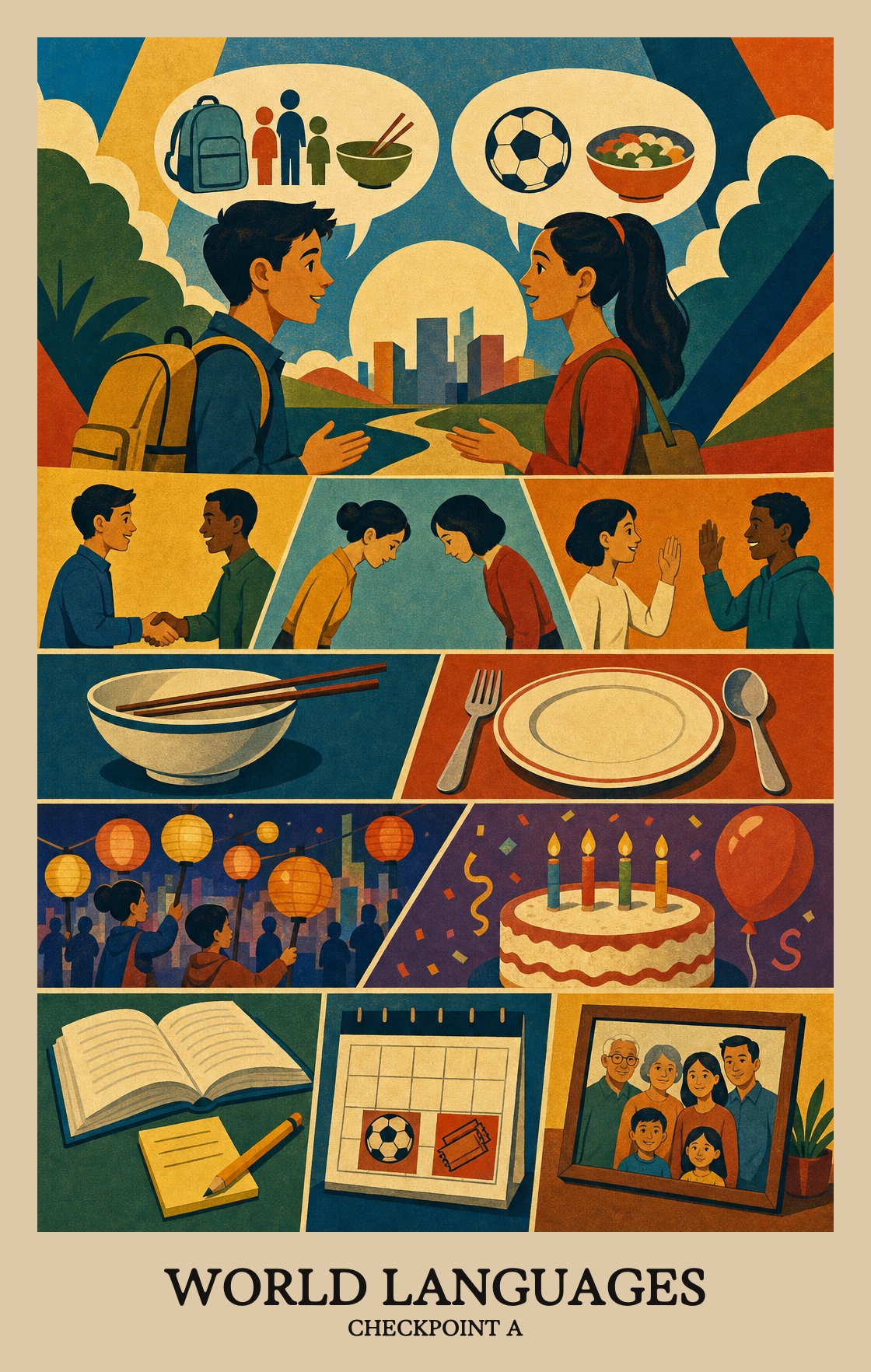
Students learn to greet people, introduce themselves, and ask simple questions about everyday life. Parents may hear short phrases at home and notice students sounding out new words with growing confidence.
Students hold short conversations about family, school, food, and free time. They begin to share opinions and feelings in the new language instead of just listing words.
Students read short passages, follow simple audio or video clips, and write short notes or messages. They start to pick out the main idea without needing a translation for every word.
Students look at customs, holidays, food, and daily routines from places where the language is spoken. They compare those practices to their own and explain what surprises them.
Students give short presentations, tell a simple story, or describe something they researched. By the end of the year, they can keep a basic conversation going on familiar topics.
Students read or listen to passages in a classical language and work out the meaning, looking beyond word-for-word translation to understand the full message.
Students hold simple back-and-forth conversations in a classical language, sharing basic information and reactions with a partner. The focus is on exchanging meaning, not just reciting memorized phrases.
Students write or speak in a classical language (Latin or Ancient Greek) to share information, tell a story, or make an argument. They adjust their words based on who is listening or reading.
| Standard | Definition | Code |
|---|---|---|
| Reading and listening in a classical language Checkpoint A | Students read or listen to passages in a classical language and work out the meaning, looking beyond word-for-word translation to understand the full message. | NY-WL.CL.A.1 |
| Sharing opinions in a new language Checkpoint A | Students hold simple back-and-forth conversations in a classical language, sharing basic information and reactions with a partner. The focus is on exchanging meaning, not just reciting memorized phrases. | NY-WL.CL.A.2 |
| Sharing ideas in a classical language Checkpoint A | Students write or speak in a classical language (Latin or Ancient Greek) to share information, tell a story, or make an argument. They adjust their words based on who is listening or reading. | NY-WL.CL.A.3 |
Students examine how daily habits, art, and objects from ancient cultures connect to the beliefs and values behind them, then explain those connections in the language they are studying.
Students compare ancient Roman or Greek customs, beliefs, and daily life to their own culture, then explain what those differences reveal about how and why societies develop the way they do.
| Standard | Definition | Code |
|---|---|---|
| How culture shapes what people do and make Checkpoint A | Students examine how daily habits, art, and objects from ancient cultures connect to the beliefs and values behind them, then explain those connections in the language they are studying. | NY-WL.CL.A.4 |
| How cultures differ from your own Checkpoint A | Students compare ancient Roman or Greek customs, beliefs, and daily life to their own culture, then explain what those differences reveal about how and why societies develop the way they do. | NY-WL.CL.A.5 |
Students listen to, read, or watch short pieces in the new language and show they understand the main point. This might mean following a simple conversation, a sign, or a short video clip.
Students hold back-and-forth conversations in a new language, sharing facts, reactions, and opinions. They listen or read what the other person says and respond in a way that keeps the exchange going.
Students practice speaking or writing in the new language to share information, tell a story, or make a point. They learn to adjust what they say based on who is listening or reading.
| Standard | Definition | Code |
|---|---|---|
| Understand what you hear and read Checkpoint A | Students listen to, read, or watch short pieces in the new language and show they understand the main point. This might mean following a simple conversation, a sign, or a short video clip. | NY-WL.ML.A.1 |
| Conversations in the target language Checkpoint A | Students hold back-and-forth conversations in a new language, sharing facts, reactions, and opinions. They listen or read what the other person says and respond in a way that keeps the exchange going. | NY-WL.ML.A.2 |
| Sharing ideas in a new language Checkpoint A | Students practice speaking or writing in the new language to share information, tell a story, or make a point. They learn to adjust what they say based on who is listening or reading. | NY-WL.ML.A.3 |
Students use the language they're learning to explore why people in that culture do things the way they do, connecting everyday habits and objects to the values and beliefs behind them.
Students compare everyday life in another culture to their own, noticing differences in habits, customs, or values. They use the language they are learning to talk through what they find.
| Standard | Definition | Code |
|---|---|---|
| How cultures shape what people do and make Checkpoint A | Students use the language they're learning to explore why people in that culture do things the way they do, connecting everyday habits and objects to the values and beliefs behind them. | NY-WL.ML.A.4 |
| How cultures compare to your own Checkpoint A | Students compare everyday life in another culture to their own, noticing differences in habits, customs, or values. They use the language they are learning to talk through what they find. | NY-WL.ML.A.5 |
A locally developed end-of-course assessment that measures speaking, listening, reading, and writing in a language other than English at the Novice-High to Intermediate-Low level. Schools use it to award the high school world language credits Advanced Designation diplomas require.
Students reach a beginner level where they can hold short conversations, read simple texts, and write a few sentences on familiar topics like family, school, food, and weekend plans. They also start noticing how daily life in the language's culture compares to their own.
Ask them to teach you a few words at dinner, label things around the house, or play a short song or video in the language while you cook. Ten minutes of regular exposure beats an hour once a week.
Memorizing helps, but using the words matters more. Quiz them with quick flashcards for five minutes, then ask them to make one sentence about their day using two of the words. That's how the vocabulary sticks.
Most teachers front-load listening and speaking so students build an ear for the language before tackling longer reading and writing. By mid-year, students can read short texts and write a short paragraph on a familiar topic.
Verb forms in the present tense, question words, and basic agreement trip students up the most. Plan short, frequent review loops rather than one big unit. Spiraling these into warm-ups all year tends to work better than reteaching them once.
Culture is a real part of the year, not a side topic. Students compare daily routines, holidays, food, and school life in the target culture with their own, and explain what those differences suggest about values. Plan a cultural thread inside each unit rather than a separate culture week.
Expect short, simple sentences with pauses and some mistakes. Students should be able to greet someone, answer basic questions about themselves, order food, or describe a picture. Fluency is not the goal yet. Being understood is.
Students should handle a short unscripted conversation on a familiar topic, read a short text and pull out the main idea, and write a paragraph with connected sentences. If most students can do those three things on a new topic, they're ready.
Speaking out loud feels risky at first. Encourage low-stakes practice at home, like reading a menu aloud, singing along to a song, or recording a short voice memo on their phone. Mistakes are part of learning, and most early errors fade with practice.