Moving with control
Students sharpen the basics of running, jumping, throwing, catching, and balancing. Movements get smoother and more controlled than in earlier grades, and students start adjusting their bodies on purpose.
This is the year movement starts to feel like skill, not just play. Students sharpen running, throwing, catching, jumping, and balance, and they begin using simple strategies in games and group activities. They also learn what fitness actually means: how the heart works during exercise, why warm-ups matter, and how to track their own progress. By spring, students can lead themselves through a short fitness routine and explain why each part helps their body.
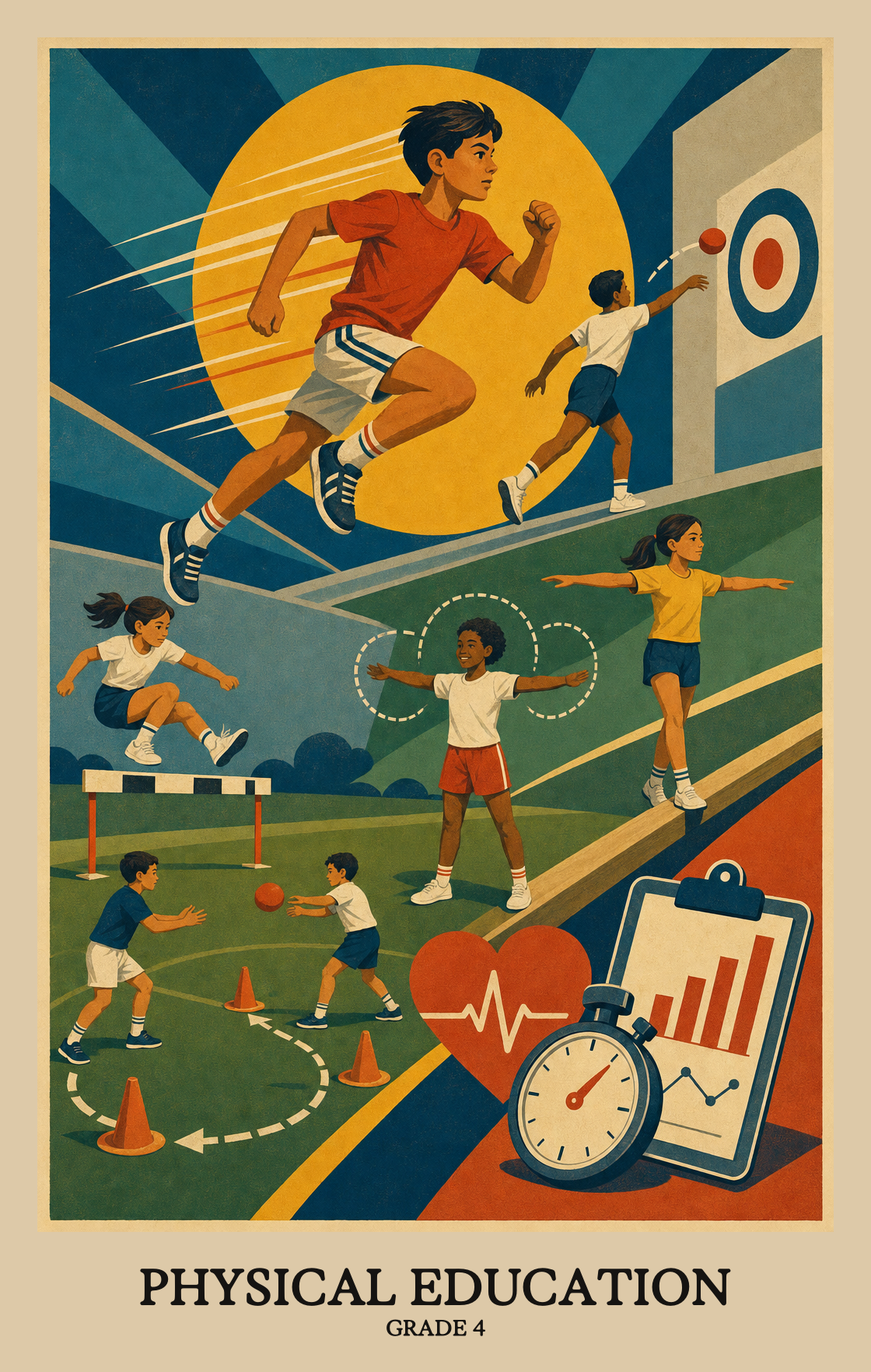
Students sharpen the basics of running, jumping, throwing, catching, and balancing. Movements get smoother and more controlled than in earlier grades, and students start adjusting their bodies on purpose.
Students learn how to read a game. They practice spacing, simple offense and defense, and how to move when someone else has the ball. Parents may hear new talk about positions and teamwork.
Students check their own fitness in areas like running, strength, and flexibility. They set small goals and track how their bodies improve with regular activity. Expect more talk about heart rate and warm-ups at home.
Students learn the reasons behind the workouts. They start to explain what stretching does, why warm-ups matter, and how food and sleep affect energy during play.
Students practice the social side of P.E. They take turns leading and following, handle winning and losing with respect, and learn how to include classmates of different skill levels.
Students practice the basic moves behind real sports and activities: how to throw, balance, change direction, and control their bodies while they play.
Students learn the why behind how they move. They practice adjusting speed, direction, and body position to get better at sports, games, and other physical activities.
Students track their own fitness over time, noticing where they've gotten stronger or need more work. The goal is building habits that help them feel and move better, not just passing a test.
Students learn how exercise affects their heart, muscles, and endurance, then use that knowledge to make smarter choices about how they train and stay active.
Students learn how mindset, teamwork, and handling pressure affect how well they move and play. They practice using that understanding to improve their performance in sports and physical activities.
| Standard | Definition | Code |
|---|---|---|
| Moving your body in different ways | Students practice the basic moves behind real sports and activities: how to throw, balance, change direction, and control their bodies while they play. | CA-PE.1.4 |
| How bodies move and why it matters | Students learn the why behind how they move. They practice adjusting speed, direction, and body position to get better at sports, games, and other physical activities. | CA-PE.2.4 |
| Tracking fitness to stay healthy and strong | Students track their own fitness over time, noticing where they've gotten stronger or need more work. The goal is building habits that help them feel and move better, not just passing a test. | CA-PE.3.4 |
| How fitness improves your health | Students learn how exercise affects their heart, muscles, and endurance, then use that knowledge to make smarter choices about how they train and stay active. | CA-PE.4.4 |
| Working together in sports and games | Students learn how mindset, teamwork, and handling pressure affect how well they move and play. They practice using that understanding to improve their performance in sports and physical activities. | CA-PE.5.4 |
California's fitness assessment for grades 5, 7, and 9. Administration was paused in spring 2022 while the program is redesigned to drop body-composition components; districts continue to receive guidance but do not currently submit student-level results.
Students should move with control in a range of activities, like jumping rope, throwing and catching, kicking a ball toward a target, and balancing. They should also be able to warm up on their own, follow simple game rules, and explain what makes their body stronger or more flexible.
Aim for an hour of active play most days. Walks, bike rides, tag in the yard, dance breaks, and catch in the driveway all count. Let students pick the activity sometimes so they build the habit of choosing movement on their own.
Skills like throwing, catching, and kicking get better with short, regular practice. Spend ten minutes a few times a week tossing a ball back and forth or kicking against a wall. Focus on effort and small wins, not on whether they look like an athlete yet.
Start with the basics that show up everywhere, like underhand and overhand throwing, catching, dribbling, and jumping. Move into combining those skills in small-sided games by midyear. Save more complex strategy work, like reading a defender or passing to open space, for the second half.
Students should know the difference between activities that build endurance, strength, and flexibility, and be able to give an example of each. They should also be able to take their pulse, notice when they are working hard, and set a small fitness goal with help.
Catching with the hands instead of the chest, throwing with opposition, and pacing during longer runs trip up a lot of students. Build short skill stations into warm-ups so students get repeated practice without losing class time to full reteach blocks.
Students are expected to take turns, follow rules, include classmates, and handle winning and losing without making a scene. Cooperative games and clear roles in small teams give students a chance to practice this every week, not just when a problem comes up.
By spring, students should be able to play a simple game with rules, use a basic strategy like spreading out on the field, and stay active long enough to get out of breath and recover. They should also be able to name one fitness goal and one way to work toward it.