Healthy habits at home and school
Students learn what keeps their bodies working well, like sleep, handwashing, brushing teeth, and eating a mix of foods. They start to name habits that help them feel good during the day.
This is the year health lessons shift from simple rules to small daily choices students start making on their own. Students learn what keeps a body healthy, like sleep, food, handwashing, and safe behavior at school. They practice talking through a problem with a friend or trusted adult instead of guessing. By spring, students can name a healthy goal and explain one step they took to reach it.
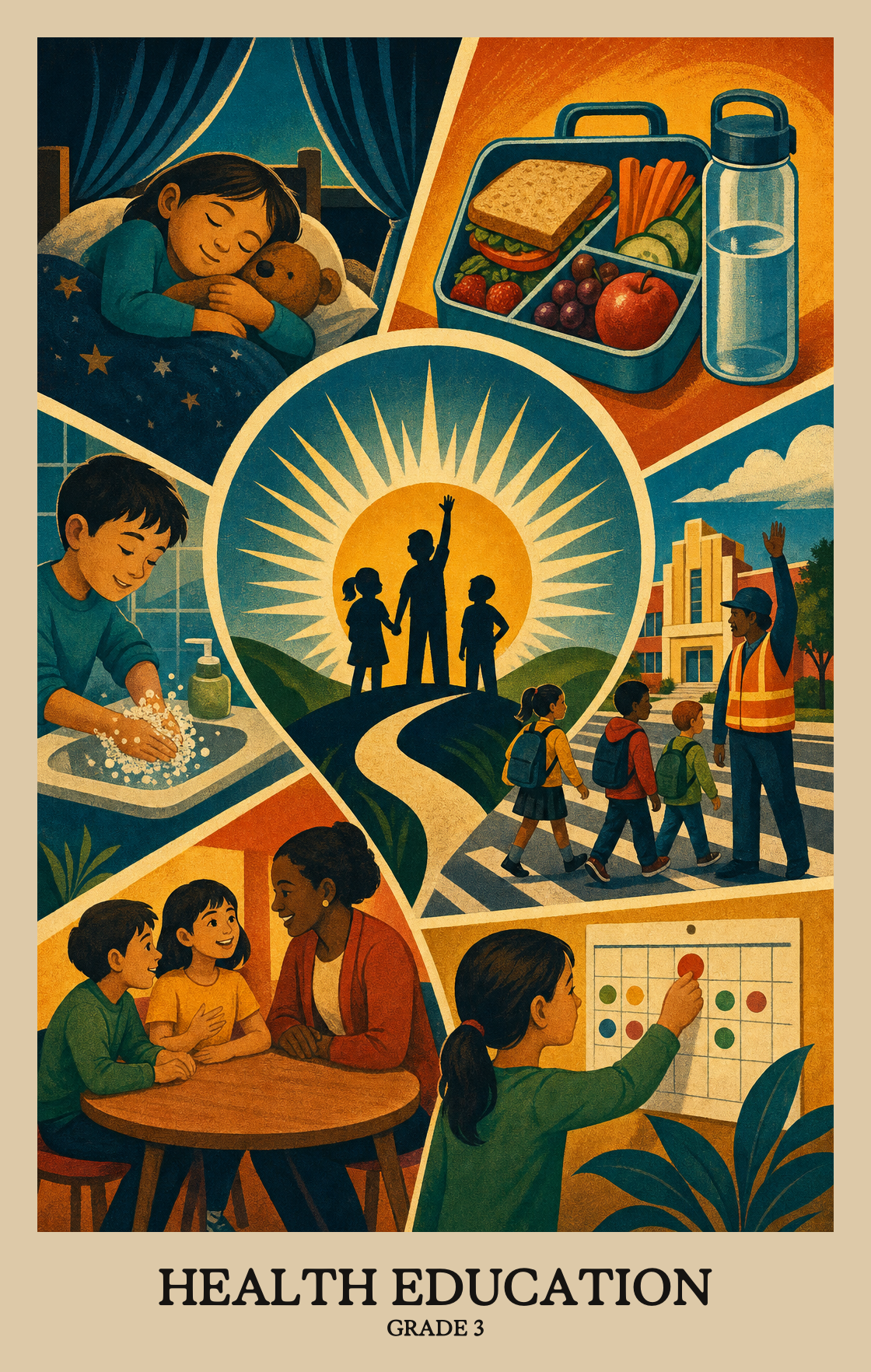
Students learn what keeps their bodies working well, like sleep, handwashing, brushing teeth, and eating a mix of foods. They start to name habits that help them feel good during the day.
Students look at how family, friends, ads, and shows on a screen can shape what they eat, buy, or do. They start to notice when a message is trying to sell them something.
Students learn who to go to with a health question, from a parent to a school nurse to a doctor. They practice telling a real source from one that just sounds good.
Students practice saying no to something unsafe, asking for help, and working out small problems with friends. They learn that calm words usually work better than loud ones.
Students walk through small decisions step by step, like what to eat for a snack or how to handle a tough feeling. They also pick one health goal and track how it is going.
Students learn what to do in everyday risks, like crossing a street, riding a bike, or feeling sick. They also think about how their choices affect family, classmates, and neighbors.
Students learn the basics of keeping their body and mind healthy, such as why sleep, food, and exercise matter. These ideas help students make better choices every day.
Students learn to recognize what shapes their health choices, like how they feel inside, what friends do, or what they see on TV. They practice asking why they made a choice and whether it was good for them.
Students practice finding trustworthy health information, like what a doctor or reliable website says, and deciding whether it actually makes sense to believe or use.
Students practice how to speak up, listen, and respond in everyday situations, like asking for help when sick or saying no to something that feels wrong.
Students practice making healthy choices, like deciding what to eat or how to handle a disagreement with a friend. They learn to think through options and pick the one that's best for their health.
Students pick a health goal, such as drinking more water or getting to bed on time, and map out the steps to reach it. They practice tracking their progress and adjusting when something isn't working.
Students learn to spot habits that keep them safe and healthy, then practice making those choices on their own. The focus is on building routines that lower everyday risks, like washing hands, getting enough sleep, or speaking up when something feels wrong.
Students practice health habits at home and in their community, then learn how to encourage others to do the same. This standard is about taking what students know about staying healthy and putting it to use for people around them.
| Standard | Definition | Code |
|---|---|---|
| Habits that keep you healthy | Students learn the basics of keeping their body and mind healthy, such as why sleep, food, and exercise matter. These ideas help students make better choices every day. | CA-HE.1.3 |
| What shapes your health choices | Students learn to recognize what shapes their health choices, like how they feel inside, what friends do, or what they see on TV. They practice asking why they made a choice and whether it was good for them. | CA-HE.2.3 |
| Finding trustworthy health information | Students practice finding trustworthy health information, like what a doctor or reliable website says, and deciding whether it actually makes sense to believe or use. | CA-HE.3.3 |
| Talking to others about your health | Students practice how to speak up, listen, and respond in everyday situations, like asking for help when sick or saying no to something that feels wrong. | CA-HE.4.3 |
| Making healthy choices | Students practice making healthy choices, like deciding what to eat or how to handle a disagreement with a friend. They learn to think through options and pick the one that's best for their health. | CA-HE.5.3 |
| Setting health goals | Students pick a health goal, such as drinking more water or getting to bed on time, and map out the steps to reach it. They practice tracking their progress and adjusting when something isn't working. | CA-HE.6.3 |
| Habits that protect your health | Students learn to spot habits that keep them safe and healthy, then practice making those choices on their own. The focus is on building routines that lower everyday risks, like washing hands, getting enough sleep, or speaking up when something feels wrong. | CA-HE.7.3 |
| Supporting health at home and in your community | Students practice health habits at home and in their community, then learn how to encourage others to do the same. This standard is about taking what students know about staying healthy and putting it to use for people around them. | CA-HE.8.3 |
Students learn the basics of taking care of their body and mind. That includes healthy food, sleep, exercise, hand washing, safety at home and on the playground, and how to be a good friend. They also start learning how to make small decisions for themselves.
Talk through everyday choices out loud. Why a glass of water with dinner, why a bike helmet, why bed at the same time. Five minutes of plain talk while making dinner does more than a lecture, and it gives students words to use when an adult is not around.
Answer honestly and simply. Use real words for body parts and feelings, and keep the answer short. If the question catches a parent off guard, it is fine to say, I want to think about that, then come back to it the same day.
Start with personal habits like sleep, food, and hygiene, since students can practice those right away. Move into safety, feelings, and friendships in the middle of the year. Save decision making and goal setting for spring, when students have enough vocabulary to talk through a real choice.
Decision making and goal setting. Students can name a healthy choice but struggle to walk through the steps before they act. Plan to revisit a simple decision routine, such as stop, think, choose, several times across the year with different examples.
Students practice asking where information came from and whether a trusted adult agrees. At home, a parent can model this by reading a label out loud or checking a claim from a video together. The point is the habit of pausing, not memorizing sources.
Students practice saying no to something unsafe, asking for help, and telling a friend how they feel without yelling. Short role plays work well, both in class and at the kitchen table. Give students the exact words to try, then let them practice in a low-stakes moment.
By spring, students should be able to name a few habits that keep them healthy, describe one safe choice in a tricky situation, and set a small personal goal like drinking more water for a week. They should also know which adults to go to for help.